Summary
- AI took 64% of global venture funding in Q3 2026, but the money went to fewer, larger rounds and deal counts fell, mostly at seed and early stage.
- AI-native and vertical products are winning budgets, and startups now hold most of the AI application market.
- Model prices keep falling, yet heavy usage can still crush your margins, so track cost per finished task.
- Enterprise buyers now ask detailed AI questions in procurement, and a clear AI fact sheet shortens your sales cycle.
Founders hear about a new AI trend every week, and most of them won’t change your next twelve months. A few will decide how much you can raise, what your margins look like and who you hire next. Separating the two is a big part of my AI consulting for startups work, and it’s the purpose of this guide.
I picked ten shifts that I see from the founder’s side of the table. Each one comes with the data behind it and my view on what I’d do about it at seed or Series A. The numbers come from Crunchbase News, Menlo Ventures, Stripe, Carta, the Stanford AI Index and a law firm briefing on the EU AI Act, and you’ll find all of them in the Sources list at the end.
Ten Trends, Who They Hit and Your Next Move
Read the table first, then jump to the trends that touch your company. Skip the rest for now.
| Trend | Who it matters for | Your move |
|---|---|---|
| Fewer, bigger rounds | Founders raising soon | Tie the raise to milestones |
| AI-native products | SaaS founders adding AI | Rebuild one core workflow |
| Vertical AI | Founders in one industry | Own a full workflow |
| Agents as products | Teams selling outcomes | Price per finished task |
| Small teams | Founders planning hires | Hire for judgment roles |
| Inference costs | Usage-heavy products | Track cost per task |
| Open-weight models | Teams with steady volume | Test one open model |
| Incumbents bundling AI | Horizontal tool makers | Go deeper than suites |
| Regulation and procurement | Startups selling to enterprise | Publish an AI fact sheet |
| AI in go-to-market | Lean sales teams | Automate research first |
1. Funding Flows Into Fewer, Bigger Rounds
Venture money for AI broke records, and most of it landed on a short list of names. Crunchbase counted $425 billion in global venture funding for 2025, and AI took $211 billion of it, roughly half. Close to 60% of all invested capital went to rounds of $100 million or more. Five companies raised $84 billion between them: OpenAI, Scale AI, Anthropic, Project Prometheus and xAI.
2026 pushed the pattern further. In the third quarter, AI startups raised $102 billion of the $159 billion in global venture funding, or 64%. A record 27 companies closed rounds of $1 billion or more, and together they took about a third of the quarter’s money. Even seed got heavier: about $2.6 billion of the $13 billion in Q3 seed funding went to seed rounds of $100 million or more.
The round counts tell the other half of the story. In a November breakdown by Crunchbase, North American funding rose 50% year over year in Q3 while deal counts fell 16%, and the drop sat mostly in seed and early-stage deals.
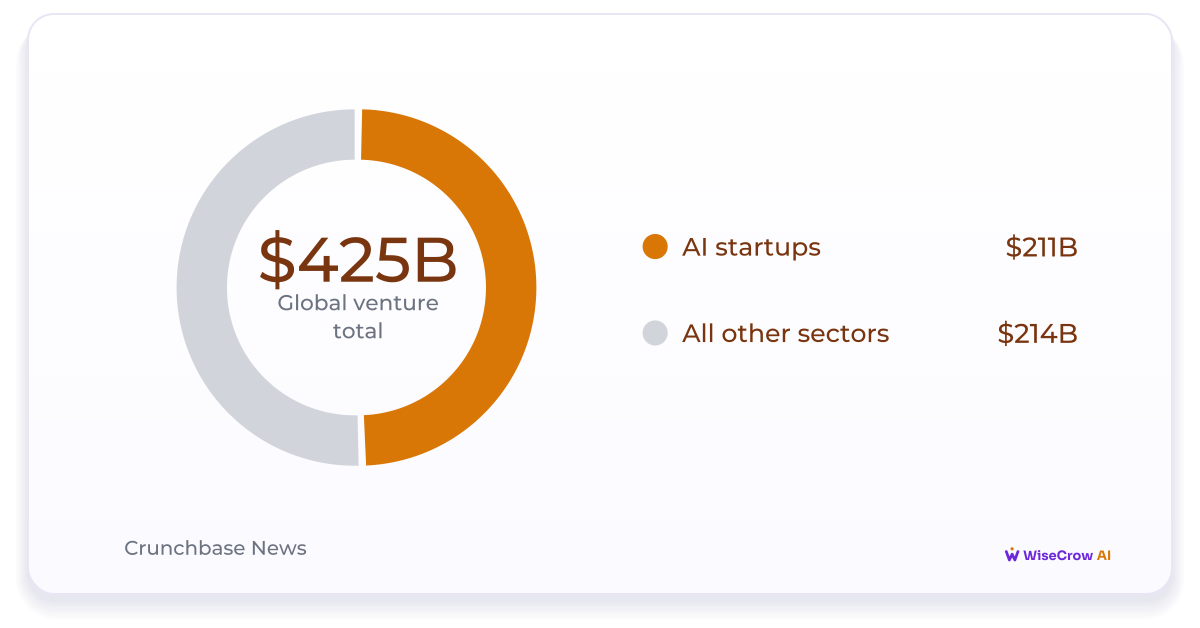
So the headline totals mislead a typical founder. More money in the market doesn’t mean more checks. In my client work, the seed and Series A founders who closed in 2026 could show paying users, a product that worked on real data and a clear cost per customer. The ones who pitched a thin layer on top of a model with a waitlist mostly heard “come back when you have revenue.” Plan your raise around milestones an investor can check, and give yourself more runway than you think you need.
2. AI-Native Products Pull Ahead of AI-Added Features
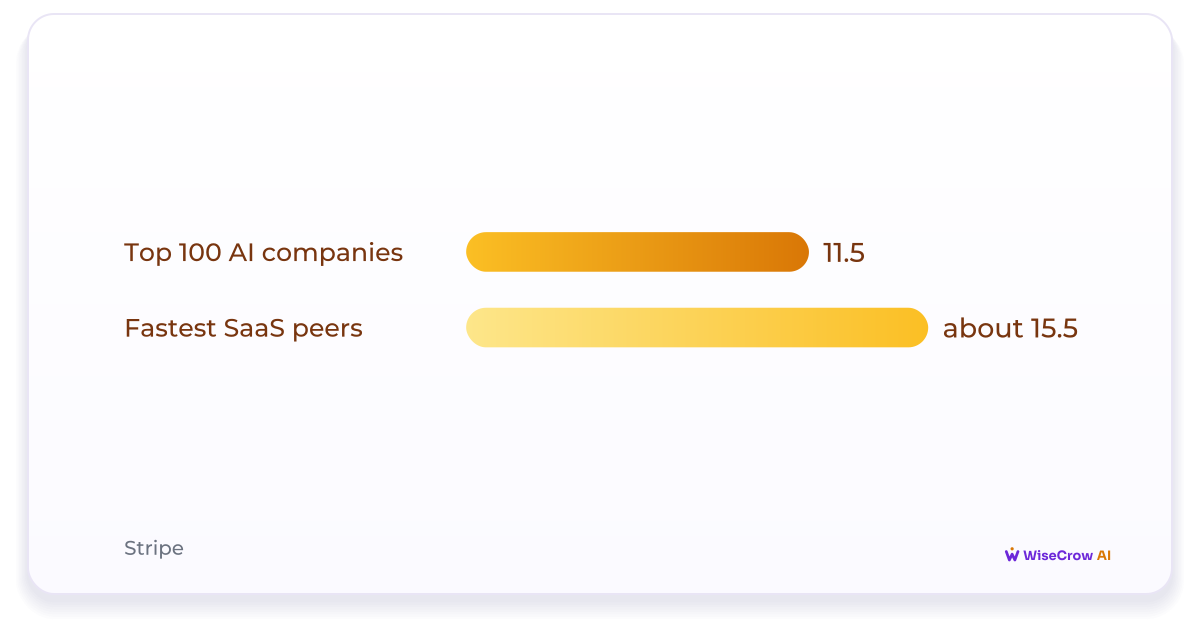
An AI-added product is a familiar tool with a chat panel or a summary button attached. In an AI-native product, the model does the core job and the user checks the result. Buyers feel the difference fast, and so do revenue curves. Stripe found that the top 100 AI companies on its platform reached $1 million in annualized revenue in a median of 11.5 months, about four months ahead of the fastest-growing SaaS companies at the height of the subscription boom.
What a Rebuild Looks Like in Practice
Last spring I worked with a small fintech team whose expense tool asked users to fill in a form while AI suggested a category. We flipped the flow. The product now reads the receipt, fills every field, flags anything odd and asks the user to approve. The model work was the easy part. The hard part was the review screen, because users only trusted the automation once they could see why each field was filled the way it was.
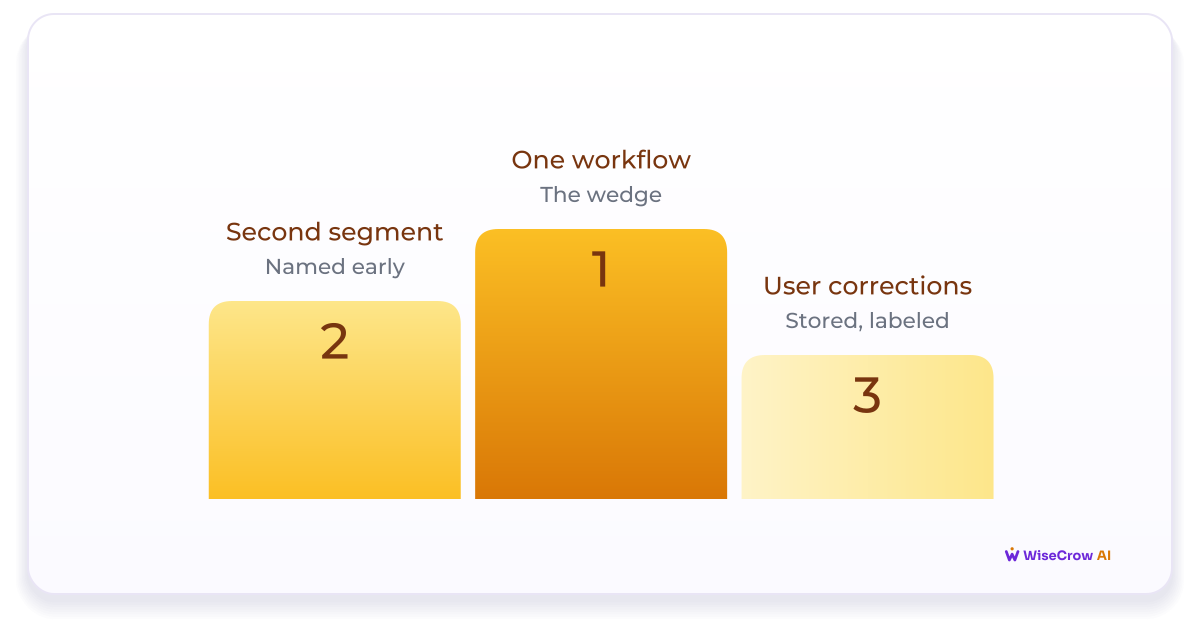
You don’t need to rebuild everything at once. Pick the one workflow customers pay you for most, let the model do the work end to end and make your interface about checking and correcting.
3. Vertical AI Wins Budgets in Regulated Industries
Horizontal assistants are crowded. Industry-specific products are where budgets are growing fastest. Menlo Ventures estimates that vertical AI captured $3.5 billion in 2025, nearly three times the $1.2 billion of 2024, and healthcare alone took close to half of it.
Vertical products win because they speak the buyer’s language, plug into the systems that industry already runs on and handle its compliance rules from day one. A clinic will pay for a notes product that knows its specialty, its billing codes and its record system. A general writing tool with a notes template rarely gets past the first demo.
The catch is market size. Investors will ask how you grow past the first niche, so have a credible second segment in mind before you pitch. The moat I trust most in vertical AI comes from the corrections your users make every day. Store them, label them and use them to improve the product. A competitor can copy your prompts in a week, but they can’t copy two years of expert feedback.
4. Agents Get Sold as Finished Work
Every pitch deck now says “agent,” but true agents are still rare in production. In the same Menlo report, only 16% of enterprise deployments and 27% of startup deployments qualified as true agents. The rest were fixed workflows or routing around a single model call.
Demand for packaged products is strong, though. Menlo found that 76% of AI use cases are now purchased, up from 53% in 2024. Buyers would sooner pay a startup for a finished outcome than build it themselves. Startups that win here sell a resolved ticket, a reconciled account or a booked meeting, and they price per task or per outcome.
To get through a buyer’s evaluation, your demo needs four things:
- A live run on the buyer’s own sample data
- The handoff screen a person sees when the agent gets stuck
- A log of every step and every tool call
- The cost per finished task at ten times today’s volume
Founders often skip the last point. Agent loops make many model calls per task, and a buyer’s finance team will ask what happens to the bill when usage grows.
5. Small Teams Run Bigger Revenue
Startups are raising with fewer people. Carta data shows the average Series A startup raising in 2025 had 14 full-time employees, down from 22 in 2022. AI coding tools and support automation explain part of the drop. A tighter funding market explains the rest, and Carta only counts full-time staff who hold equity.
Revenue per employee has become a board-level number. I like the discipline, but I’ve also watched lean teams break in a predictable place. The founders stay the only people who talk to customers, support slips and churn rises before anyone notices. AI can draft the reply, write the test and summarize the call. It can’t own a customer relationship or decide what to build next.
Spend your headcount on judgment roles: someone close to customers, someone who owns security and data and someone who checks model quality. Automate the rest. The stack I see small teams run on is in my ranking of AI tools for startups.
6. Cheaper Models, Thinner Margins
Model prices have collapsed. The 2025 Stanford AI Index reports that the cost of running a system at GPT-3.5 level dropped more than 280-fold between November 2022 and October 2024, while hardware costs fall about 30% a year.
Your bill may still go up. Products now call larger reasoning models, send longer context and run agent loops with dozens of calls per task. The price per token falls, and the tokens per customer climb faster. AI products also tend to carry lower gross margins than classic SaaS, which investors know and will ask about.
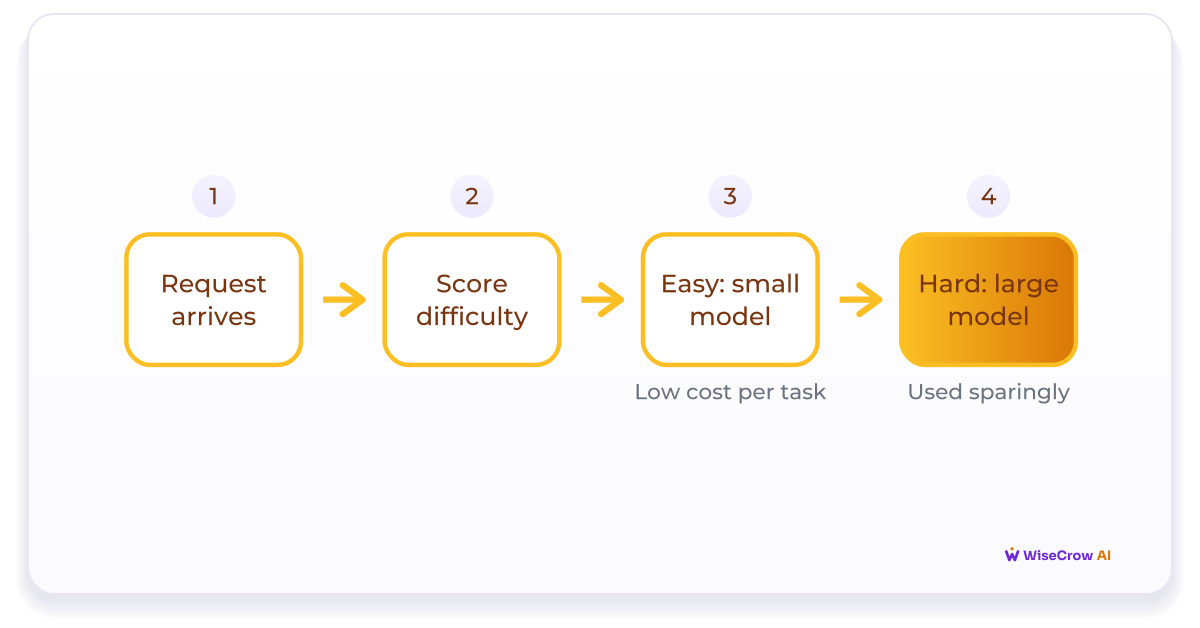
Three habits protect margins. Measure the model cost of each finished task and review it weekly. Route easy requests to a small, cheap model and save the big one for hard cases. Cache anything you compute twice. In my client work, routing alone usually cuts the model bill noticeably within a few weeks, with no drop in quality users can see.
7. Open-Weight Models Close the Gap
Open-weight models used to trail far behind. According to the same AI Index, the performance difference between leading open-weight and closed models on some benchmarks shrank from 8% to 1.7% in a single year.
For startups, the gap matters less than the options. An open model lets you host inside a customer’s environment, fine-tune on your own data and cap your costs at high volume. It also brings hosting, monitoring and evaluation work that a five-person team may not have time for.
My advice is blunt. Build on a hosted API until your volume is steady. Then test one open-weight model on a sample of real tasks and compare quality and total cost, staff time included. Keep a thin layer in your code between the product and the model, so switching providers takes a config change and a test run.
8. Incumbents Bundle AI Into Their Suites
Microsoft, Google and Salesforce now ship AI inside products your customers already pay for. Copilot sits in Microsoft 365, Gemini in Google Workspace and Agentforce in Salesforce. Any feature they can bundle, they eventually will.
Startups are winning anyway, so far. Menlo’s data shows startups held 63% of the AI application market in 2025, up from 36% a year earlier. They win on depth and speed: workflows that cross several tools, industry detail the suites won’t build and product updates every week.
Where they lose is generic features. Meeting summaries, email drafts and simple chat over documents now come free with the suite. Before you build a feature, ask if a suite vendor could ship it as a checkbox next year. If yes, integrate with the suite and sell the depth it lacks. A product that lives inside Teams or Slack also gets past procurement faster than one that asks users to open another tab.
9. Regulation Moves Into the Sales Cycle
The EU AI Act is now law, and its schedule keeps shifting. The EU formally adopted the AI Omnibus in 2026, which delays the main obligations for high-risk systems. Transparency rules arrive sooner. Check the current status before you plan around any date.
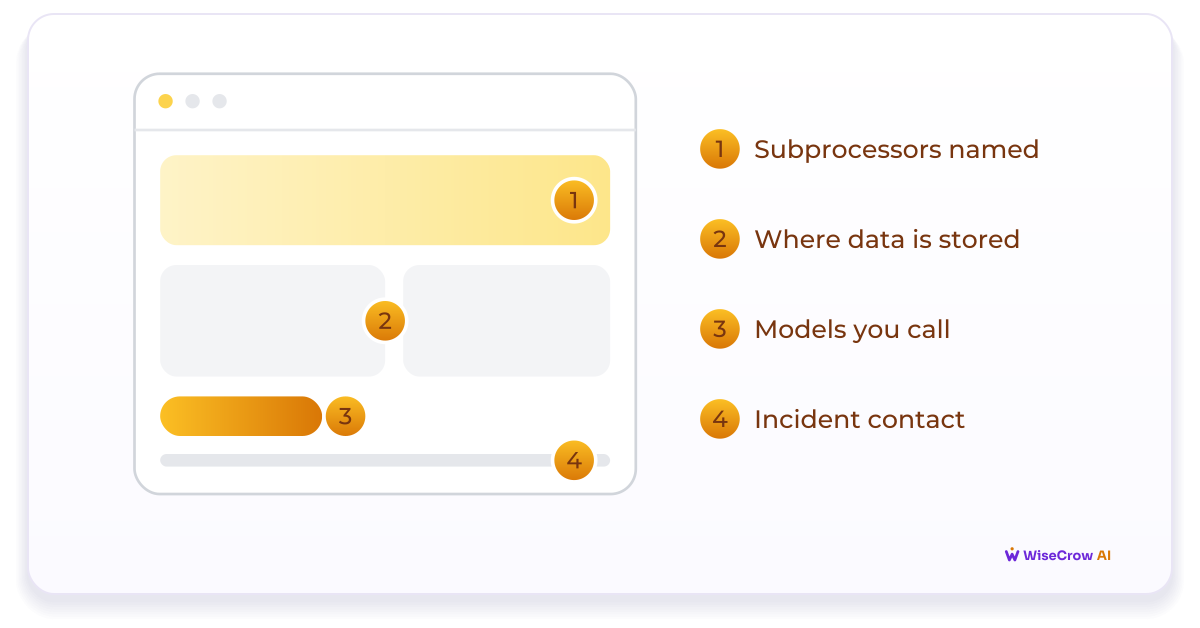
For most startups, the bigger effect shows up in procurement long before a regulator calls. Enterprise security reviews now include a page of AI questions:
- Which model providers do you use, and where is data processed?
- Is customer data used to train any model?
- How do you log outputs and handle errors?
- Where does a person review or approve results?
I’ve seen a promising Series A deal sit in legal review for two months because the startup couldn’t say which subprocessor handled its model calls. The answer took one afternoon to find. Nobody had written it down.
10. AI Runs More of Go-to-Market
Your buyers already use AI at work. The 2026 Stanford AI Index puts organizational adoption at 88%. They expect to try a product before they talk to sales, and the numbers back that up. Menlo found that 27% of AI application spend comes through product-led growth, and closer to 40% once you count staff who buy tools on their own. Startups also hold 78% of the AI sales tool category.
Inside lean startups, AI now handles account research, first drafts of outreach, call notes, CRM updates and onboarding emails. One founder can run a pipeline that needed two reps a few years ago.
The risk is volume without judgment. Inboxes are full of AI-written outreach that nobody reads. My rule for clients: let AI do the research and the admin, and keep the first real conversation with a bigger account human. Personal, well-researched outreach still gets replies. Mass-generated sequences mostly get filtered.
How to Choose Which Trends to Bet Your Runway On
A seed-stage team can act on two trends per quarter, maybe three. Run each candidate through these filters, in this order:
- Customer pull. Has a paying customer or a serious prospect asked for it? Real demand beats a good blog post.
- Unit economics. Does it change your cost per customer or your price? Inference and open-weight models usually land here.
- Fundraising story. Will it change what your next investor sees in the data room?
- Test size. Can you run a small test in a few weeks with one clear success metric?
A trend that passes the first two filters goes on this quarter’s plan. One that only passes the third is a slide for your deck, so keep it out of the roadmap. Revisit the list each quarter, because the funding data and model prices behind it change that fast.
Questions About AI Startup Trends
What Are the Biggest AI Startup Trends in 2026?
Funding is concentrating in fewer, larger rounds, AI-native and vertical products are winning budgets, and agents are being sold as finished work. Underneath that, falling model prices, open-weight models and smaller teams are changing startup economics, while regulation and enterprise procurement add new questions to every sale.
Is It Harder to Raise Money for an AI Startup in 2026?
There is more money in the market, but it goes to fewer companies. Crunchbase data shows record totals in 2026 alongside falling deal counts, with the drop concentrated in seed and early-stage rounds. Founders with paying customers and clear unit economics still raise. Founders with a demo and a waitlist find it much harder.
What Is the Difference Between an AI-Native and an AI-Added Product?
An AI-added product is a traditional tool with AI features attached, such as a chat panel or a summary button. In an AI-native product, the model does the core job and the user reviews the result. A quick test: if the product still delivers most of its value with the AI switched off, it’s AI-added.
Why Are Vertical AI Startups Attracting Investors?
Vertical products solve one industry’s workflow end to end, speak the buyer’s language and handle its compliance needs. Menlo Ventures estimates vertical AI spending reached $3.5 billion in 2025, nearly three times the year before, with healthcare taking close to half.
How Do AI Startups Protect Their Margins from Inference Costs?
Measure the model cost of every finished task, send simple requests to smaller models, cache repeated work and set usage limits or usage-based pricing for heavy users. Review cost per task every week, because a single prompt or model change can move it a lot.
Should an Early-Stage Startup Use Open-Weight Models?
Usually not at the very start. Hosted APIs are faster to build on. Once your volume is steady and model cost per task matters, or a customer needs data to stay in its own environment, test an open-weight model on your real tasks and compare quality and total cost.
How Does the EU AI Act Affect AI Startups?
It applies obligations by risk level. Most startup products fall into low-risk categories, but some uses, such as certain hiring decisions, count as high risk. The EU has agreed through the AI Omnibus to delay the main high-risk obligations. Rules keep changing, so check the current status before you plan around a date.
Sources
- Crunchbase News, Global venture funding in 2025 (January 2026): news.crunchbase.com
- Crunchbase News, Q3 2026 global startup funding (October 2026): news.crunchbase.com
- Crunchbase News, Q3 2026 funding amounts vs. round counts (November 2026): news.crunchbase.com
- Stripe, Inside the growth of the top AI companies on Stripe (June 2025): stripe.com
- Menlo Ventures, 2025: The State of Generative AI in the Enterprise (December 2025): menlovc.com
- Carta, Startup headcount in 2025: carta.com
- Stanford HAI, AI Index Report 2025: hai.stanford.edu
- Stanford HAI, AI Index Report 2026: hai.stanford.edu
- Addleshaw Goddard, EU AI Act: AI Omnibus formally adopted (July 2026): addleshawgoddard.com
Disclaimer: This article is for general information only and isn’t investment, financial or legal advice. Funding data, model prices and regulatory timelines change often, so check the original sources and your advisers before you act.
Did you find this helpful?
Thank you for your feedback.
Marlena leads the WiseCrow editorial team and works with our consultants to turn real client projects into practical guides on AI strategy, automation and governance. Before joining WiseCrow, she spent 12 years in B2B operations and SaaS content. She has since edited more than 400 articles on AI and automation and reviewed workflows from over 60 client projects. She is based in Austin, Texas.