Skip navigation

Fintech AI Consulting

Onboard users faster, stop more fraud and ship AI features in your product, with the controls your partner bank and investors will ask about. You start with a free discovery call and strategy session.

Talk to an Expert for Free
  • Your savings, estimated first
  • No commitment
  • Same-day reply
Trusted in 7 sectors
  • HALVERTON
  • KestrelGROUP
  • norvane
Fintech AI stack with onboarding checks, fraud scoring, underwriting reasons and an in-app assistant feeding one partner-ready evidence pack
  • Full-service, end-to-end AI consulting
  • 150+ AI use cases scoped
  • 60+ AI agents and workflows built
  • 80+ readiness assessments
  • Trusted in 7 sectors
  • Free discovery call and strategy session
  • One named contact person
  • Multilingual support

What Is Fintech AI Consulting?

Fintech AI consulting is a service for neobanks, lenders, payment companies, wealthtech, insurtech and BaaS platforms that want AI in their operations and in their product. You get workflows for onboarding, fraud, underwriting and support, plus customer-facing AI features, each built with the model evidence a sponsor bank or regulator may ask to see.

How AI Runs Inside a Fintech Product and Its Back Office

  1. An event hits your APIA sign-up, a card payment, a loan application or a chat message arrives through your app or a partner’s platform.
  2. AI scores and explainsModels check identity data, spot unusual payments, assess credit or read the question, and attach the reasons to each result.
  3. Clear cases flow onAccounts open, payments clear and simple questions get answered inside limits your risk lead and partner bank signed off.
  4. Your ops team takes the restEdge cases land in one queue with the evidence, the model’s suggestion and a draft note, ready for a quick decision.
  5. Result checkmark iconYou scale with proofApproval rates, fraud losses, review time and overrides are logged per model, ready for your board and partner reviews.

What Fintech AI Consultants Actually Do

You get people who can sit in a sprint planning meeting in the morning and a partner bank call in the afternoon.

  • KYC and KYB onboarding automation
  • Fraud and transaction monitoring support
  • Explainable underwriting models
  • In-app assistants and money insights
  • Support automation for high ticket volume
  • Model evidence for partners and audits

What Manual Operations Cost a Growing Fintech

Your user base can double in a quarter. Your ops and compliance team usually can’t, and every manual review step turns growth into a backlog.

  • Hourglass icon1.

    Sign-Ups Stuck in Manual Review

    Blurry IDs, mismatched addresses and complex business owners pile up, and new users drop off before their account opens.

    Real costLost Activations

    Paid sign-ups that never fund an account

  • Warning icon2.

    Fraud Rules That Block Good Users

    Tight rules stop fraud but also decline real customers, and loose ones let losses climb with volume.

    Real costLosses and Churn

    Chargebacks on one side, angry users on the other

  • Shield icon3.

    Partner Reviews That Stall Launches

    A new credit model or AI feature waits weeks when your sponsor bank asks for documentation nobody wrote.

    Real costDelayed Roadmap

    Features built but not allowed to ship

  • Inbox icon4.

    Support Queues That Grow With Users

    Card disputes, failed transfers and verification questions arrive faster than your support team can hire.

    Real costRising Cost per User

    Headcount that tracks every growth spurt

Fintech AI Consulting Built for Product Speed and Partner Scrutiny

Fintech teams often build an AI feature in two sprints, then lose two months in partner review. Your project writes the evidence as it builds: test results, reason codes, data maps and a monitoring plan, so the review starts with answers on the table.

Work is ranked by what moves your growth and loss numbers and by how much scrutiny each use case will draw. Onboarding and support automation usually ship first. Credit decisions and customer-facing AI follow, with fairness tests, guardrails and a clear off switch.

What You Walk Away With

  • AI use cases ranked by growth impact and scrutiny
  • A partner-ready evidence pack per model
  • Reason codes for every credit and fraud call
  • Monthly reports on losses, approvals and review time

Why AI Matters More for a Fintech Than for Most Startups

In a fintech, your cost per user and your loss rate are the business model. AI moves both: it cuts manual review per account and sharpens the decisions that decide who gets approved, flagged or paid. Start with the queue that grows fastest, prove it against a baseline and add the next one once the numbers hold.

Right for You If You Want To

  • Fast response iconOpen more accounts the same day users sign up
  • Warning iconCatch more fraud while declining fewer real customers
  • Target iconApprove borderline borrowers with reasons you can explain
  • Inbox iconAnswer card, transfer and dispute questions around the clock
  • Results report iconGive users spending insights and smart help inside your app
  • Shield iconHand partner banks and auditors evidence they can check

Your Fintech AI Project, Step by Step

  1. Step 1

    Free Discovery Call

    You talk through your product, your licenses or partner setup and the queues that slow your team. Your consultant asks about your vendors, volumes, loss rates and what your sponsor bank has asked for in past reviews.

    A written recap and budget range follow

    Short enough to forward to your founders, your compliance lead and your partner manager.

  2. Step 2

    Product, Data and Partner Review

    Each idea is scored for growth impact, loss impact, build effort and how much partner scrutiny it will draw. Data flows and AI vendors are mapped, and gaps in your current model documentation are listed.

    You get priorities in order plus a fixed quote

    Priorities, a data map, a vendor list, a timeline and one price for the first project.

  3. Step 3

    Build, Test and Write the Evidence

    Workflows and features ship in small releases behind feature flags. Models are tested on your own past applications, payments and tickets, and the evidence pack grows with every release.

    You get a live workflow and its evidence pack

    In your repos and vendors, with reason codes, monitoring, an off switch and training for your ops team.

  4. Ongoing

    Monitor, Tune and Scale

    Your account manager tracks approvals, fraud catches, false positives and drift each month. Rules and models are retuned as fraud patterns, products and partner requirements change.

    You get a monthly model report

    Loss, approval, review time and override trends in one place, ready for board decks and partner check-ins.

What’s Included in Fintech AI Consulting

Bring in help for one workflow or one product feature, or for the full program from review to monitoring.

  • KYC and KYB Onboarding Automation

    ID, address and business ownership checks with only true exceptions sent to an analyst.

  • Fraud and Transaction Monitoring Support

    Risk scores, alert summaries and draft case notes your ops team confirms.

  • Explainable Underwriting Models

    Credit scoring with reason codes, fairness tests and documented limits.

  • AI Features Inside Your Product

    Assistants and money insights grounded in user data, with guardrails and logs.

  • Support Automation at Scale

    Card, transfer and dispute questions answered or routed with full context.

  • Model, Data and Vendor Evidence

    Model docs, data maps and AI vendor checks your partners can review.

AI Use Cases Scoped150+
Governance and Security Reviews50+
KYB onboarding queue where AI has verified business documents and ownership, with one beneficial owner flagged for analyst review
Card payment fraud score with the top reasons listed and a draft case note for the fintech ops team

Client Feedback on Speed, Controls and Results

Live in Production in 9 Weeks

“We had a pilot that never left the sandbox. WiseCrow rebuilt the data pipeline, set up monitoring and gave our engineers clear ownership. Nine weeks later it was running in production, and they still review performance with us every month.”

PR
Priya RamanVP of Engineering, SaaS Platform

Board Approval in 30 Days

“Our leadership needed a business case they could trust. WiseCrow built the roadmap, the budget and the risk controls in plain language. The board approved it in thirty days, and our account manager made every handoff with IT painless.”

EN
Elena NovakCFO, Manufacturing Group

Cut Manual Work by 38%

“WiseCrow mapped our back-office workflows in two weeks and showed us which ones were worth automating first. Their phased plan kept the rollout calm, and we cut manual processing by 38% without adding headcount or disrupting the team we already had.”

MT
Megan TorresOperations Director, Logistics Company

Your Fintech Operations Before and After AI

Where your team’s hours and your partner goodwill go today, and what changes.

Before Fintech AI

  • New accounts waiting days for manual checks
  • Fraud rules tuned by gut feel after losses
  • Credit models nobody can explain to a partner
  • Support hiring that tracks user growth
  • AI features stuck waiting for documentation

After Fintech AI

  • Clean sign-ups verified in minutes
  • Fraud scores with reasons and tracked catch rates
  • Reason codes and fairness tests for every model
  • Routine tickets answered with account context
  • Evidence packs written while features ship

Benefits of Fintech AI Consulting for Your Company

What outside help changes for your growth, your losses and your partner relationships.

Progress chart iconGrowth Stops Waiting on Ops

When clean applications and routine tickets move on their own, your ops team handles exceptions only. A marketing push or a new partner channel adds users without a matching hiring plan.

Coin iconLosses Drop Without Hurting Approvals

Fraud and credit models with tracked catch rates and false positives let you tune the trade-off on purpose. You see what each threshold change does to losses and to good customers turned away.

Shield iconPartner Reviews Get Shorter

A sponsor bank that receives test results, reason codes, data maps and a monitoring plan up front has fewer follow-up questions. Launches move closer to the date on your roadmap.

Target iconProduct AI Users Can Trust

Assistants and insights answer from real account data and approved content, refuse what they shouldn’t do and log every exchange. Users get help that feels useful, and your complaints team gets a full record.

Fintech AI Consulting Pricing and Return

Your first project gets a fixed quote after a free review. The table assumes AI saves about seven minutes of ops time on each routine case, such as a KYC or KYB file, a fraud alert or a support ticket, valued at $40 an hour. It leaves out lower fraud losses and higher approval rates, which depend on your own data. Test the assumption against your volumes and salaries during the review.

KYC files, alerts or tickets per weekHours back per weekHours back per yearValue per year
200 23 hrs1,213 hrs$48,533
400Usual starting project 47 hrs2,427 hrs$97,067
800 93 hrs4,853 hrs$194,133

How Your Fintech AI Project Gets Started

  • Documentation written after launch

    Evidence Built Alongside the Code

    Test results, reason codes and data maps are written during the build, ready for your next partner review.

  • Models without an off switch

    Feature Flags and Fallbacks

    Every model ships behind a flag with a rules-based fallback, so you can pause it within minutes.

  • Demo data that hides edge cases

    Testing on Your Own History

    Models are scored on past sign-ups, payments and tickets, so you see real accuracy before users do.

  • Open-ended day rates

    A Fixed Quote After the Review

    You know the price of your first project before work starts, with vendor and API costs listed next to it.

Fintech stack with a BaaS ledger, identity verification vendor, fraud platform and data warehouse connected to one AI decision layer

Onboarding, Fraud and Underwriting That Plug Into Your Stack

Your ledger, BaaS provider, identity and KYB vendors and fraud platform stay in place. AI sits between them to pull the signals together, score the case and explain the result, and every outcome writes back through the APIs and webhooks you already use.

Underwriting models add cash-flow and account data on top of bureau scores where your policy allows it. Each decision carries reason codes your team can reuse in customer notices, and fairness tests run on every new version before it goes live.

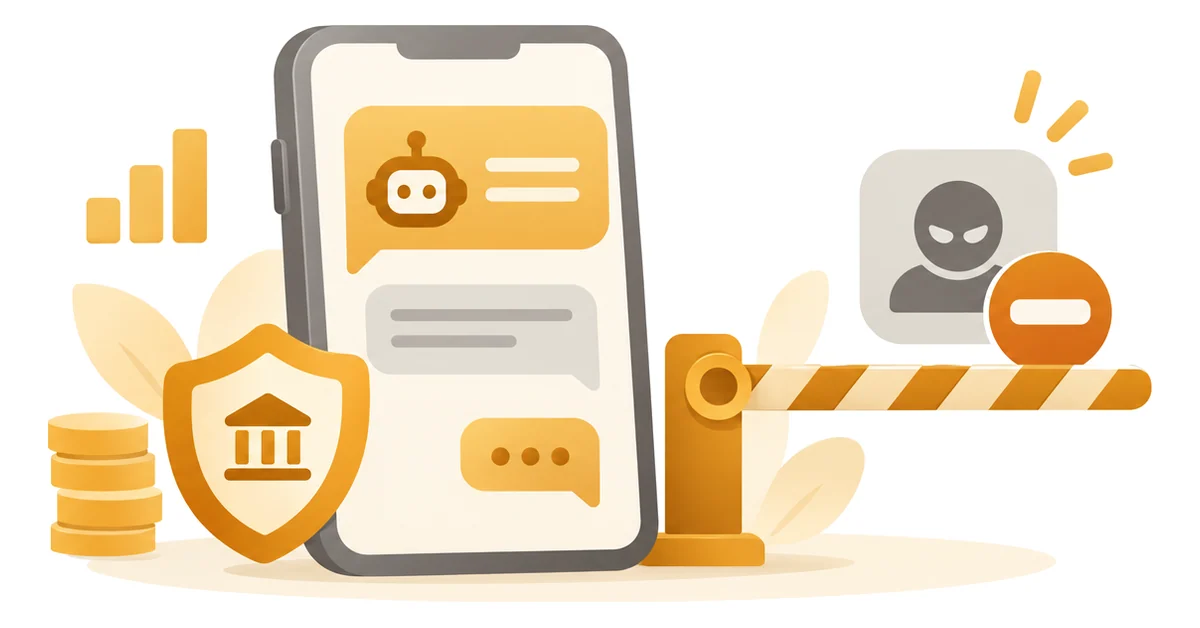
Mobile banking app assistant answering a card dispute question, next to a guardrail log and model evidence pack for the partner bank

In-App AI and the Evidence Your Partners Expect

Assistants, spending insights and smart alerts give your users help inside the app. They answer from the user’s own data and your approved content, refuse requests outside your license and ask for confirmation before anything touches money.

Each model, in the product or the back office, gets an owner, a purpose statement, test results, a data map and a monitoring plan. AI vendors are checked for data retention and training terms. Your partner bank receives one consistent pack, and your team updates it with each release.

Fintech AI Consulting for Your Business Model

Where AI pays back first, depending on what your fintech sells.

Neobanks and Digital Banking Apps

Start with onboarding checks and support automation, then add in-app assistants and spending insights. Assistants with access to accounts need strong protection against misuse, and AI security consulting covers prompt injection, access and logging in depth.

Lenders and Credit Platforms

Build explainable underwriting, income and document checks, and collections outreach with a person on every adverse decision. Credit models depend on clean, traceable data, which AI data governance consulting sets up across sources.

Payments and BaaS Platforms

Use AI for merchant and business onboarding, transaction monitoring and dispute handling across many programs at once. If you’re on the bank side of the partnership, see financial services AI consulting.

Wealthtech and Insurtech

Add guided onboarding, portfolio or policy explanations and claims intake, with clear limits on advice. Early-stage teams still shaping their product can start with AI consulting for startups.

How to Choose a Fintech AI Consulting Partner

A partner without fintech experience either moves fast and leaves you exposed in the next bank review, or moves so slowly your roadmap stalls. Before you sign, ask your fintech AI consulting partner to show you:

  • Real work on onboarding, fraud, credit or in-app AI
  • A sample model evidence pack a partner bank has seen
  • Reason codes and fairness testing for credit models
  • Data maps and vendor checks for every AI provider
  • Feature flags, fallbacks and monthly model monitoring

Also ask how regulatory questions are handled. A good partner tracks the general direction of guidance on model risk, fair lending and consumer protection, raises open points early and leaves legal interpretation to your counsel.

What You Can Count On From Your Fintech AI Partner

  • Price agreement icon

    Fixed Quote Before the Build

    The price of your first project is clear before work begins.

  • Coin icon

    Affordable, Best-in-Class Work

    Full-service, end-to-end consulting sized for a growing fintech.

  • Single point of contact icon

    Dedicated Account Manager

    One contact who knows your product, vendors and partners.

  • Shield icon

    User Data Protected

    Data maps, masking, least-privilege access and NDAs on request.

Questions About Fintech AI Consulting

Where Should a Fintech Start with AI?

Pick the queue that grows fastest with your user base. For most fintechs that’s KYC and KYB onboarding review, fraud alert handling or support tickets about payments and cards. Each one has a clear volume, a cost per case and an owner on your team. Your review scores every candidate for growth impact, partner sensitivity and build effort, so the first project helps your numbers and survives your sponsor bank’s questions.

What Will Our Sponsor Bank Ask About Our AI?

Expect questions on which decisions the model touches, who reviews its output, how it was tested, what data it sees and which outside vendors are involved. Banks also want to know how you’ll spot problems after launch and how fast you can switch a model off. You get those answers written up once, in a pack your compliance lead can send with each partner review and update as the product changes.

Can AI Approve or Decline Loan Applications on Its Own?

Only if your credit policy, your partners and your counsel agree it should. Many lenders let a model approve clear cases and route declines or borderline files to an underwriter. Whatever the setup, every decision gets reason codes in plain language, models are tested for uneven outcomes across customer groups before launch, and overrides are logged. Your compliance team decides how reasons are worded in customer notices.

How Do You Add an AI Assistant to Our App Safely?

The assistant answers from approved sources, such as your help center, fee schedule and the user’s own account data, and it can only reach what that user is allowed to see. It is tested against prompt injection, made-up answers and requests it should refuse, like investment or tax advice outside your license. Sensitive actions, such as moving money, need an explicit user confirmation. Every conversation is logged for quality review and complaint handling.

Do You Work with Our Existing Stack and Vendors?

Yes. Workflows connect to the tools fintechs usually run: your core ledger or BaaS provider, identity verification and KYB vendors, fraud and transaction monitoring platforms, your helpdesk, CRM and data warehouse. Work runs through their APIs, webhooks and your event streams. A new vendor is only suggested when the numbers clearly beat what you already pay for.

How Is Customer and Transaction Data Protected?

Each workflow gets a data map: which fields it reads, where they’re stored, which model or vendor sees them and for how long. Card numbers, account numbers and ID images are masked or kept out of prompts where the task allows it. Access follows least-privilege rules and every model call is logged. AI vendors are checked for data retention and training terms before they go live, and NDAs are available on request.

How Much Does Fintech AI Consulting Cost?

It depends on the number of workflows, the vendors and systems involved, how much model documentation your partners expect and how much human review each step keeps. You get a cost range on your free discovery call and a fixed quote after the review, with no hidden extras. Model API and vendor fees are listed separately, so you can see the monthly run cost next to your burn.

How Do You Keep Up with Changing Financial Regulation?

Rules and supervisory expectations on AI in finance keep shifting, and they differ by country and license type. Each workflow records the policies and obligations it depends on, and those are reviewed with your compliance lead on a set schedule. When guidance changes, affected workflows get flagged. Nothing in a project counts as legal advice, so check the current status of any rule with your counsel and your partner bank.

Can a Small Team Keep These Models Running After Launch?

Yes, if the setup stays simple. Monitoring dashboards show approval rates, fraud catch rates, false positives and override rates against agreed limits, with alerts when something drifts. Prompts, rules and evaluation sets live in your repositories with documentation your next hire can follow. Teams that want ongoing help can keep a monthly review with their dedicated account manager.

What Support Do We Get After Launch?

Your dedicated account manager reviews model performance and partner feedback with you each month, handles fixes and updates workflows when your products, policies or vendors change. Monitoring reports are formatted for partner bank reviews and internal risk meetings. Support is available in 5+ languages for teams and customers in different markets, and you receive full documentation and training.
Plan Your First Fintech AI Project With a Free Call

Get a free review of your queues and product ideas, and a plan your partner bank can follow.

Talk to an Expert for Free

Set Up Your Free Intro Call

Your name is required.
Please use a valid email.
A short subject helps us route your message.
Tell us briefly what you want to achieve.