Summary
- Collibra, Atlan and Alation cover the full governance job, from catalog and lineage to stewardship workflows.
- Purview, Unity Catalog and Google’s Knowledge Catalog are the cheapest start if your data already lives on that cloud.
- Ataccama and Monte Carlo go deepest on data quality and catch broken pipelines before your AI models use bad data.
- Pick the tool your data owners will open every week, then prove it on one domain before you roll it out further.
The Best AI Data Governance Tools at a Glance
| Tool | Type | Best for | Lineage and quality |
|---|---|---|---|
| 1. Collibra | Enterprise governance suite | Regulated enterprises | Both strong |
| 2. Atlan | Active metadata platform | Modern cloud stacks | Lineage leads |
| 3. Alation | Data intelligence catalog | Self-service analytics | Lineage leads |
| 4. Informatica CDGC | Catalog in a data suite | Informatica and Salesforce shops | Both strong |
| 5. Microsoft Purview | Cloud governance service | Azure and Fabric users | Good on Microsoft data |
| 6. Databricks Unity Catalog | Lakehouse governance layer | Databricks teams | Column-level lineage |
| 7. Google Knowledge Catalog | Cloud governance service | BigQuery users | Good on Google data |
| 8. Ataccama ONE | Quality and MDM platform | Messy master data | Quality leads |
| 9. Monte Carlo | Data observability | Pipelines feeding AI | Quality leads |
| 10. Secoda | All-in-one catalog | Mid-sized data teams | Both, lighter |
The 10 Best AI Data Governance Tools, Ranked
I ranked these tools by how much of the governance job each one covers in a single product, so the full suites come first, the cloud-native layers sit in the middle and the quality specialists close the list. The tool matters less than people expect. In the AI data strategy consulting work I review, governance programs stall because nobody owns the data, and no catalog fixes that on its own.
Collibra
The Most Complete Governance Suite When Auditors and Regulators Ask Hard Questions
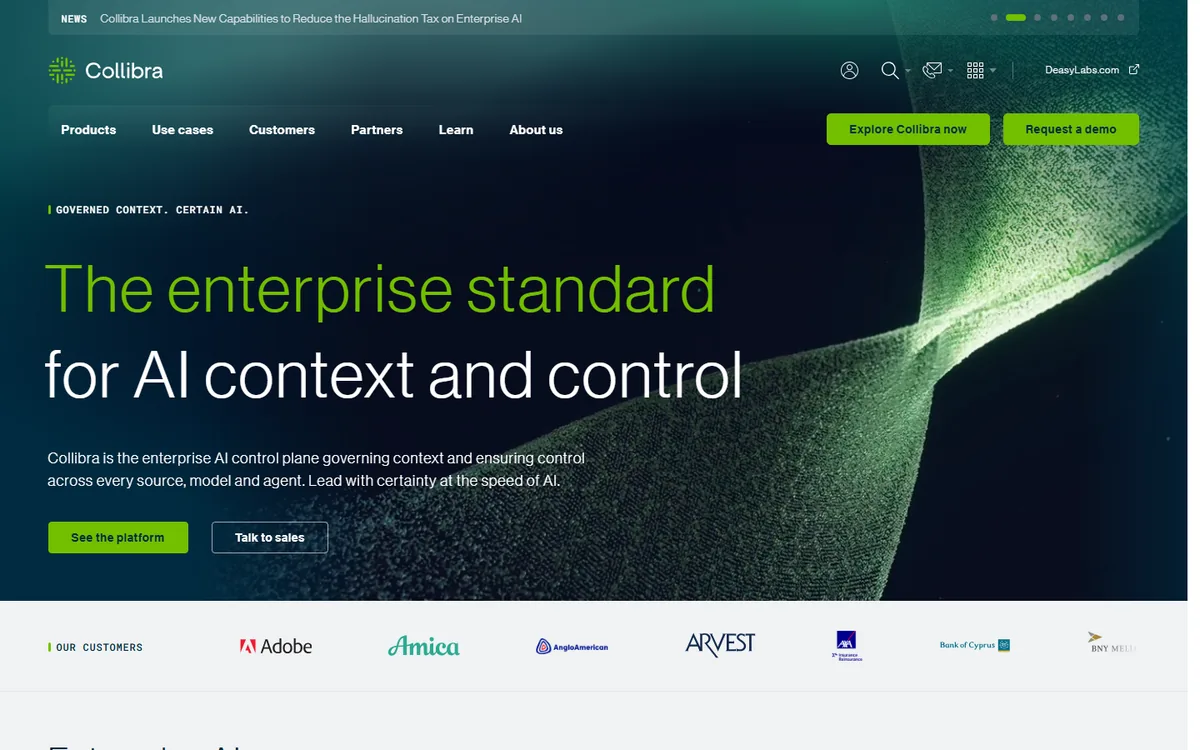
Collibra combines a data catalog, business glossary, lineage, data quality and observability, privacy controls and AI governance in one platform built around stewardship workflows.
Collibra is the tool I see most often at banks, insurers and healthcare groups, and for good reason. Its strength is the operating model it enforces. Every term in the glossary has an owner, every change runs through a workflow and every approval leaves a trail. When a regulator asks where a risk figure came from, you can walk the lineage back to the source table and show who signed off on each definition along the way.
The data quality and observability module sits inside the same platform, so a failed check shows up on the asset your business users already look at. Its AI governance features let you register AI use cases and link them to the datasets they use, which helps when legal wants to know what a model was trained on. The cost is effort. Collibra assumes you’ll staff data stewards and design workflows, and in my experience the first months go into configuration more than value. Smaller teams often find it heavy, and the interface takes some getting used to.
What Collibra Does Well
- Stewardship workflows leave a clean audit trail
- Quality results appear on the same asset pages as lineage
- AI use cases link straight to the data behind them
What Collibra Could Do Better
- Setup and workflow design take months
- Too heavy for teams without dedicated stewards
Collibra Pricing
Collibra doesn’t publish prices. Contracts are quote-based and depend on the modules you choose, such as catalog, data quality, privacy or AI governance, and on the number of users and data sources you connect.
Collibra Reviews
- G2: score of 4.2 out of 5 (from +100 customer reviews)
Atlan
The Catalog Data Teams Actually Open, Built for Snowflake, dbt and Databricks Stacks
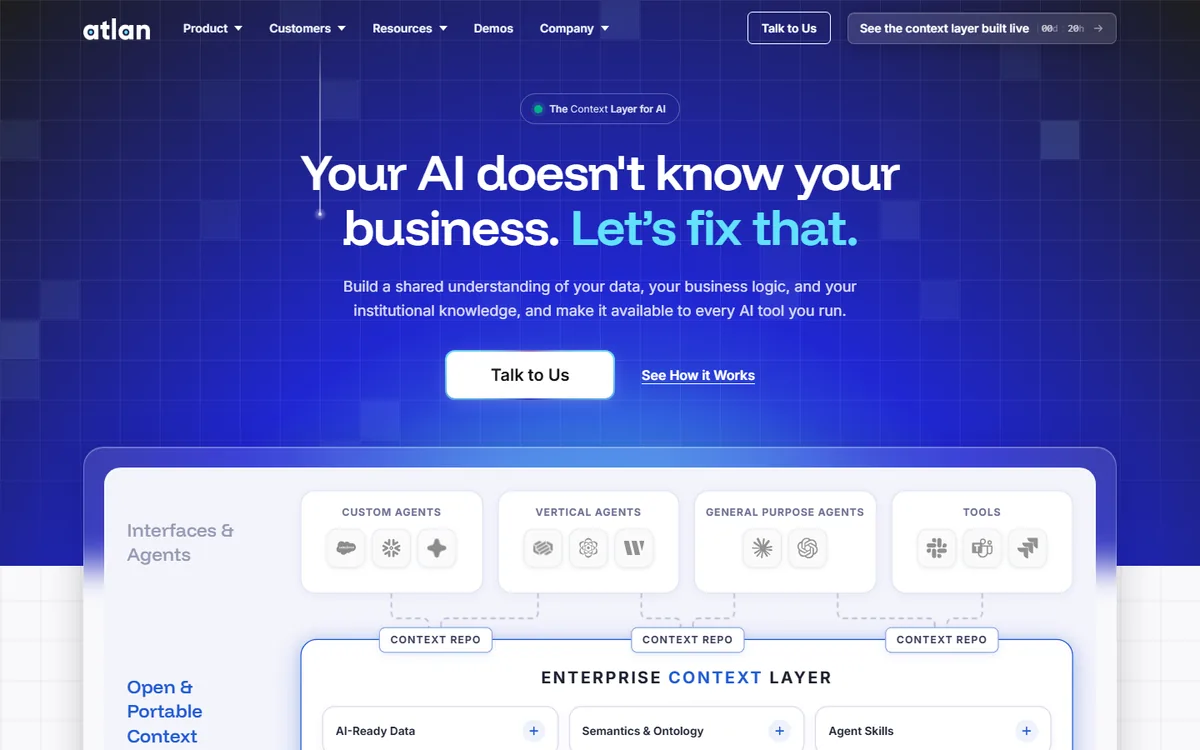
Atlan is an active metadata platform that pulls lineage, ownership and quality signals from your modern data tools and pushes them back into the places your team already works.
Atlan feels like a product built by people who were tired of catalogs nobody visited. It connects to Snowflake, Databricks, dbt, Looker, Tableau and the rest of a typical cloud stack, then builds column-level lineage across them without much manual mapping. The “active” part means the metadata moves. A dbt test failure can flag the downstream dashboard, and a deprecation note in Atlan can show up as a warning in the BI tool.
I like it most for adoption. Analysts can search in plain language, ask questions in Slack or Teams and see who owns a table without leaving their workflow, which matters more than any feature list. G2 names it a Leader in its active metadata category. Where I’m more careful is deep policy work: it handles ownership, tags and access policies well, but formal stewardship workflows for heavily regulated firms feel less mature than Collibra’s. Atlan also leans on other tools for the quality checks themselves, so plan for dbt tests, Monte Carlo or a similar layer next to it.
What Atlan Does Well
- Column-level lineage across the modern stack builds itself
- Metadata flows back into Slack, Teams and BI tools
- Analysts adopt it quickly with little training
What Atlan Could Do Better
- Formal stewardship workflows trail the older suites
- Quality checks mostly come from connected tools
Atlan Pricing
Atlan doesn’t list prices on its site. Its pricing page leads to a conversation with sales, and quotes depend on the connectors, users and features you need.
Atlan Reviews
- G2: score of 4.5 out of 5 (from +120 customer reviews)
Alation
A Strong Pick When Getting People to Find and Trust Data Is the Main Goal
Alation is a data intelligence platform with modules for catalog, lineage and quality, known for search that learns from how people actually query your data.
Alation was one of the first enterprise catalogs, and its core idea still holds up. It reads query logs to see which tables people use, who uses them and how, then ranks search results and suggests experts based on that behavior. For a company where analysts waste hours asking around for the “right” revenue table, that alone can justify the purchase.
Lineage is a frequent topic in its G2 reviews, along with search and efficiency gains, and the platform now sells catalog, lineage and quality as separate modules. Alation has also pushed hard into agents that answer data questions on top of the catalog. The weak spot I keep hearing about is integration: some connectors need more work than you’d expect, and reviewers mention gaps in the tooling around the catalog. If your main problem is regulatory control, Collibra fits better. If it’s adoption across a large analyst base, Alation is a safe, proven choice.
What Alation Does Well
- Search ranks data by real usage, so the trusted tables surface first
- Catalog, lineage and quality can be bought as separate modules
- A long track record with large analyst teams
What Alation Could Do Better
- Some connectors need extra setup work
- Policy and stewardship depth trails Collibra
Alation Pricing
Alation doesn’t publish plans or prices. Its pricing page asks you to start a conversation with sales, and the quote depends on the modules, such as catalog, lineage and quality, and on your scale.
Alation Reviews
- G2: score of 4.4 out of 5 (from +90 customer reviews)
Informatica Cloud Data Governance and Catalog
The Natural Choice If Informatica Already Moves Your Data, Now Under Salesforce
Informatica Cloud Data Governance and Catalog is the governance and catalog service inside Informatica’s cloud data management platform, which also covers integration, quality and master data.
Informatica has one advantage nobody else on this list can match: if its tools already move and clean your data, it sees the transformations from the inside. Lineage comes from the pipelines themselves, often down to the column, and quality scores from Informatica’s data quality service appear next to each asset in the catalog. Its CLAIRE AI engine suggests classifications, glossary links and owners, which speeds up the boring first pass of cataloging.
The ownership question is settled. Salesforce completed its acquisition of Informatica in November 2025 and plans to fold its catalog, governance and quality features into Data 360 and Agentforce. For Salesforce-heavy companies that’s good news. For everyone else, I’d ask your account team for a clear product roadmap before signing a multi-year deal. Reviewers like the interface but mention manual mapping and fiddly rule setup, and the G2 sample is small.
What Informatica Does Well
- Lineage comes straight from your Informatica pipelines
- Quality, catalog and master data share one platform
- AI suggestions speed up classification and tagging
What Informatica Could Do Better
- Roadmap now tied to Salesforce priorities
- Consumption pricing is hard to forecast
Informatica Pricing
Informatica sells its cloud services through Informatica Processing Units, a consumption model where you buy a pool of IPUs and spend them across eligible services, with a dashboard and alerts to track use. No dollar prices are published, so you need a quote.
Informatica Reviews
- G2: score of 4.3 out of 5 (from 14 customer reviews)
Microsoft Purview
The Obvious Starting Point for Companies Whose Data Lives in Azure and Fabric
Microsoft Purview pairs a data map that scans your sources with a Unified Catalog for business ownership, data quality and access, next to the sensitivity labels many companies already use for Microsoft 365.
Purview has two personalities, and it helps to know both. One half is security and compliance: sensitivity labels, data loss prevention and retention for files and email. The other half is data governance: the data map scans Azure SQL, Fabric, Power BI, Databricks and other sources, and the Unified Catalog lets business owners define data products, glossary terms and quality rules. The link between the two is the reason to pick Purview. A label set on a source can follow the data into reports and into Copilot.
Lineage is solid inside the Microsoft world, especially for Fabric and Power BI, and gets patchier once data passes through non-Microsoft tools. The governance side was rebuilt in recent years, and I’ve watched clients lose time to renamed features and moved menus. Reviewers praise how it fits Microsoft 365 and Azure and complain about instability. If you plan to roll it out in stages, the data readiness roadmap I use starts with one domain before you scan everything.
What Microsoft Purview Does Well
- Sensitivity labels connect data governance with Microsoft 365 security
- Strong lineage for Fabric and Power BI
- Pay-as-you-go pricing lets you start small
What Microsoft Purview Could Do Better
- Frequent renames and interface changes slow teams down
- Lineage thins out beyond Microsoft sources
Microsoft Purview Pricing
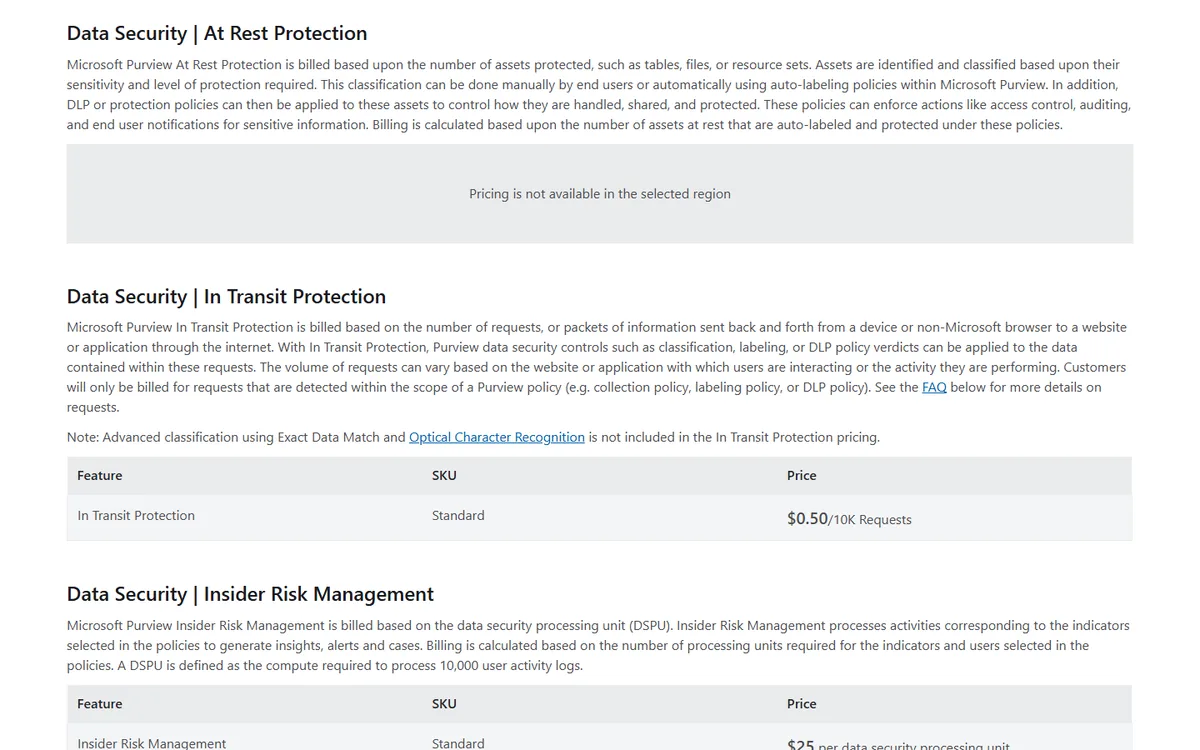
Purview data governance is pay-as-you-go. You pay per governed asset in the Unified Catalog, per Data Governance Processing Unit for quality and management work, and per vCore hour for scanning. Microsoft’s own pricing example puts 200 governed assets over 30 days at $100, and search, glossary and lineage come with the data map.
Microsoft Purview Reviews
- G2: score of 4.7 out of 5 (from 18 customer reviews of Microsoft Purview Data Governance)
Databricks Unity Catalog
The Best Way to Govern Tables, Models and Agents Together If You Run on Databricks
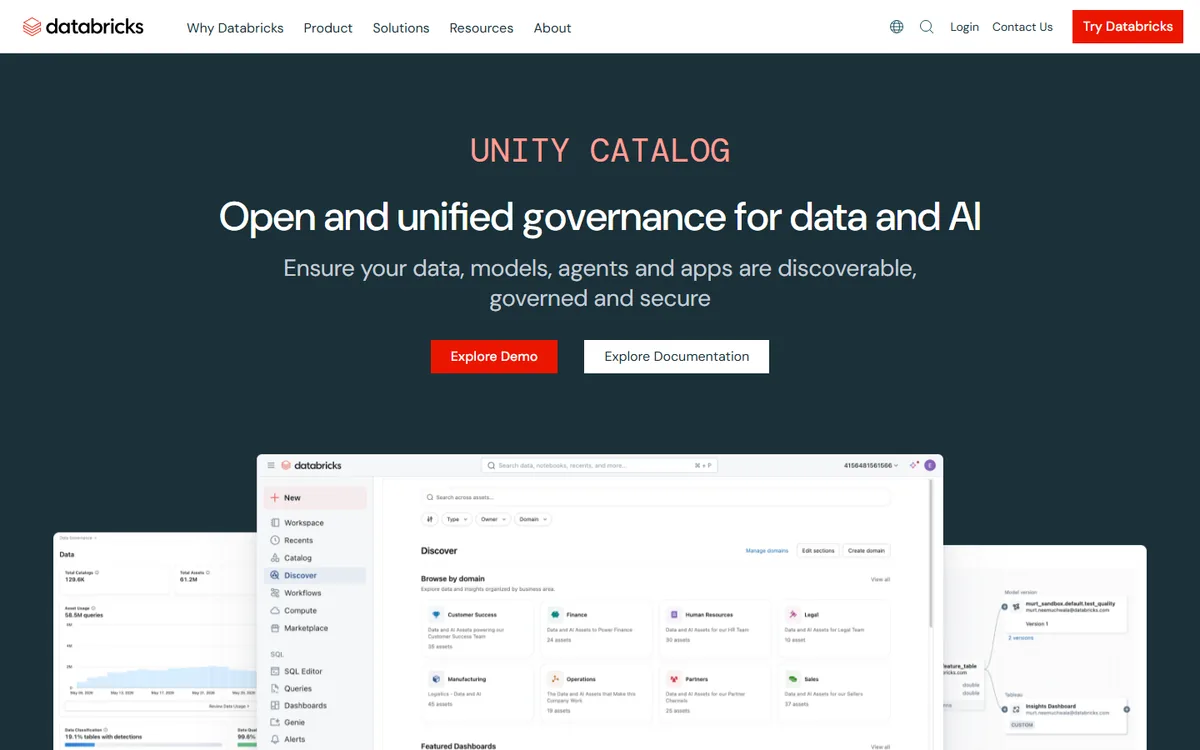
Unity Catalog governs data and AI assets on the Databricks platform, with automatic column-level lineage, attribute-based access control, quality monitoring and controls over what agents and models can reach.
If your data engineering and machine learning already run on Databricks, Unity Catalog is where I’d start, because it records everything without extra setup. Every query and job writes lineage automatically, down to the column, across notebooks, pipelines, dashboards and models. You don’t have to install scanners or wait for a nightly crawl. Access works on tags and attributes, so classifying a column as personal data can restrict it everywhere at once.
The AI angle is stronger here than on most of this list. Models, feature tables, functions and agents are governed objects next to your tables, and Databricks now lets you control which models, agents and MCP tools can reach which data. Quality monitoring flags freshness and anomaly problems on the same assets. The limits show up at the edges. Business users rarely log into Databricks, and data that lives outside the lakehouse gets thin coverage. The open-source version under the Linux Foundation eases lock-in worries, though at least one G2 reviewer still raised lock-in as a concern.
What Databricks Unity Catalog Does Well
- Column-level lineage is captured automatically on every job
- Data, models and agents share one permission model
- No separate license on Premium and Enterprise tiers
What Databricks Unity Catalog Could Do Better
- Little reach into data outside Databricks
- Not a natural home for business glossary work
Databricks Unity Catalog Pricing
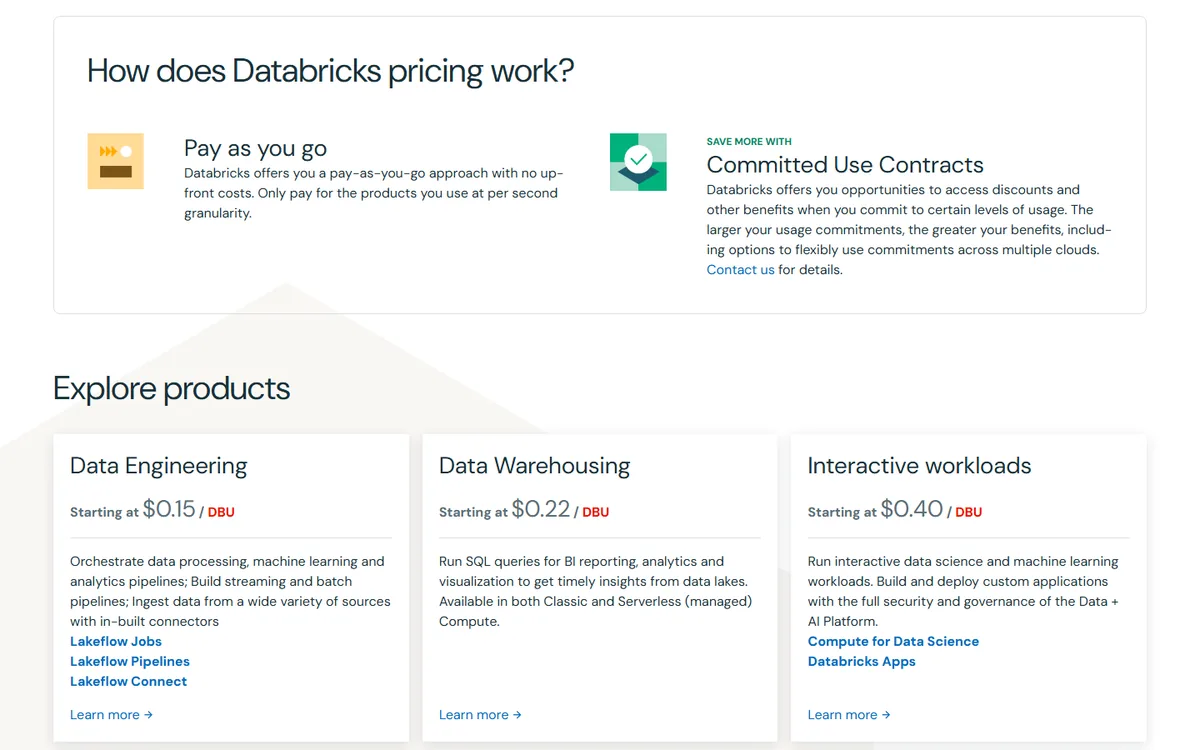
Unity Catalog needs no separate license. It comes with the Databricks Premium and Enterprise tiers, and you pay for the compute and storage you use. An open-source version is available under the Linux Foundation.
Databricks Unity Catalog Reviews
- G2: score of 4.6 out of 5 (from +1,300 customer reviews of the Databricks platform listing, which covers Unity Catalog)
Google Cloud Knowledge Catalog
A Low-Effort Governance Layer for Teams That Keep Their Data in BigQuery
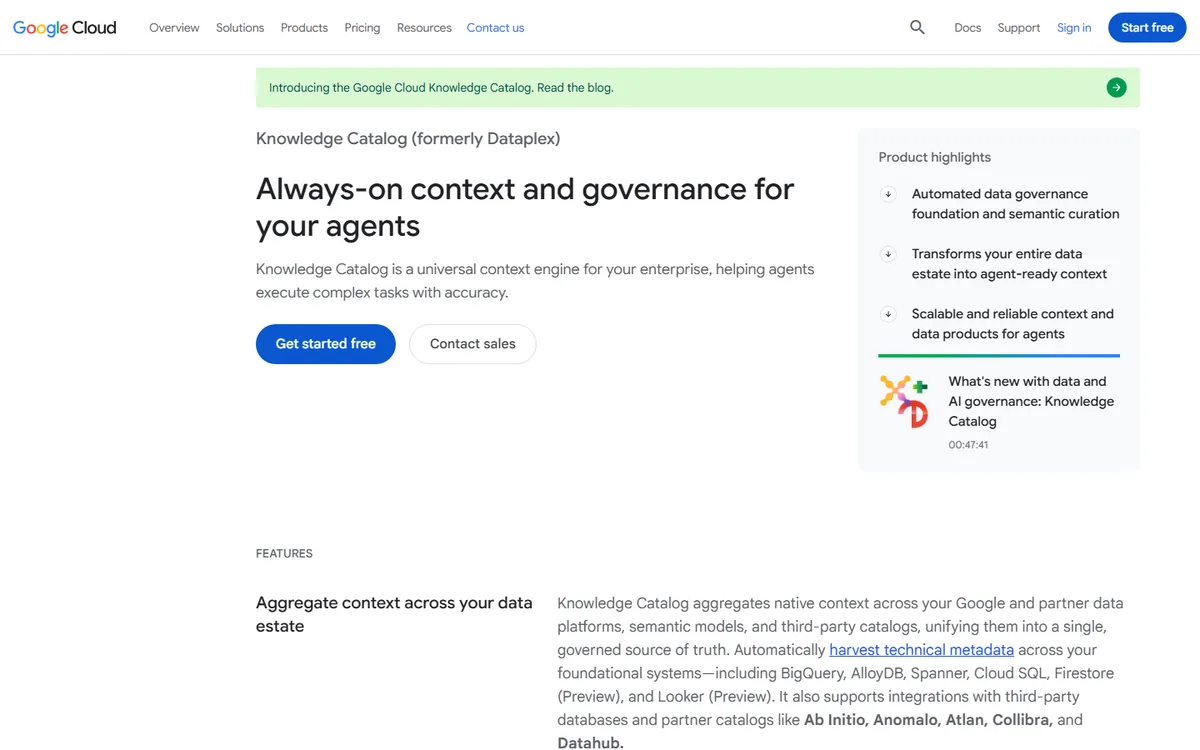
Knowledge Catalog, the product Google previously called Dataplex Universal Catalog, catalogs Google Cloud data and adds column-level lineage, quality scans, profiling and a business glossary.
Google has renamed this product more than once, so don’t be thrown if you search for Dataplex and land on Knowledge Catalog. The idea stays the same. BigQuery tables, Cloud Storage files and other Google Cloud assets appear in one searchable catalog without a separate install. Lineage traces column-level transformations through BigQuery jobs and supported pipelines, which makes a broken field easier to chase back to its source.
The quality features are better than people expect. You write reusable rules for nulls, ranges and formats, run scheduled scans, and let machine learning flag outliers and freshness problems. Profiling scans spot schema changes and drift. The glossary maps your internal metric names to shared business terms, which also helps Gemini and other AI tools understand what a column means. As with Purview and Unity Catalog, coverage drops off fast once data leaves the vendor’s cloud, and stewardship workflows are basic. For a BigQuery-first company it’s the cheapest way to get started.
What Google Cloud Knowledge Catalog Does Well
- Google Cloud assets show up with no extra setup
- Quality scans combine your own rules with anomaly detection
- Glossary terms help AI tools read your data correctly
What Google Cloud Knowledge Catalog Could Do Better
- Repeated renames confuse documentation and teams
- Weak coverage for data outside Google Cloud
Google Cloud Knowledge Catalog Pricing
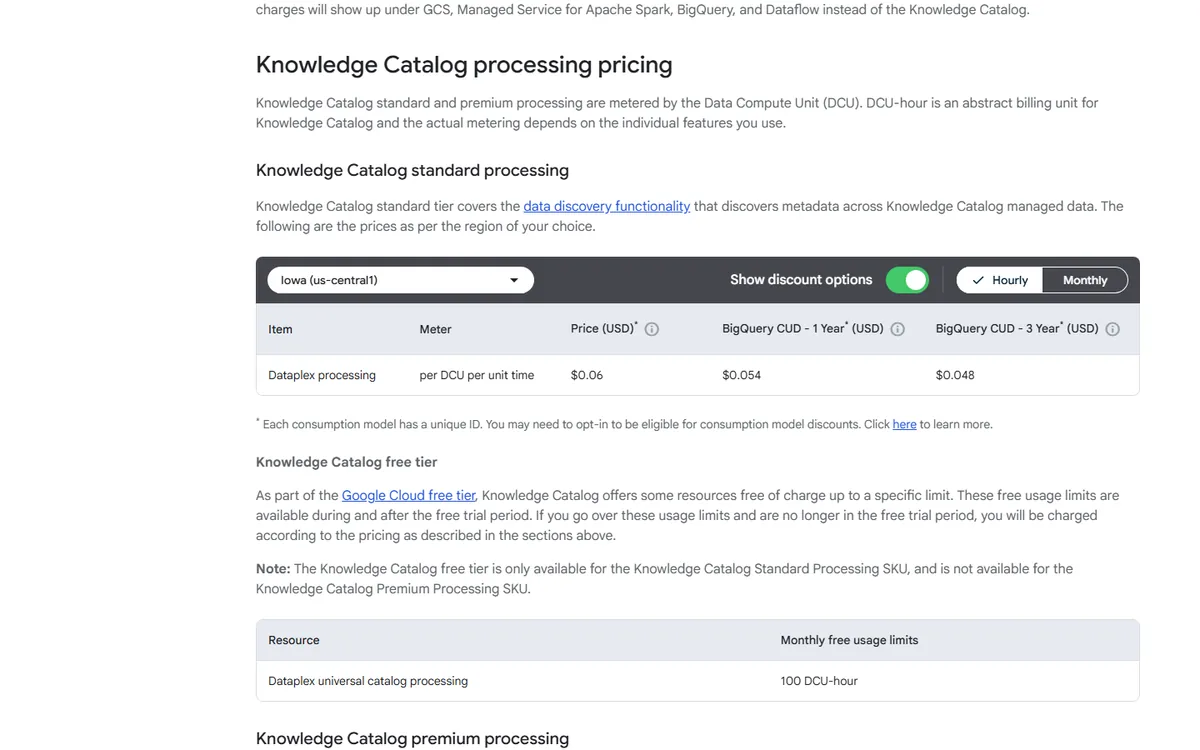
Knowledge Catalog is billed by usage on your Google Cloud account. You pay for the processing that runs quality, profiling and discovery scans and for metadata storage, at the rates on Google’s pricing page for your region.
Google Cloud Knowledge Catalog Reviews
- G2: score of 4.3 out of 5 (from 17 customer reviews on the former Google Dataplex listing)
Ataccama ONE
The Quality-First Platform for Companies Fighting Duplicate and Inconsistent Records
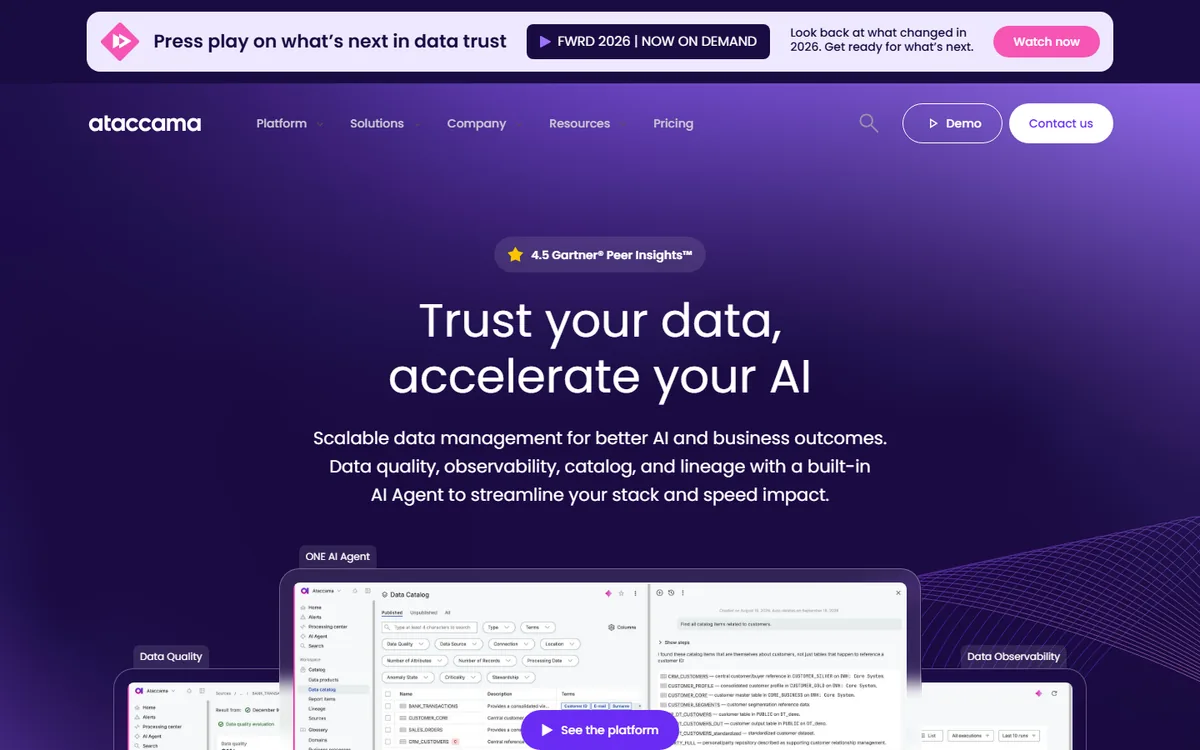
Ataccama ONE combines data quality, observability, master data management and a catalog, with AI that suggests and generates quality rules.
Ataccama comes at governance from the quality side, and I recommend it when the real problem is the data itself. Think of three customer records for the same person, product codes that differ between ERP and webshop, or addresses typed five different ways. Its rule engine handles complex checks and fixes, and the master data module merges duplicates into one golden record. The catalog and lineage then show where those records travel next.
For AI projects, that order makes sense. A model trained on duplicated customers learns the wrong patterns, so cleaning comes before governance paperwork, a sequence I explain in my AI data strategy framework. Ataccama’s pricing model is also refreshingly clear about what counts. The catch is the learning curve: several G2 reviewers mention needing proper training, and setup is closer to an enterprise project than a quick install. Reviewers do rate its support and configurability well.
What Ataccama ONE Does Well
- Deep rule engine for complex quality checks and fixes
- Master data management in the same platform
- View-only users aren’t capped on any tier
What Ataccama ONE Could Do Better
- Steep learning curve without formal training
- Catalog features trail the dedicated catalogs
Ataccama ONE Pricing
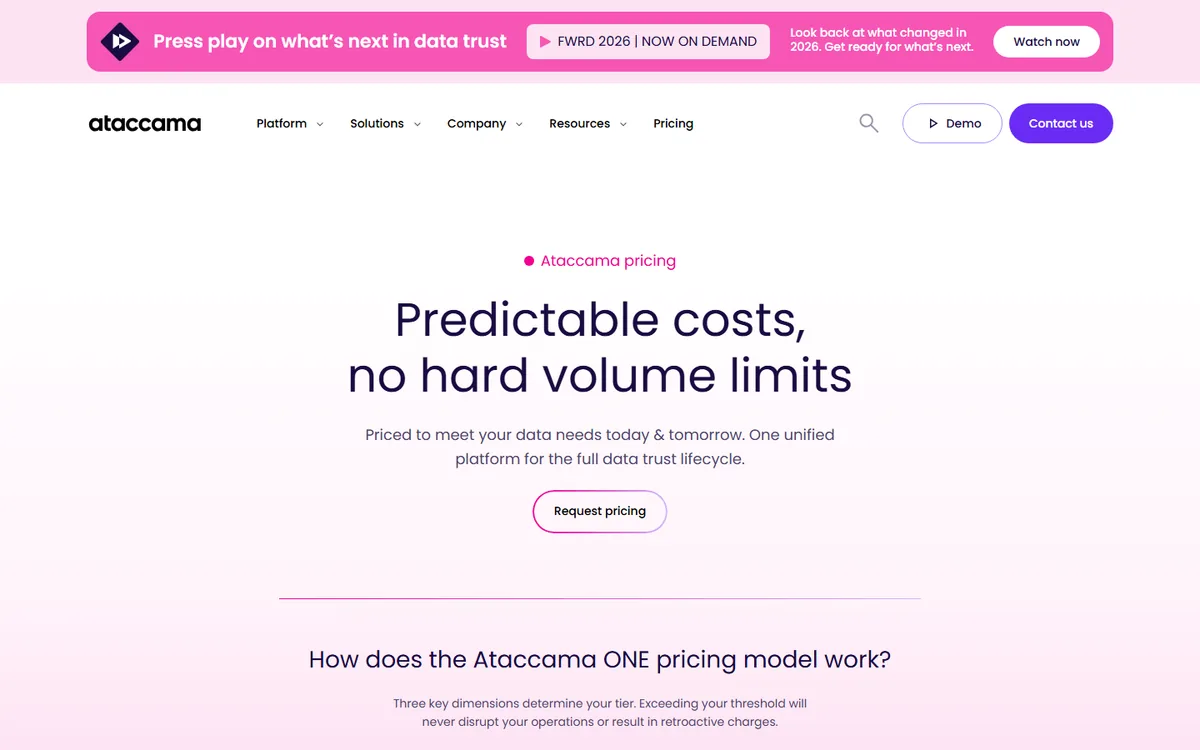
Ataccama prices in tiers without published dollar figures. Your tier depends on named users with full access, the number of data objects you manage and active quality configurations. Limits are soft, consumer users are unlimited and each named user gets an annual allowance of AI queries.
Ataccama ONE Reviews
- G2: score of 4.2 out of 5 (from +10 customer reviews)
Monte Carlo
The Early Warning System That Catches Broken Pipelines Before Your Dashboards and Models Do
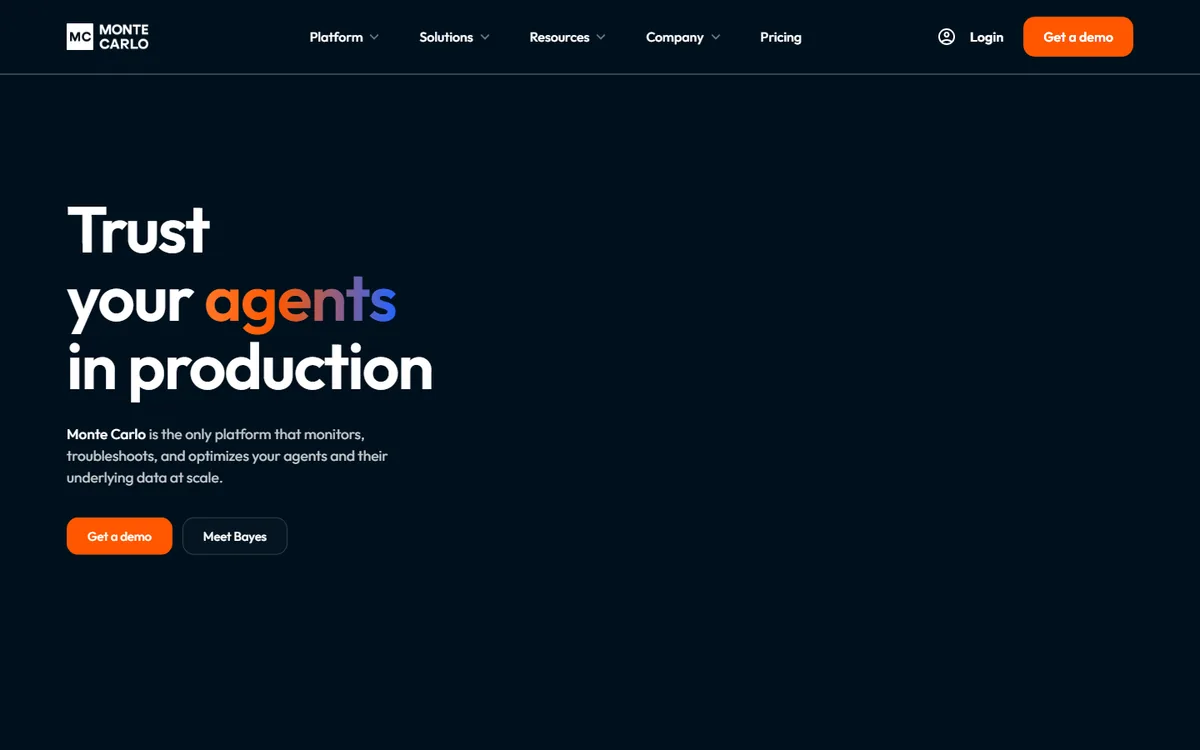
Monte Carlo is a data and AI observability platform that monitors freshness, volume, schema and values across your stack and uses lineage to show what a failure breaks downstream.
Monte Carlo isn’t a governance suite, and it doesn’t pretend to be. I include it because quality is half of what this list is about, and no catalog catches a silent pipeline failure as fast. It learns normal patterns for your tables and alerts you when a load arrives late, row counts drop or a field suddenly fills with nulls. Field-level lineage then shows which reports, models and teams are affected, so the right owner hears about it first.
It has the largest review base of any tool here on G2, and reviewers praise its ease of use. The complaint I hear from clients matches the reviews: alert overload. Switch on monitoring everywhere and your team will start muting channels within weeks. Start with the tables that feed revenue reporting or a production model, tune thresholds and add coverage from there. Monte Carlo now monitors AI outputs too, which helps if you run agents on top of your warehouse.
What Monte Carlo Does Well
- Anomaly detection works with little manual rule writing
- Lineage shows exactly what a broken table affects
- Monitoring extends to AI outputs
What Monte Carlo Could Do Better
- Alert noise builds up without careful tuning
- Needs a catalog next to it for full governance
Monte Carlo Pricing
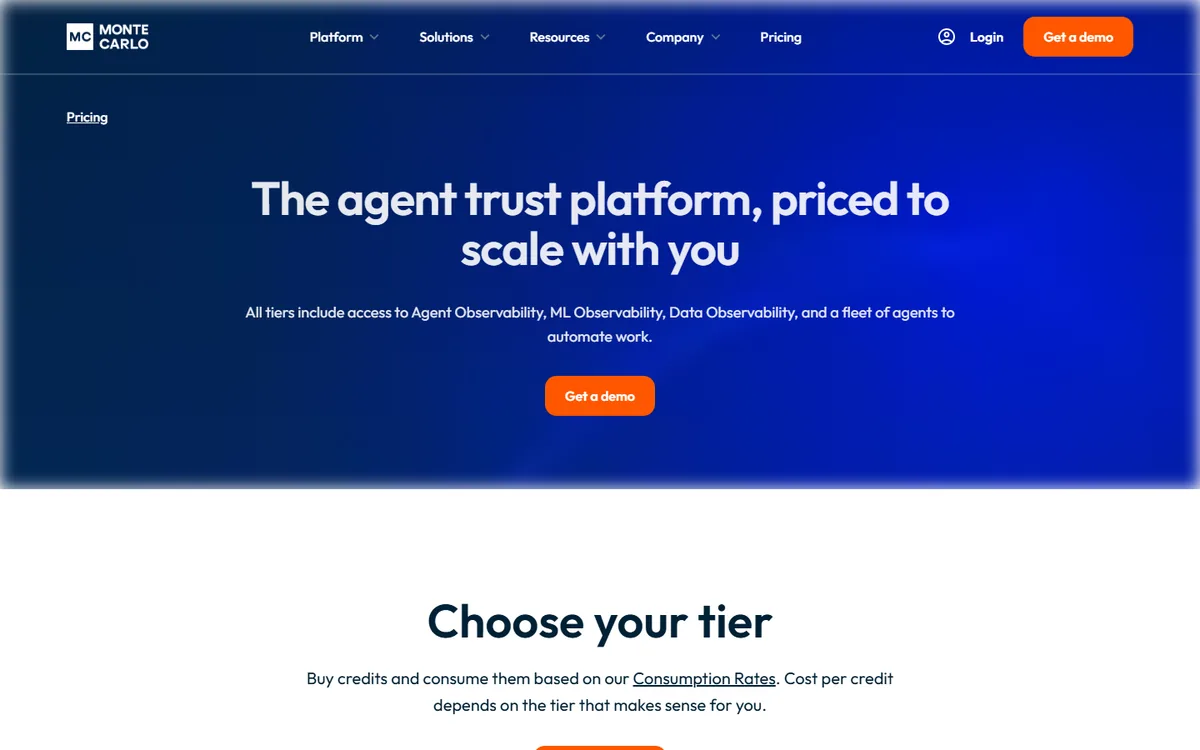
Monte Carlo sells Start, Scale, Enterprise and Business Critical plans with pay-per-monitor pricing. You buy credits and spend them at published consumption rates, and the price per credit depends on the tier. Start allows up to 10 users and 1,000 monitors, the higher tiers allow unlimited users, and dollar prices come with a quote.
Monte Carlo Reviews
- G2: score of 4.3 out of 5 (from +500 customer reviews)
Secoda
A Lighter All-in-One Option for Mid-Sized Teams on a Modern Data Stack
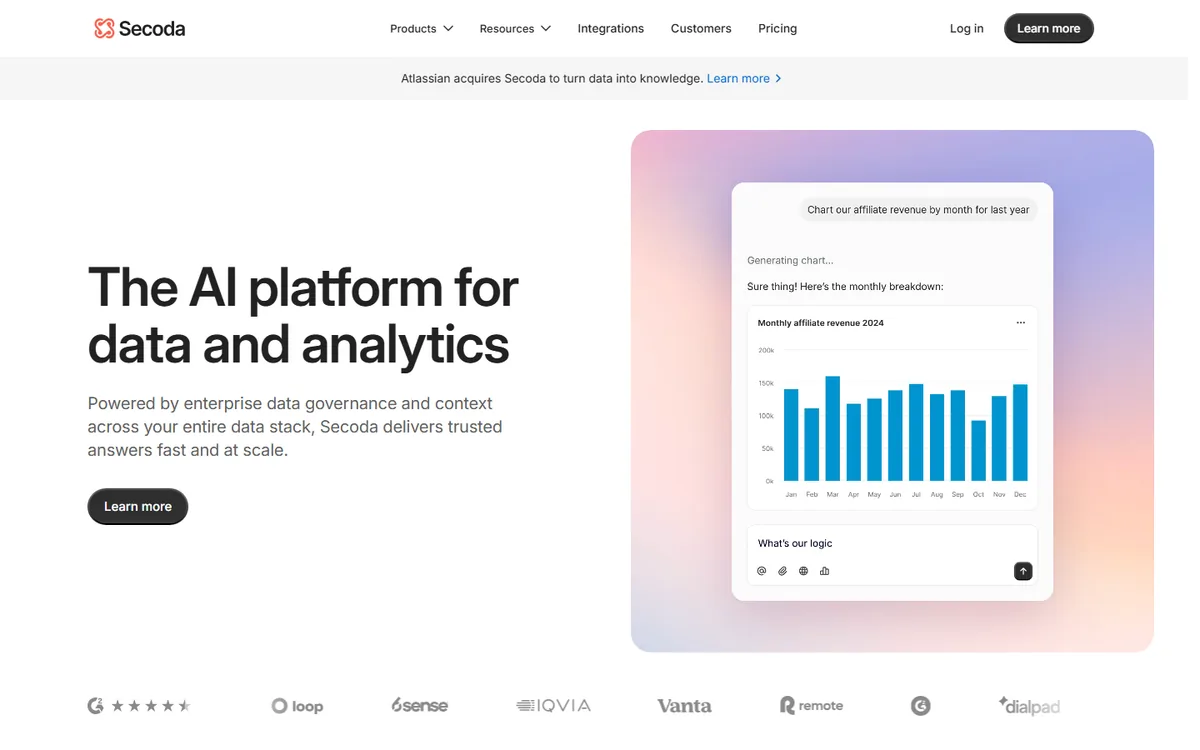
Secoda puts a catalog, lineage, quality monitoring and an AI assistant into one tool aimed at data teams that don’t want to stitch several products together.
Secoda earns its place for teams that find the big suites too much. It connects to Snowflake, dbt, BigQuery, Tableau and similar tools, builds lineage across them and lets you add owners, descriptions and quality checks in one workspace. The AI assistant answers questions like “which table holds active customers?” using your catalog, which cuts the stream of repeat questions to the data team.
Most of its G2 reviewers come from mid-market companies, and that matches where I’d use it. Lineage and easier data discovery are the features they praise most. The criticism centers on setup: non-technical users find the team and permission structure confusing, and there are small bugs, though reviewers say support fixes them fast. You won’t get Collibra-style stewardship workflows or deep master data features. For a data team of a dozen people that wants governance working this quarter, I’d take that trade.
What Secoda Does Well
- Catalog, lineage and quality checks in one workspace
- AI assistant cuts repeat questions to the data team
- Quick to roll out on a modern cloud stack
What Secoda Could Do Better
- Team and permission setup confuses non-technical users
- Lighter policy features than the enterprise suites
Secoda Pricing
Secoda offers Core, Premium and Enterprise plans. The pricing page doesn’t show dollar amounts, and each plan leads to a sales contact for a quote.
Secoda Reviews
- G2: score of 4.5 out of 5 (from +50 customer reviews)
Estimate the Return on a Data Governance Tool
Governance pays off mostly in hours: analysts who stop hunting for the right table, engineers who find the cause of a broken report in minutes, stewards who stop answering the same question twice. Enter the hours your team loses each month and the monthly cost of the tool you’re looking at to check if the numbers hold up.
Will It Pay for Itself?
Move the sliders to match the work you want to automate and the plan you are considering.
How to Choose an AI Data Governance Tool
Start with where your data lives and who will maintain the metadata. A great catalog that only the data team opens governs very little. Before you book demos, answer these questions:
- Does most of your data sit on one cloud platform, or is it spread across many tools?
- Is your bigger problem finding and trusting data, or bad data itself?
- Do regulators or auditors need formal approvals and a trail for every definition?
- Who will own the glossary, the quality rules and the access policies day to day?
If you’re all-in on one cloud, start with Purview, Unity Catalog or Knowledge Catalog and see how far it gets you. For regulated enterprises with many sources, Collibra is my first call, with Informatica a strong option if it already runs your pipelines. Modern cloud stacks fit Atlan or Alation, and smaller teams fit Secoda. When bad data is the main pain, add Ataccama or Monte Carlo before you spend on a bigger catalog. In my client work, the projects that work pilot one domain, such as customer or finance data, and only scale once owners are actually updating it.
Questions About AI Data Governance Tools
What Does an AI Data Governance Tool Actually Do?
It keeps track of what data you have, where it came from, who owns it and how far you can trust it. Most tools combine a searchable catalog, lineage that shows how data moves between systems, quality checks and access policies. The AI part works in two directions: the tools use AI to tag and describe data for you, and they govern the data your AI models and agents are allowed to use.
What Is the Difference Between a Data Catalog and a Data Governance Tool?
A catalog helps people find and understand data. A governance tool adds the rules around it: owners, approval workflows, policies, quality standards and audit trails. The line has blurred, and most products on this list now do both. When you compare them, check how deep the policy and stewardship side goes, because that’s where catalogs with a governance label tend to be thin.
Do I Need a Separate Data Quality Tool If My Catalog Has Quality Features?
Often not at first. Built-in checks in Unity Catalog, Knowledge Catalog, Purview or Collibra cover freshness, volume and simple rules for many teams. I add a specialist like Monte Carlo or Ataccama when pipelines feed revenue reports or AI models and a silent failure would cost real money, or when quality rules get too complex for the catalog to manage.
How Much Do AI Data Governance Tools Cost?
Most enterprise platforms on this list don’t publish prices and quote based on users, data assets or connectors. Cloud-native options charge for usage: Purview bills per governed asset and processing unit, Knowledge Catalog bills for processing and metadata storage, and Unity Catalog comes with Databricks Premium and Enterprise tiers at no separate license fee. Budget for setup and stewardship time too, which often costs more than the license.
Which Data Governance Tool Is Best for a Small or Mid-Sized Company?
If your data already sits in Databricks, Google Cloud or Azure, start with the governance layer you already pay for. If you run a modern stack with Snowflake, dbt and a BI tool, Secoda and Atlan are easier to roll out than the large enterprise suites. Pick the one your analysts will actually open, because an unused catalog governs nothing.
How Long Does It Take to Implement a Data Governance Tool?
Connecting sources and pulling in metadata can happen within weeks. The slow part is the people work: naming owners, agreeing on definitions and writing quality rules for the data that matters. In my client work, the first useful domain usually goes live within a quarter, and a company-wide rollout takes considerably longer.
Can These Tools Govern AI Models and Agents Too?
Several can. Unity Catalog governs models, agents and tool access next to tables. Collibra, Atlan and Alation track AI use cases and the data behind them, and Purview applies sensitivity labels that carry into Microsoft AI tools. For model risk reviews and regulatory documentation you may still need a dedicated AI governance product, so check what each vendor covers today.
Sources
- Salesforce: Salesforce Completes Acquisition of Informatica
- Google Cloud: Knowledge Catalog Overview
- Microsoft Azure: Microsoft Purview Pricing
- Databricks: Unity Catalog
- Ataccama: Pricing
- Monte Carlo: Pricing
Disclaimer: Prices, plans, product names and ratings change often. They were checked when this article was last updated, so confirm them with each vendor and on G2 before you buy. Nothing here is legal, compliance or financial advice.
Did you find this helpful?
Thank you for your feedback.
Marlena leads the WiseCrow editorial team and works with our consultants to turn real client projects into practical guides on AI strategy, automation and governance. Before joining WiseCrow, she spent 12 years in B2B operations and SaaS content. She has since edited more than 400 articles on AI and automation and reviewed workflows from over 60 client projects. She is based in Austin, Texas.