Summary
- Plan your AI data work across eight pillars, from business alignment and quality through access to governance roles and the operating model.
- Give every pillar one concrete artifact, such as a quality scorecard or an access matrix, so progress is visible and checkable.
- Score each pillar from level 1 to level 5 with the maturity table and fix the lowest pillar your first use case depends on.
- Add coverage to the classic quality dimensions and carry permissions into every AI data store, since those two gaps cause most AI-specific data failures.
Ask five people in a company what “AI-ready data” means and you’ll get five answers. The data engineer talks about pipelines. Legal talks about consent. The analyst wants one definition of revenue. All of them are right, and none of them has the full picture. In my AI data strategy consulting work, I use a framework of eight pillars to put those answers on one page, in an order that starts with what the business wants from AI and ends with who keeps the data in shape once the first model is live.
You’ll find the eight pillars in one table, a short section on each, a maturity table you can score yourself against and a few patterns I see in the scores. The framework tells you what has to be true. The calendar comes later.
The Eight Pillars at a Glance
Each pillar answers one question and produces one artifact. If you can’t point to the artifact, treat the pillar as open, however much work has gone into it.
| Pillar | What it tells you | Artifact that proves it |
|---|---|---|
| 1. Business Alignment | Which data earns its keep? | Use case to data map |
| 2. Data Quality | Can a model trust it? | Quality scorecard |
| 3. Architecture and Integration | How does data reach AI? | Target data flow |
| 4. Unstructured Data | Which documents count? | Approved content set |
| 5. Metadata and Lineage | What does it mean, where from? | Glossary and lineage |
| 6. Security and Access | Who may see what? | Access matrix |
| 7. Governance Roles | Who decides? | Decision rights table |
| 8. Operating Model and Metrics | Who runs it after launch? | Monthly data review |
The order matters. Pillars one to four decide what data you need and how good it has to be. Pillars five to eight make sure it stays understandable, safe and owned. Quality sits near the top on purpose, since you can only judge it once you know the use. Governance sits at the bottom because it holds the rest in place.
1. Business Alignment
Data strategy goes wrong most often at the very start, when it begins with the data. Someone lists every system, a team profiles every table, and six months later there’s a large report with no AI in sight. Gartner warned in February 2025 that through 2026, organizations will abandon 60% of AI projects that aren’t supported by AI-ready data. I read that figure as an argument for focus. You can’t make all data AI-ready. You can make the data behind three use cases ready.
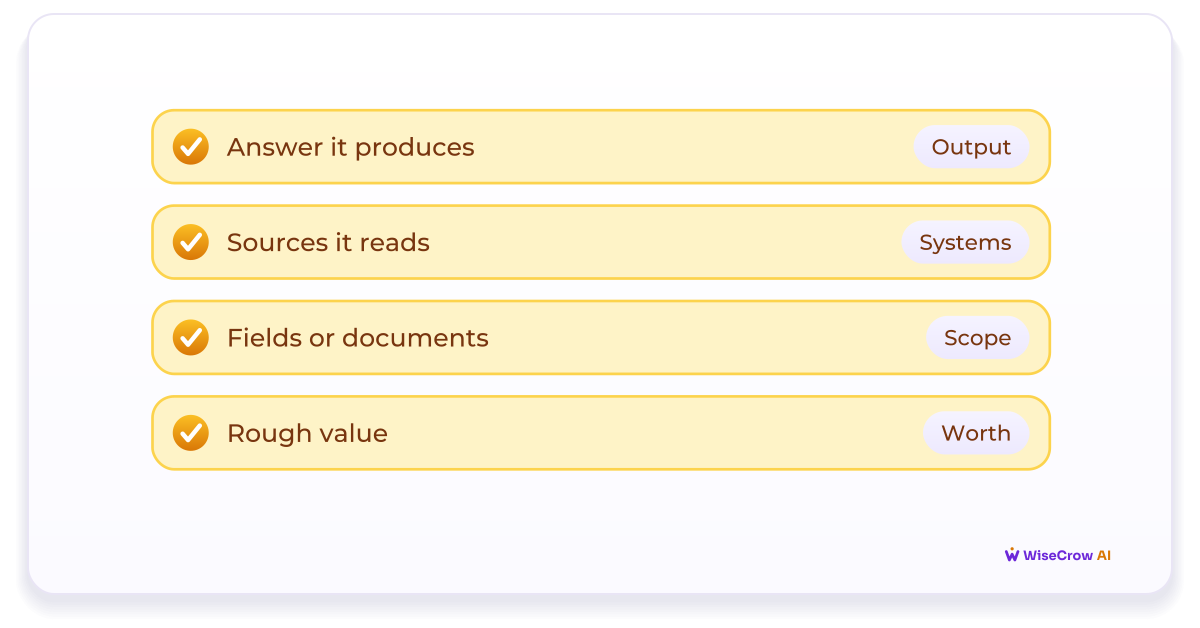
The artifact is a use case to data map. List your top two or three AI use cases. For each, name the decisions or answers it produces, the sources it reads, the fields or documents it needs and a rough value. A churn model needs billing history, product usage and support contacts. A policy assistant needs the current handbook and nothing else. Once the map exists, every later pillar has a scope, and data work you can’t connect to a row on the map waits.
2. Data Quality
Quality only means something against a use. A customer table with 8% missing phone numbers is fine for a churn model and useless for a call-routing assistant. So score quality per use case, on the fields the map says it needs, using real samples.
| Dimension | What you test | Example check |
|---|---|---|
| Completeness | Required fields filled | Orders with a ship date |
| Accuracy | Values match reality | Spot-check 50 records |
| Consistency | Systems agree | CRM and ERP customer counts |
| Freshness | Data arrives on time | Ticket feed under an hour old |
| Uniqueness | No duplicates | One record per customer |
| Validity | Formats and ranges hold | One date format |
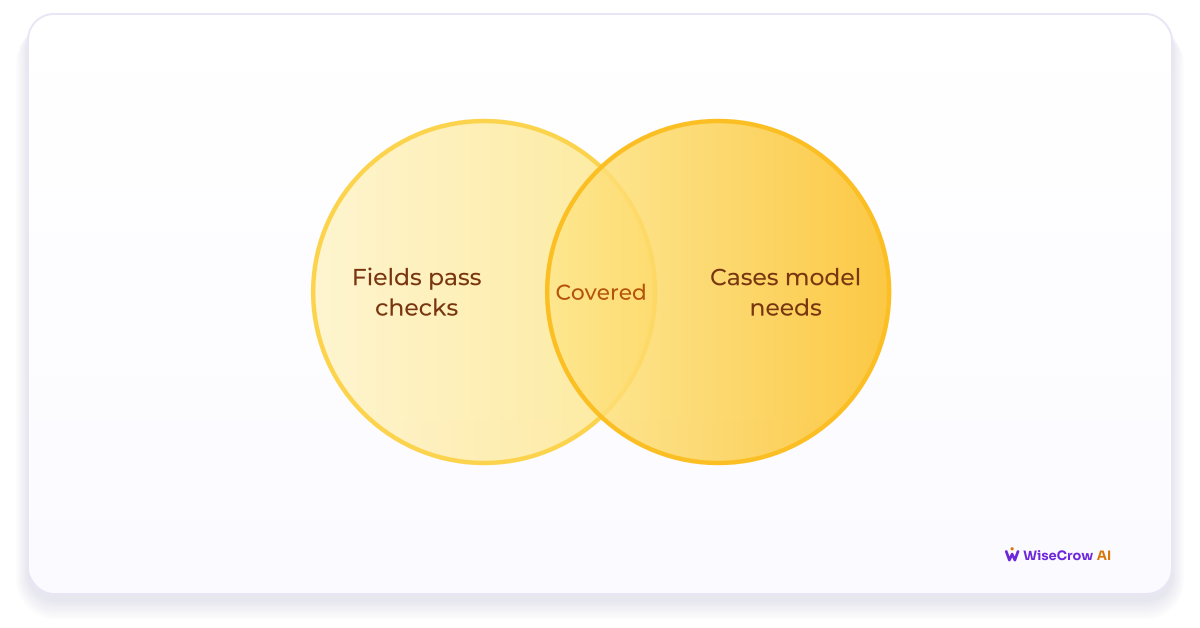
| Coverage | All real cases present | Every region in the history |
The first six are the classic dimensions. Coverage is the one I add for AI. A forecasting model trained on three years of orders from two regions will make confident guesses for the third region it has never seen. Every classic check can pass while coverage fails.
Set a threshold per field and use, write it into the quality scorecard and run the checks on a schedule. A one-off profile tells you where you stood in March. Scheduled checks tell you when a source system update broke the date format last Tuesday.
3. Architecture and Integration
Architecture answers how data gets from where it lives to where AI reads it, how often and through which steps. I keep this pillar short on purpose, because the right answer depends on the platforms you already pay for. Three patterns cover most mid-sized companies I work with:
- Direct reads: the AI tool calls a source system’s API at the moment it needs the data. Good for one or two sources and live lookups, such as order status in a support assistant.
- Central store: pipelines copy data from several systems into a warehouse or lakehouse, where it gets joined and cleaned. Good for models that need history and data from many places.
- Retrieval layer: documents get split into passages and indexed, often in a vector store, so an assistant can look them up before it answers. Good for knowledge work.
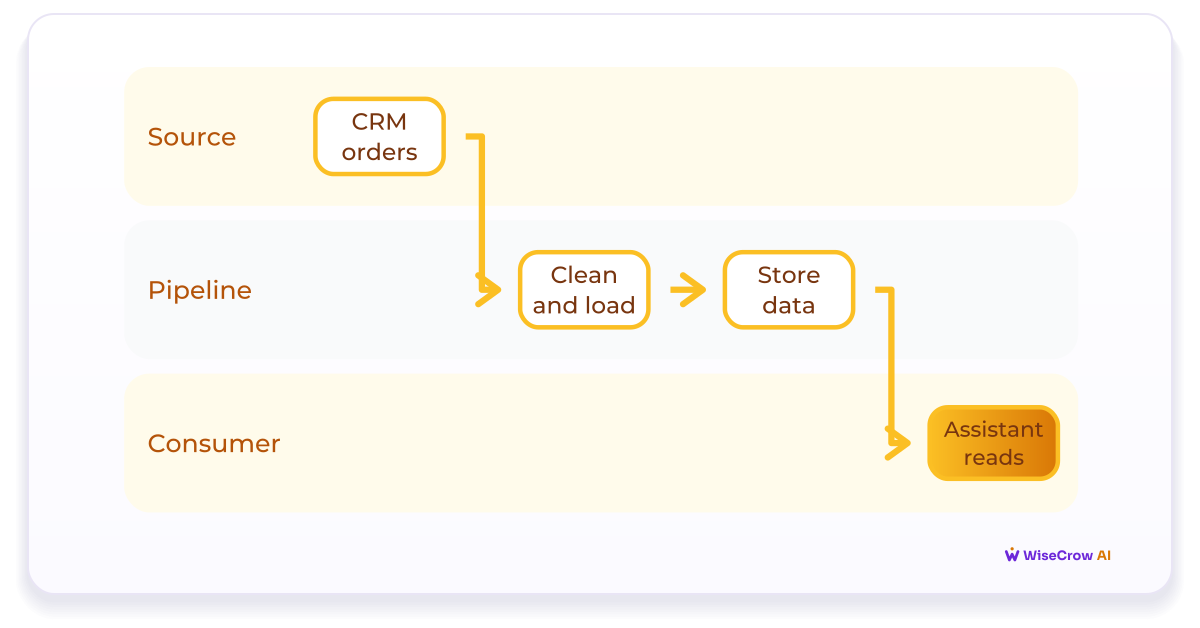
Most AI programs end up with all three. The artifact is a target data flow: one drawing per use case showing source, pipeline, store and consumer, with refresh times written on the arrows. Draw it before buying anything. Half the time, the warehouse you already have can do the job with two new pipelines.
4. Unstructured Data and Knowledge
Contracts, emails, wiki pages, PDFs and support tickets hold much of what a company knows. Older data strategies left them out because reporting tools couldn’t read them. Generative AI reads them all, including the ones it shouldn’t.
The work here is curation. Pick the content set a use case needs. Remove duplicates and retire old versions, so the assistant can’t quote last year’s price list. Pull clean text from scans. Then tag each item with its source, owner, date, sensitivity and audience. The artifact is an approved content set with an owner for each folder or collection and a rule for how changes reach the index.
A professional services client of mine indexed a whole shared drive for an internal assistant. Within a week it answered a question about travel rules with a draft policy that had never been approved. The fix took a month: a content owner for each collection, a “current” tag and a nightly sync. The second assistant on the same content set took two weeks to launch.
5. Metadata and Lineage
Metadata tells people and systems what a field or document means, where it came from and how fresh it is. Lineage traces a number or a passage back through every pipeline step to its source. Together they make AI output explainable. When a model gives an odd forecast, lineage shows you in minutes which source changed.
Start small. A business glossary with the twenty terms your use cases depend on, such as active customer, net revenue or open ticket, does more good than a catalog of ten thousand tables nobody reads. For every key field, record five things: definition, owner, source system, refresh rate and known issues. Lineage can begin as a column in the target data flow and move into a tool once pipelines multiply. My ranking of AI data governance tools compares the catalogs and lineage features that help at that stage.
6. Security, Privacy and Access
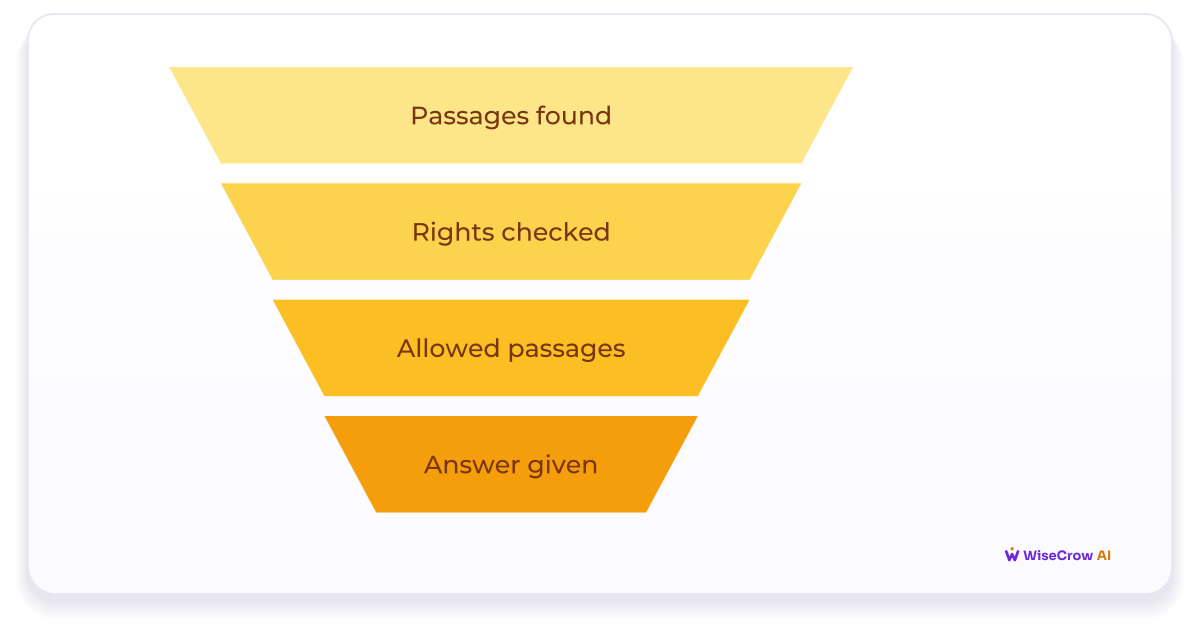
Every time data gets copied for AI, its access rules risk staying behind. A file only HR could open becomes a passage in an index that the whole company can search. In my client work, it’s the most common serious finding in a data review, and it’s almost always accidental.
The artifact is an access matrix: for each data source and content set, who may read it, which AI uses may touch it and what masking applies. Personal and confidential fields get flagged at the source. The rule I push hardest is to check permissions when the user asks the question, against the original system’s rights, so an assistant only returns what that person could already open.
Privacy rules decide which personal data may go into which models at all. Check which laws apply in each market you serve and their current status with your privacy team, and record the outcome in the matrix next to the data it covers.
7. Governance Roles and Decision Rights
Governance in a data strategy comes down to one thing: when a question about data comes up, everyone knows who decides. Without that, definitions drift, exceptions pile up and every argument ends up in IT, which can’t judge if a customer record is correct.
The minimum cast is small. A business data owner for each key dataset decides what correct means. A data steward looks after quality checks and fixes. A security or privacy lead approves sensitive uses. The artifact is a decision rights table like this one:
| Decision | Who decides | Who is consulted |
|---|---|---|
| Meaning of a key field | Business data owner | Steward, analysts |
| New source for an AI use | Data owner | Security, legal |
| Personal data in a model | Privacy lead | Owner, legal |
| Quality bar for go-live | Use case owner | Data steward |
| Retiring a document set | Content owner | Knowledge lead |
| Exception to access rules | Security lead | Data owner |
Put a person’s name in each cell. A role without a person is still an open gap. For the AI side of governance, such as risk tiers and model monitoring, the NIST AI Risk Management Framework is free and fits neatly next to these data roles.
8. Operating Model and Metrics
The last pillar asks who keeps all of the above alive after the first launch. Pipelines break, owners change jobs and new documents arrive every day. A data strategy without an operating model looks great for one quarter.
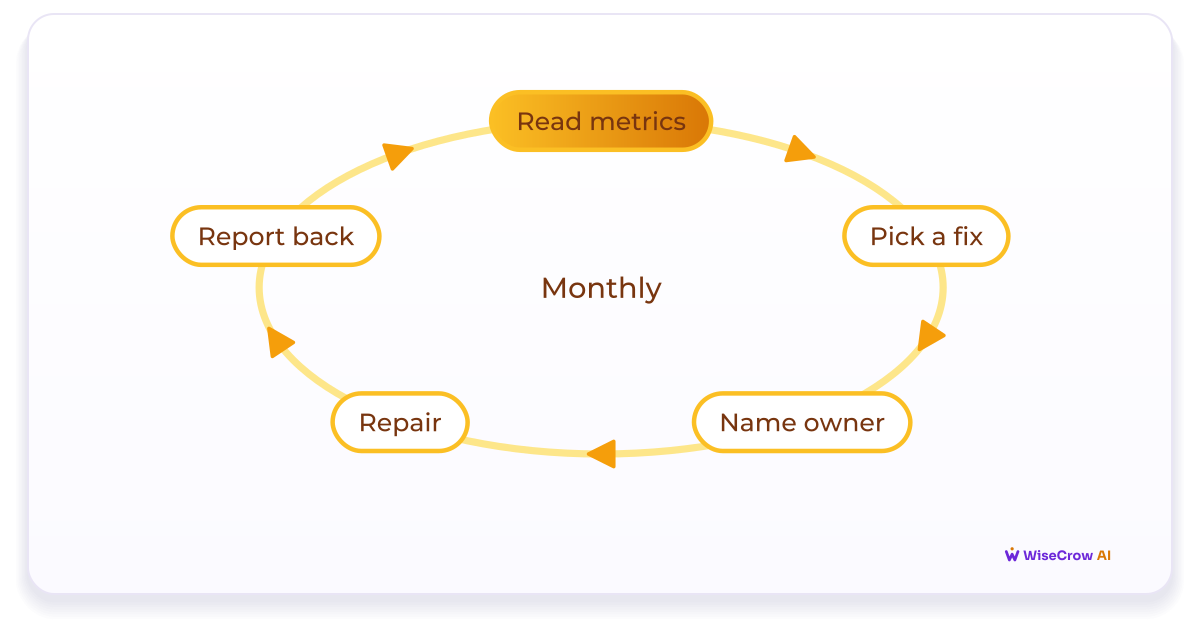
For most mid-sized companies, the right setup is a small central team that owns the platform, the glossary and the quality checks, with owners and stewards sitting in the business. New AI ideas come through one intake that asks the business alignment questions from pillar one. The artifact is a monthly data review, thirty minutes with a short list of metrics:
- Quality checks passed per key source, against the thresholds you set
- Freshness of each feed that a live AI use case reads
- Open data issues by owner and age
- Share of indexed documents with an owner and a current tag
- Access exceptions granted and still open
Keep the list short enough that the meeting actually happens. Five metrics reviewed every month beat twenty on a dashboard nobody opens.
Score Each Pillar From Level 1 to Level 5
The table describes three points on a five-level scale. Level 2 sits between the first and middle columns, level 4 between the middle and last. Give each pillar one level, based on evidence you could show an outsider.
| Pillar | Level 1 | Level 3 | Level 5 |
|---|---|---|---|
| Business Alignment | Data work, no use case | Each fix tied to a use case | Data spend tracked to value |
| Data Quality | Problems found mid-build | Key fields profiled weekly | Thresholds stop bad loads |
| Architecture | Manual exports | Pipelines for top sources | Shared layer, reused |
| Unstructured Data | Drives indexed as they are | Approved set, old versions out | Owned, tagged, kept in sync |
| Metadata and Lineage | Definitions in people’s heads | Glossary for key terms | Answer traceable to source |
| Security and Access | Permissions lost on copy | Roles mapped for AI stores | Access checked per query |
| Governance Roles | IT owns everything | Owners for key datasets | Decision rights in use |
| Operating Model | One hero engineer | Small team with intake | Metrics reviewed monthly |
Add the eight levels up for a score between 8 and 40, then ignore the total for a moment and look at the lowest pillar. Your first use case can only be as ready as the weakest pillar it depends on. A score of 26 with security at level 1 is a bigger worry than an even 22.
Two scoring habits help. Score as a group, with someone from data, IT, security and the business in the room, because each sees a different pillar clearly. And when two levels seem to fit, take the lower one and write down what would earn the higher.
Three Score Patterns and What They Mean
After scoring a lot of companies, I find that the results tend to fall into a few shapes. Each one points to a different first move.
Strong Platform, Weak Meaning
Architecture at level 4, metadata and roles at level 1 or 2. The lakehouse is modern and nobody agrees what “active customer” means. AI built here produces fast, well-formatted, contested numbers. Spend the next quarter on the glossary and named owners, and hold new platform spend until both exist.
Clean Tables, Wild Documents
Quality and architecture at level 3 or higher for structured data, unstructured data at level 1. Typical in companies with a mature BI team that now wants a generative AI assistant. The BI habits transfer well. Treat each content collection like a dataset, with an owner, a quality bar and a refresh rule.
Rules Without a Target
Governance roles and security at level 3, business alignment at level 1. Policies and committees exist, but no use case has been chosen, so every approval is abstract and slow. Pick one use case this month and run it through the decision rights table for real.
Put a Number on the Data Work You Repeat
Data work competes with other budget lines, so it helps to know what the current mess costs in time. Enter how long a routine data task takes today, such as reconciling two reports or chasing the meaning of a field, how often it happens and what an hour of that work costs. The result shows how much a cleaner foundation could give back each year.
How Much Time Could You Save?
Move the sliders to match one repetitive task in your business.
How to Choose Which Pillar to Fix First
Use your maturity scores and the use case to data map together. Then pick by the first rule that applies:
- Business alignment at level 1 or 2: fix it first, since every other pillar needs a use case to score against.
- Security and access at level 1 with any AI already in use: close it next, before the index grows.
- A pillar your first use case depends on below level 3: lift that one, and leave the others alone for now.
- Architecture two levels above metadata and roles: pause platform spend and put the budget into owners and the glossary.
- Level 3 or higher on every pillar the use case needs: build the pilot and rescore after it.
Once you know which pillars to lift, the next step is putting them on a calendar with owners and dates. My AI data strategy roadmap sets out the phases I use for that, from the first readiness check to a data foundation the second and third use cases can reuse.
WiseCrow has scoped 150+ AI use cases and run 50+ governance and security reviews, and the advice I give most often is plain: fix the data behind one use case properly, write down who owns it, and let the second use case reuse what the first one built.
Questions About the AI Data Strategy Framework
What Is an AI Data Strategy Framework?
It’s a fixed set of areas you plan and score so your data can support the AI you want to build. Mine has eight pillars: business alignment, data quality, architecture and integration, unstructured data, metadata and lineage, security and access, governance roles, and the operating model with its metrics. Each pillar has a question it answers and one artifact that proves the answer.
How Is an AI Data Strategy Different from a Regular Data Strategy?
A regular data strategy mostly serves reporting and analytics. An AI data strategy adds three things: documents and other unstructured content as a first-class source, quality checks for how well data covers the real cases a model will meet, and access rules that survive when data gets copied into indexes and vector stores. The governance basics stay the same.
Which Pillar Should Come First?
Business alignment. Until you know which two or three use cases matter, you can’t judge quality, design architecture or set access rules, because every one of those depends on what the data is for. In my client work, a one-page map from use cases to data sources saves more time than any other early step.
What Are the Main Data Quality Dimensions for AI?
The classic six are completeness, accuracy, consistency, freshness, uniqueness and validity. For AI I add coverage: does the data include all the cases the model will see in real use, such as every region, product line and customer type? A dataset can pass the classic six and still fail coverage.
How Do I Score My Company Against the Framework?
Use the maturity table in this post. Give each pillar a level from 1 to 5, where the table describes levels 1, 3 and 5 and the even numbers sit in between. Score with evidence, such as a glossary that exists or a quality check that runs, and pick the lower level when in doubt. Rescore after each AI pilot.
Do Small Companies Need All Eight Pillars?
They need all eight questions answered, but the answers can be short. A company with 60 people might cover governance roles with a list of five dataset owners and cover the operating model with one person and a monthly check. Skipping a pillar entirely is where the trouble starts, especially security and access.
How Does the Framework Relate to AI Data Governance Tools?
Tools sit on top of the framework. A catalog can hold your glossary and lineage, and an observability tool can run quality checks, but neither one decides who owns a dataset or which use case comes first. Score the framework first, then buy tools for the pillars where manual work no longer keeps up.
Sources
- Gartner, Lack of AI-Ready Data Puts AI Projects at Risk (February 26, 2025): gartner.com
- NIST, AI Risk Management Framework: nist.gov
General information only: this is not legal, financial or tax advice. Examples and numbers reflect typical projects; check the specifics with your advisers before deciding.
Did you find this helpful?
Thank you for your feedback.
Marlena leads the WiseCrow editorial team and works with our consultants to turn real client projects into practical guides on AI strategy, automation and governance. Before joining WiseCrow, she spent 12 years in B2B operations and SaaS content. She has since edited more than 400 articles on AI and automation and reviewed workflows from over 60 client projects. She is based in Austin, Texas.