Summary
- Start the checklist before anyone builds, because purpose, data consent and privacy choices are expensive to change after training.
- Test bias, explanations, appeals, disclosure and misuse on the release candidate, never on an earlier prototype.
- Give every point a piece of evidence and a named signer, and let one business owner hold the final sign-off.
- Treat launch as the start of monitoring, with outcome rates by group, appeals and drift reviewed on fixed dates.
The worst time to ask an ethics question is the afternoon before launch. I’ve sat in that meeting more than once. The model is trained, the announcement is drafted, and someone from legal asks who checked the system for bias. The room goes quiet, and the launch slips by weeks. A lot of my AI ethics consulting work comes down to pulling those questions forward, so they get answered while changes are still cheap.
The 10 points below follow the order a real launch runs in. Four belong before anyone builds, five belong before go-live, and one never ends. Each point names the evidence you should be able to hold up and the person who signs for it, so a verbal “it’s fine” stops counting as done.
Why the Checklist Follows Your Launch Timeline
Most ethics checklists I get handed are one long list, ticked off in a single meeting near the end. By then the data has been collected, the model trained and the budget spent. Every hard finding turns into an argument about the deadline, and the deadline usually wins.
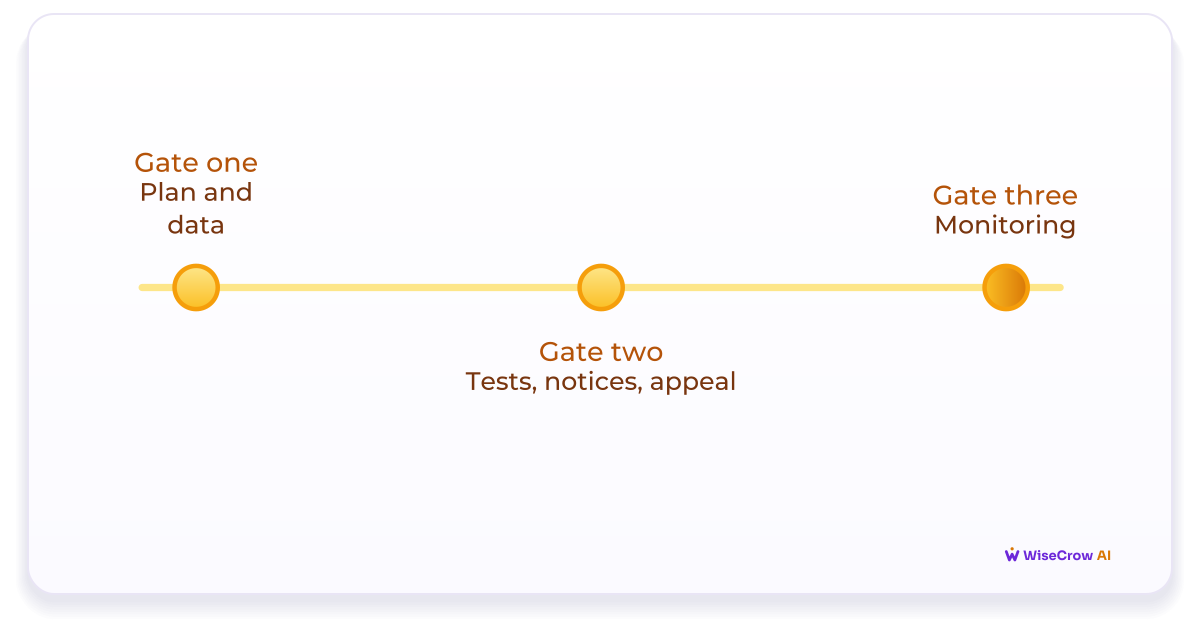
So I split the points into three gates. Gate one happens before the build and covers the choices that are costly to undo: purpose, ownership, data and privacy. Gate two happens on the release candidate and covers what you can only test once the system exists: bias, explanations, oversight, disclosure and misuse. Gate three starts at go-live and covers monitoring. Each gate has its own sign-offs, and a gate that isn’t signed doesn’t open the next one.
One more distinction. The checklist is a gate for a system that hasn’t shipped yet. If you need to score a system already in use, my scoring framework for bias and fairness goes deeper and gives you a rating per dimension.
Gate One: Before Anyone Builds
These four points take a few days of honest writing. They also decide most of what can go wrong later.
Write Down the Purpose and Who It Touches
Put one page together that says what decision the system supports, who uses its output and who is affected without ever seeing it. Those last people are easy to miss. Applicants ranked by a screener, patients flagged by a risk score and tenants checked by a screening tool never log in, yet they carry the cost of every error. For each group, write what happens to them if the system is wrong in either direction: a false yes and a false no.
To check the page, hand it to someone outside the project and ask them to name the worst realistic failure. If they can’t, the page is too vague. In my client work, the list of affected people often grows once someone from customer service reads it, because they know who calls in when things break.
Name One Owner and the Sign-Off Path
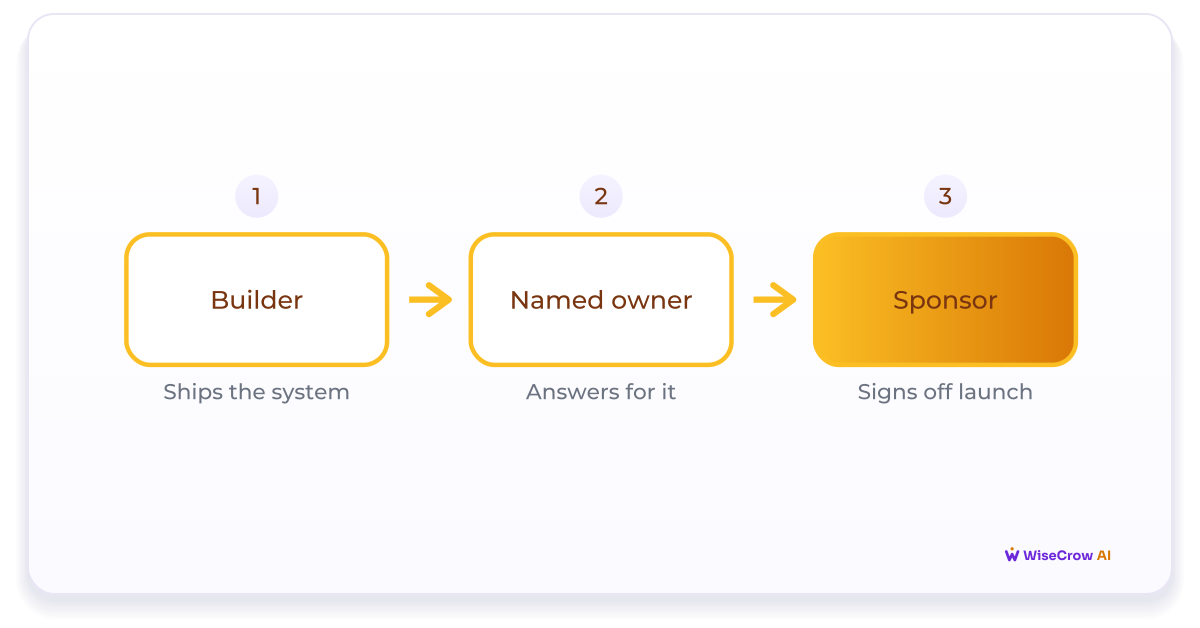
Accountability usually gets left to the end, and then it belongs to nobody. Name one person now who answers for the system’s outcomes and has the authority to delay the launch or pause the system later. Then write the signing order: who signs which point, in what sequence, and what happens when a signer refuses.
The Air Canada chatbot case shows why the name matters. In 2024, a Canadian tribunal ordered the airline to pay a passenger after its chatbot gave him wrong information about bereavement fares, and it rejected the argument that the chatbot was responsible for its own actions. Your system’s words are your company’s words. A quick test for this point: ask who can switch the system off tonight. One name should come back, fast.
Trace Where the Data Came From and What People Agreed To
For every data source, record where it came from, who collected it, for what purpose and what the people in it were told. The common mismatch is reuse. Data gathered to run billing or deliver a service gets pulled into training a model about customer behavior, and nobody checks if the original notice covers it. Scraped data, bought lists and old CRM exports raise the same question. The Datasheets for Datasets paper proposes a standard sheet for each dataset, and I use a trimmed version with about a dozen questions.
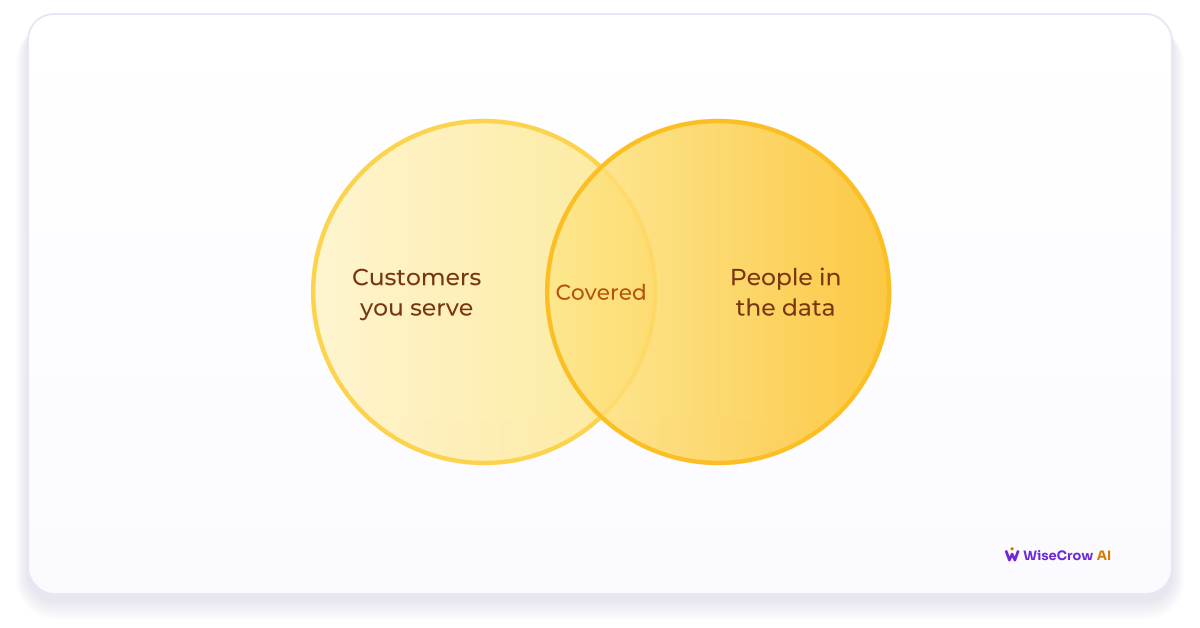
Pick three sources at random and trace each one back to its collection notice or contract. While you’re there, look at who is in the data and who isn’t. If older customers, one region or one language barely show up, write it down now. That gap decides which groups need the closest look in point 5.
Keep Personal Data to What the Purpose Needs
Privacy choices are cheapest on paper. Go through every field the system would use and ask if the purpose from point 1 needs it. Drop identifiers the model doesn’t need, set retention periods for training copies, logs and prompts, and check what goes to outside model providers and under which terms. A field kept “in case a future model wants it” is a liability with no owner.
The evidence is a field list with a keep or drop reason next to each line, signed by your privacy lead. Then test one path end to end: file a deletion request for a test record and see if it reaches the training copies and logs. It often stops at the main database.
Gate Two: Before Launch Day
Now the system exists. Run every test in this gate on the release candidate, the exact version you plan to ship. A clean result on last month’s prototype tells you nothing about this week’s model.
Test for Bias Across the Groups You Listed
Points 1 and 3 already told you which groups to test: the people the system affects and the ones thin in the data. Compare outcomes and error rates for each group, then for combinations, such as older women or non-native speakers in one region. Choose one fairness measure that fits the harm you most want to avoid, report it with the number of people behind each figure, and set the pass bar before the test runs. A bar set after you see the numbers isn’t a bar.
The evidence is a dated results table built on the release candidate. The most common failure I find is a careful test run on a prototype, followed by a final retrain nobody retested. Match the model version in the test report against the one in the release notes. If they differ, the point stays open.
Write Explanations the Affected Person Can Use
An explanation that satisfies a data scientist rarely helps the person who got declined. The UK ICO and the Alan Turing Institute’s guidance on explaining AI decisions lists six types of explanation, from rationale and responsibility to data, fairness, safety and impact. For a launch, I put most of the effort into two: why this outcome happened, and who the person can talk to about it. On the internal side, a model card covers what the team needs to know, including intended use and results by group.
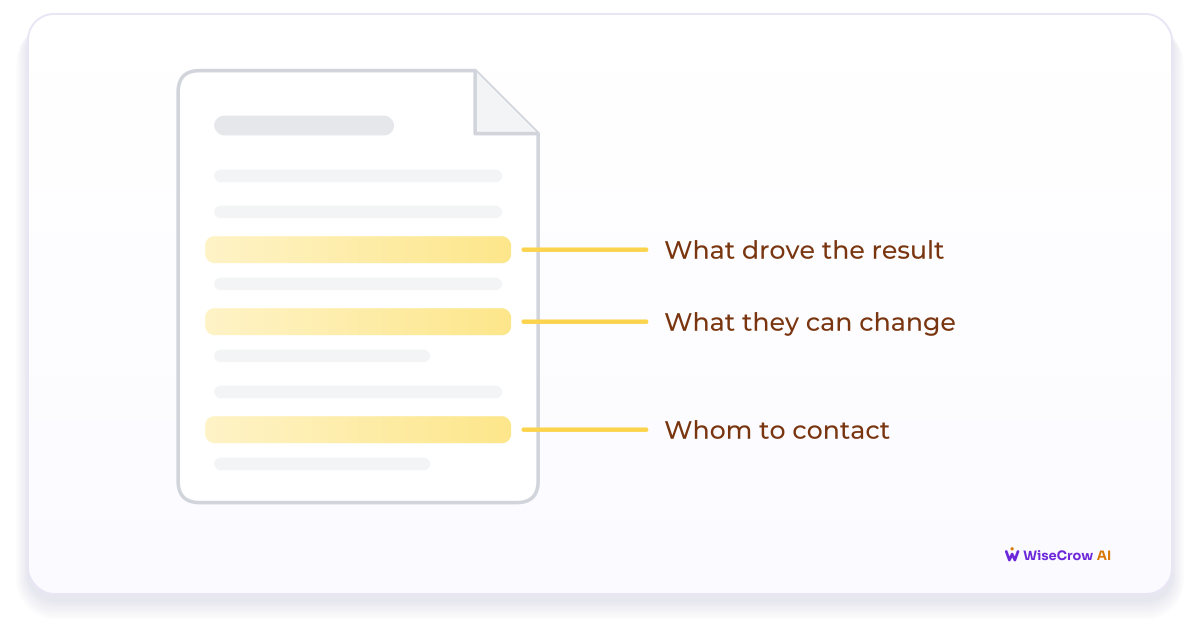
Write sample explanations for three real cases: a clear yes, a clear no and a borderline call. Show them to five people outside the team. If they can’t say what drove the outcome, what they could change or whom to contact, rewrite the text and test again.
Give People a Human Who Can Say No and a Way to Appeal
Decide which cases go to a person before the system acts: low-confidence scores, high-stakes outcomes and the groups where point 5 showed weaker results. The reviewer needs the case details, enough time per case and the authority to overrule the system without filling in a form to justify it. Size the review team for real volume. A queue that grows faster than people can clear it turns oversight into a backlog.
For appeals, keep the route short: one link or one email address, a person who replies and a stated response time. Before launch, file a test appeal yourself and time it from submission to answer. If it disappears into a general inbox, you’ve found the gap while it’s still cheap to fix.
Tell People When AI Is Involved
Disclose at the moment it matters. A chatbot says it’s an AI in its first message, generated images and text carry a label, and decision letters say an automated system supported the outcome. People care about knowing, as the survey data in my roundup of AI ethics and trust statistics shows. Some rules point the same way. Article 50 of the EU AI Act sets transparency duties for certain systems, including telling people they’re dealing with an AI. Check the current status and which duties apply to you before you plan around them.
Screenshot the notice in the live build, on desktop and mobile. Then read it aloud to someone outside the team. If it hides in the terms of service or talks about “algorithmic optimization,” rewrite it in words a customer would use.
Try to Break It Before Someone Else Does
List the ways the system could cause harm when used wrongly, on purpose or by accident. A support bot gets pushed into giving medical or legal advice. A text generator gets asked for harmful content. A CV screener gets gamed with hidden keywords in white text. Odd inputs, missing fields and sudden changes in the data belong on the list too. For each case, decide in advance what the system should do: refuse, hand over to a person or flag the case.
The evidence is a test log with every scenario, the result and the fix. Each serious finding is either closed or accepted in writing by the owner from point 2, with a reason. An open finding with no name next to it blocks the launch.
The Launch Sign-Off Sheet
Before go-live, walk through this sheet with each signer in the order agreed under point 2. The middle column is what the signer should see before signing. The right column is my default split. In a smaller company, one person may sign three rows, and that’s fine as long as nobody signs their own work on bias and misuse testing.
| Point | Evidence you need | Who signs |
|---|---|---|
| 1. Purpose and affected people | One-page use statement | Business owner |
| 2. Owner and sign-off path | Named owner, signing order | Executive sponsor |
| 3. Data provenance and consent | Datasheet per source | Data owner |
| 4. Privacy by design | Field list with reasons | Privacy lead |
| 5. Bias testing across groups | Dated results per group | Data science lead |
| 6. Explanations people can use | User-tested sample notes | Product owner |
| 7. Human oversight and appeal | Review rules, test appeal | Operations lead |
| 8. Disclosure to users | Screenshot of live notice | Legal and product |
| 9. Safety and misuse testing | Test log, fixes closed | Engineering and security |
| 10. Monitoring after launch | Dashboard, review dates | Business owner |
A signer can refuse. When that happens, the refusal goes to the owner with the evidence attached, and the owner makes a written call: fix and retest, narrow the system to the cases where it works, or delay. I’ve watched teams treat a refusal as a personal attack. The better teams treat it as the checklist doing its job.
Gate Three: After Go-Live
Launch is the day real people and real data arrive. Most of the problems I’ve seen in live systems weren’t visible in testing, because the people using the system behaved differently from the test set.
Monitor Outcomes, Appeals and Drift on Fixed Dates
Track five signals from day one: outcome rates by group, the share of cases reviewers overrule, appeal volume and results, complaints that mention the AI, and drift in the inputs the system sees. Set a threshold for each and name who gets the alert. A sudden drop in overrides deserves as much attention as a spike. It can mean reviewers have stopped looking. The NIST AI Risk Management Framework treats this kind of tracking as part of its measure and manage functions, which helps when leadership wants a reference point.
Put the first review on the calendar before launch, a few weeks after go-live, then on a fixed schedule. Agree on the triggers for a full rerun of gate two: a new model version, a new data source, a new user group or a new market. To check this point, ask when someone last opened the dashboard. If nobody knows, monitoring exists only on the slide.
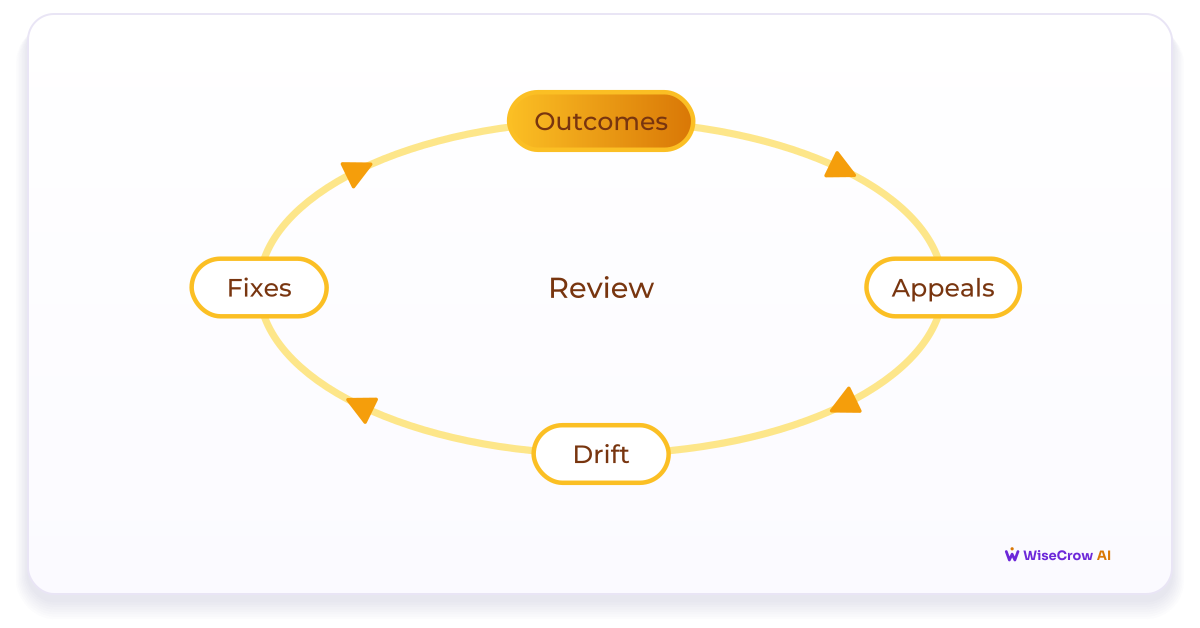
Monitoring tells you when something moves. It doesn’t prove your controls still work the way the sign-off sheet says. Once a system has run for a few months, a formal AI ethics audit tests that, ideally with reviewers who weren’t part of the launch.
The 10 Points as Launch Questions
Paste these into your launch ticket. Every question needs a yes and a link to the evidence.
- Can an outsider read the use statement and name the worst failure?
- Does one named person own outcomes and hold the off switch?
- Can you trace each data source to what people agreed to?
- Does every personal data field have a written reason to stay?
- Did the bias test run on the version you’re shipping?
- Did people outside the team understand the sample explanations?
- Did your own test appeal reach a person and get an answer?
- Is the AI notice visible in the live build on every device?
- Is every serious misuse finding closed or accepted by name?
- Is the first monitoring review already in the calendar?
How to Choose Who Runs the Checklist
The points stay the same for every launch. Who works through them should change with the stakes:
- Internal tools that don’t make decisions about people: the product team runs it, and the owner signs. Expect a few days of work.
- Customer-facing assistants and content generators: the product team runs it, with someone from another team checking points 8 and 9.
- Systems that rank, approve or reject people, such as hiring, credit, insurance or care: add a reviewer independent of the build team for points 5, 7 and 9.
- No one in-house who can design a bias test or a misuse test: bring in outside help for those points and keep the rest in-house.
One view I hold firmly, and some governance leads disagree with me. Don’t hand the checklist to an ethics committee. Committees meet monthly, and launches don’t wait. Let the product owner run the checklist week by week, and ask the committee to review the sign-off sheet and the refusals. You get faster launches and a committee that sees the decisions that matter.
Questions About the AI Ethics Checklist
What Should an AI Ethics Checklist Include?
It should cover the purpose of the system and who it affects, where the data came from, privacy, bias testing across groups, explanations, human oversight with an appeal route, disclosure to users, safety and misuse testing, a named owner with a sign-off path, and monitoring after launch. Each point needs a piece of evidence and a person who signs for it. A list of principles with no evidence attached is a poster.
When Should You Start Working Through the Checklist?
At the idea stage, before anyone collects data or trains a model. Points 1 to 4 shape what gets built, and fixing them later often means retraining or redesigning. Points 5 to 9 happen on the release candidate in the weeks before launch, and point 10 runs for as long as the system is live.
How Is a Checklist Different from an AI Ethics Assessment or an Audit?
The checklist is a launch gate. It asks if each point has evidence and a signature before go-live. An assessment scores a system in more depth across several dimensions, and it works for systems already in use. An audit comes later and checks, often with outside reviewers, that the controls still work as claimed.
Who Should Sign Off on an AI Launch?
One accountable business owner gives the final sign-off, and specialists sign the points they know: the privacy lead for data minimization, the data science lead for bias results, engineering and security for misuse testing, and legal with product for the user notice. Agree on the signing order before the build starts, so nobody is asked to sign something they first see the day before launch.
Does the Checklist Apply to AI Tools You Buy from a Vendor?
Yes. You still choose the purpose, the people it affects, the notice, the human review and the monitoring. For data provenance, bias results and misuse testing, ask the vendor for written evidence, such as a model card and test results by group. If the vendor won’t share them, run your own tests on your data before you sign.
What If a Bias Test Fails Right Before Launch?
Don’t launch the affected part as planned. The owner has three honest options: fix the cause and retest, narrow the system to the cases where it works and send the rest to people, or delay. Write the decision down with the test result attached. Shipping with a known gap and a promise to fix it later is the option I see regret most often.
Does Completing the Checklist Make an AI System Legally Compliant?
No. The checklist is a practical ethics and governance tool, and it lines up with public frameworks such as the NIST AI Risk Management Framework. Legal duties depend on your system, your sector and your markets, and some AI rules are still being phased in, so check the current status at the source and have your legal team review what applies to you.
Sources
- CBS News, Air Canada chatbot case before British Columbia’s Civil Resolution Tribunal (February 2024): cbsnews.com
- Gebru et al., Datasheets for Datasets (2018): arxiv.org
- Obermeyer, Powers, Vogeli and Mullainathan, Dissecting Racial Bias in an Algorithm Used to Manage the Health of Populations, Science (October 2019): science.org, with coverage at techxplore.com
- ICO and The Alan Turing Institute, Explaining Decisions Made With AI: ico.org.uk
- Mitchell et al., Model Cards for Model Reporting (2018): arxiv.org
- EU AI Act, Article 50, Transparency Obligations for Providers and Deployers of Certain AI Systems: artificialintelligenceact.eu
- NIST, AI Risk Management Framework (AI RMF 1.0, January 2023): nist.gov
Disclaimer: This article is for general information only and isn’t legal advice. AI rules such as the EU AI Act, privacy laws and anti-discrimination rules differ by market and some obligations are still being phased in, so check the current status at the original sources and with your advisers before you act.
Did you find this helpful?
Thank you for your feedback.
Marlena leads the WiseCrow editorial team and works with our consultants to turn real client projects into practical guides on AI strategy, automation and governance. Before joining WiseCrow, she spent 12 years in B2B operations and SaaS content. She has since edited more than 400 articles on AI and automation and reviewed workflows from over 60 client projects. She is based in Austin, Texas.