Summary
- Prisma AIRS and Cisco AI Defense cover posture, red teaming and runtime protection in one platform, and fit best if you already run those vendors.
- Lakera Guard is the quickest way to put a prompt injection firewall in front of an LLM app, with a free tier for testing.
- Promptfoo and NeMo Guardrails give you a free open-source stack for red teaming and custom guardrails.
- Match the tool to your biggest exposure first: staff using public AI, apps you build or models you download.
The Best AI Security Tools at a Glance
| Tool | Type | Best for |
|---|---|---|
| 1. Prisma AIRS | AI security platform | Palo Alto customers covering every layer |
| 2. Cisco AI Defense | AI security platform | Cisco networks needing tests and guardrails |
| 3. Lakera Guard | LLM firewall API | Fast runtime screening for LLM apps |
| 4. HiddenLayer | Model and runtime security | Teams running their own models |
| 5. Prompt Security | AI usage control | Stopping staff data leaks to AI tools |
| 6. Lasso Security | AI security platform | Companies scaling AI agents |
| 7. Mindgard | Automated red teaming | Testing guardrails on a schedule |
| 8. Promptfoo | Open-source red-teaming CLI | Free security tests in CI |
| 9. NVIDIA NeMo Guardrails | Open-source guardrail library | Developers writing custom rules |
The 9 Best AI Security Tools, Ranked
I ranked these tools by how many of the three layers each one covers on its own (runtime guardrails, red teaming, and posture or data-leak control), so full platforms come first, then specialists, then free open-source kits. Buying a tool is the easy part. In the AI security consulting reviews I take part in, the gaps that hurt most are usually an agent with too many permissions or a chatbot nobody in security knew existed.
Prisma AIRS
The Broadest Single Platform If Palo Alto Networks Already Guards Your Network
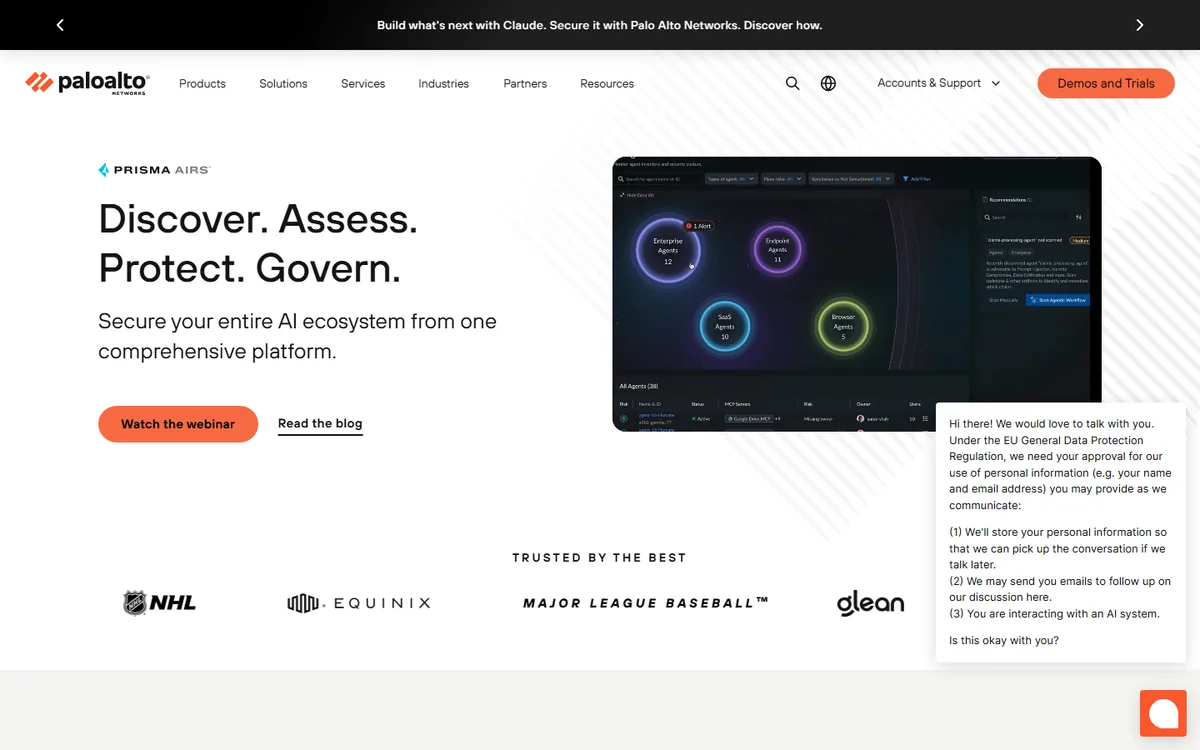
Prisma AIRS covers AI posture, model scanning, automated red teaming and runtime protection for apps and agents in one console.
Palo Alto Networks built Prisma AIRS on its 2025 purchase of Protect AI, and version 2.0 finished folding Protect AI’s model scanning and red teaming into the platform. Version 3.0 followed in March 2026 with a clear focus on autonomous agents. It lists your agents, models and MCP servers, scores their risk and guards them while they run. You can connect it as an API your app calls before and after each model request, or place it in the network path like a firewall.
I put it first because one contract covers the three questions I ask in every review: what AI do you run, how does it break under attack, and what stops it in production? The model scanner alone earns its place. Teams pull open-weight models from public hubs all the time, and a scan that flags unsafe files before a model loads closes a gap most security stacks ignore. The catch is weight. Prisma AIRS makes the most sense when Palo Alto firewalls and Strata Cloud Manager already run your network. The credit-based licensing also takes a sales call and some spreadsheet work before you know your bill.
What Prisma AIRS Does Well
- One platform covers posture, red teaming and runtime protection
- Model scanning catches risky open-weight models before they load
- You can deploy it as an API or in the network path
What Prisma AIRS Could Do Better
- Credit-based licensing is hard to forecast
- Best value only if you already use Palo Alto products
Prisma AIRS Pricing
Palo Alto Networks doesn’t publish a list price for Prisma AIRS. Its licensing documentation explains that runtime security, supply chain security and red teaming are all paid with Software NGFW credits, bought for a one- to five-year term. API usage counts in tokens per month, and usage above your credits is billed at pay-as-you-go rates.
Prisma AIRS Reviews
Prisma AIRS has a G2 profile, but it had no user reviews when I checked, so I’ve left the rating out.
Cisco AI Defense
A Strong Fit When Cisco Runs Your Network and You Want Red Teaming and Guardrails Together
Cisco AI Defense finds the AI apps and models in your environment, red-teams them automatically and enforces guardrails on live traffic.
Cisco built AI Defense on Robust Intelligence, the AI testing company it bought in 2024. The product splits into parts that match how a security team already thinks. AI Cloud Visibility lists your models and the data they connect to. AI Model and Application Validation runs algorithmic red teaming. AI Runtime Protection applies guardrails in the network, and AI Access governs which third-party AI apps your staff can use. In February 2026 Cisco added an AI bill of materials that covers MCP servers and third-party dependencies, plus runtime guardrails for agents and an integration with NVIDIA NeMo Guardrails.
The validation step is my favourite part. You point it at a model or app, it runs a battery of attacks and returns a report mapped to OWASP, MITRE and NIST categories. A report in that shape gets a security lead and a product owner reading the same page, which saves weeks of back and forth. Cisco said at launch that some of the new features were still in development, so ask which ones are generally available before you sign. If you don’t run Cisco security gear, the network enforcement is less of a draw, and an API-based guardrail may suit you better.
What Cisco AI Defense Does Well
- Red-team reports map to OWASP, MITRE and NIST
- Covers your own apps and staff use of public AI tools
- Works with NeMo Guardrails if you already use it
What Cisco AI Defense Could Do Better
- Some announced features roll out in stages
- Most of the value goes to companies already on Cisco security
Cisco AI Defense Pricing
Cisco doesn’t publish prices for AI Defense, so you buy it through Cisco sales or a partner. The product page also offers an Explorer Edition, a red-teaming option for AI builders, which lets you test a model before you talk about a full contract.
Cisco AI Defense Reviews
G2 has a page for Cisco AI Defense, but I couldn’t confirm a current star rating or review count there, so none is shown.
Lakera Guard
The Fastest Way to Put a Prompt Injection Firewall in Front of an LLM App
Lakera Guard screens prompts and responses through one API call and flags prompt attacks, data leaks and content that breaks your policy.
Lakera started in Zurich and became known for Gandalf, its prompt injection game. Check Point bought the company in 2025, and Lakera’s own documentation now calls the runtime product Check Point AI Guardrails, so expect to see both names in contracts. The mechanics haven’t changed. Your app sends the user input, and later the model output, to the Guard endpoint. It gets a verdict back and decides to block, redact or log. Policies are set per project, so a customer chatbot can run stricter rules than an internal search tool.
For a team shipping its first LLM feature, Lakera is the easiest guardrail I know to put in. A developer can wire it up in an afternoon, and the free tier is large enough to test against real traffic. Keep two limits in mind. Guard only sees what your code sends it, so a forgotten endpoint stays open. It also doesn’t list or attack your AI by itself, which is why Lakera sells red teaming as a separate product, Lakera Red. Ask how the Check Point roadmap affects pricing and support before you sign a multi-year deal.
What Lakera Guard Does Well
- One API call adds input and output screening
- The free tier is big enough for a proper pilot
- Separate policies per project keep rules sensible
What Lakera Guard Could Do Better
- Protects only the traffic your code routes through it
- Names and packaging are still shifting after the acquisition
Lakera Guard Pricing
Lakera’s platform documentation caps the free Community plan at 10,000 screening requests per month. Lakera also offers Pro and Enterprise plans for higher volumes, and you get prices for those from its sales team.
Lakera Guard Reviews
- G2: score of 5.0 out of 5 (from 1 user review)
HiddenLayer

The Specialist to Pick When Your Biggest Worry Is the Models Themselves
HiddenLayer scans models for malicious code and backdoors, simulates attacks and runs a runtime firewall for generative AI and agents.
HiddenLayer was one of the first companies to focus on attacks against machine learning models, and its platform still shows that background. It has four modules. AI Discovery finds shadow AI, AI Supply Chain Security scans models before deployment, AI Attack Simulation runs continuous red teaming, and AI Runtime Security is the firewall in production. In 2026 it added runtime controls for agents, including Agent Harness Security for AI coding agents.
I reach for HiddenLayer when a client trains or fine-tunes its own models, or pulls lots of open-weight models from public hubs. A poisoned model file can run code the moment someone loads it, and HiddenLayer’s scanner checks for malicious code, backdoored weights and vulnerable dependencies first. Prompt injection is a separate problem, and several guardrail vendors barely look at model files at all. If you only call a hosted model like GPT or Claude through an API, the supply chain module matters less, and a lighter guardrail may cover your main risk. Pricing is quote-only, so plan time for a demo and a proof of concept.
What HiddenLayer Does Well
- Deep model scanning for backdoors and malicious code
- Covers discovery, testing and runtime in one platform
- New controls for AI coding agents
What HiddenLayer Could Do Better
- Less useful if you only call hosted models
- No public pricing or self-serve trial
HiddenLayer Pricing
HiddenLayer doesn’t list prices on its site, and every plan starts with a demo and a quote. Ask how the quote scales with the modules you pick and the number of models and apps you cover.
HiddenLayer Reviews
HiddenLayer’s G2 profile showed zero reviews when I looked, and I found no Capterra listing, so there’s no score to report.
Prompt Security
The Best Pick When Your Main Risk Is Staff Pasting Company Data Into Public AI Tools
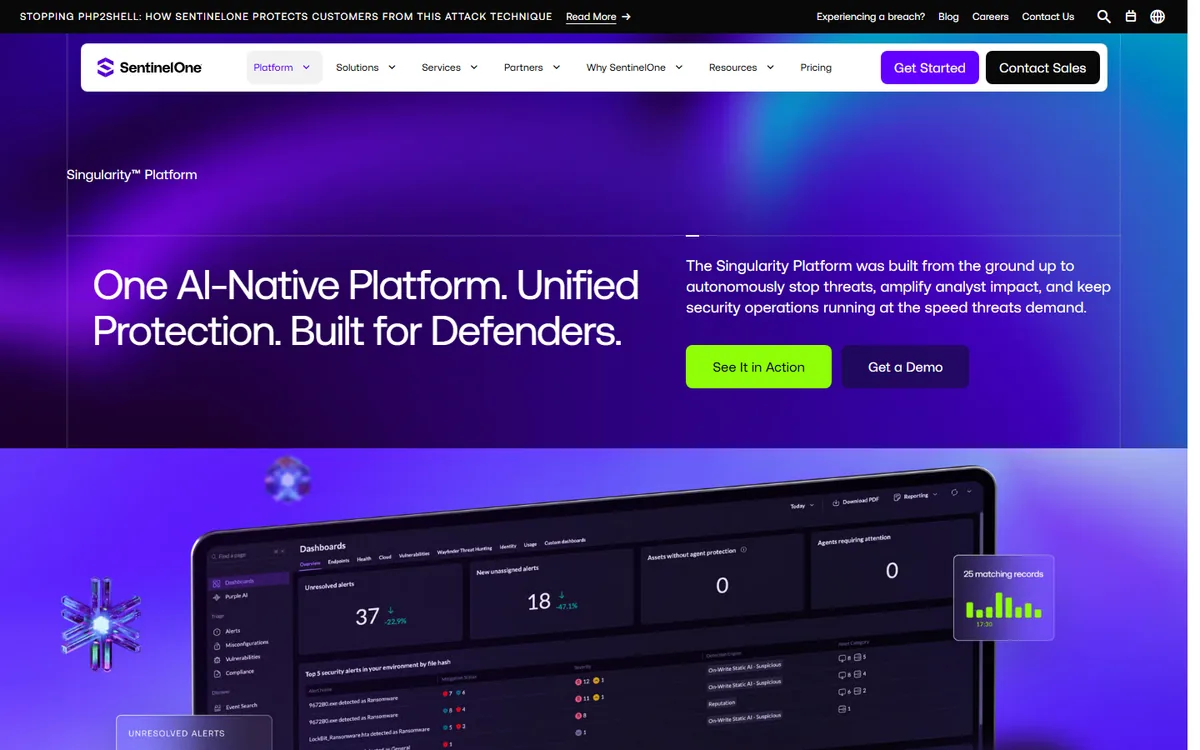
Prompt Security, now part of SentinelOne, watches how employees use generative AI tools and masks sensitive data before it leaves the browser.
SentinelOne completed its purchase of Prompt Security in September 2025, and the product now sits inside the SentinelOne platform. Its best-known piece is a browser extension that sees when someone types, pastes or uploads into an AI site. Based on your policy, it masks secrets and personal data or blocks the action. Other modules cover AI code assistants, your own AI apps and, in newer releases, agents that use MCP.
Shadow AI is where I see most companies start, because it’s the risk that is already live. In IBM’s 2025 breach study, one in five organizations reported a breach due to shadow AI. Prompt Security shows you which AI apps your staff use and what data flows into them, and a vague policy turns into rules you can enforce. The trade-off is depth on the app side. If you mainly build customer-facing LLM apps, a dedicated guardrail or red-teaming tool goes further. If SentinelOne already protects your laptops, adding it to the same contract is the simplest route.
What Prompt Security Does Well
- Clear view of which AI apps staff actually use
- Masks secrets and personal data in real time
- Covers AI code assistants as well as chat tools
What Prompt Security Could Do Better
- Less depth for customer-facing LLM apps
- Buying now runs through SentinelOne sales
Prompt Security Pricing
Prompt Security doesn’t publish prices, and you get a quote through SentinelOne or one of its partners. Ask if the employee module, the code assistant module and app protection are priced separately.
Prompt Security Reviews
- G2: score of 5.0 out of 5 (from 2 customer reviews)
Lasso Security
A Good All-Rounder for Companies Rolling Out AI Agents Across Many Teams
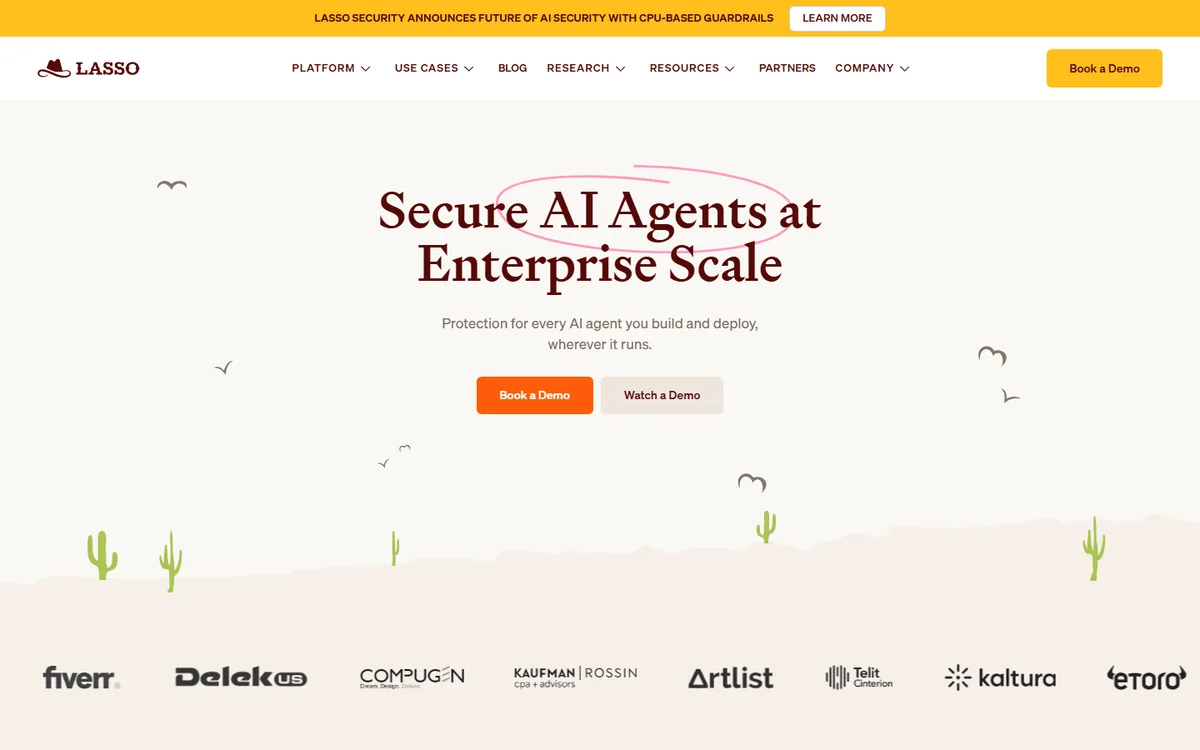
Lasso combines AI discovery, posture checks, automated red teaming and runtime guardrails, with extra focus on agents and the tools they call.
Lasso puts the full loop on one screen. It builds an AI bill of materials from your agents and apps, checks posture against NIST and OWASP guidance, runs automated red teaming and enforces guardrails at a proxy, an API or an AI gateway. It also released an open-source MCP gateway in 2025 that sits between agents and the tools they call. In September 2026 it raised $30 million and launched LEAP, a guardrail that runs on standard CPUs.
I like Lasso for mid-sized companies moving from one chatbot to many agents that need one view of all of them. Its agent focus shows in the red-team library, which includes multi-turn attacks, context poisoning and tool-chain manipulation. Those are the attacks that matter once an agent can send email or change records. It’s a younger vendor than Palo Alto or Cisco, so ask for references at your size and test how fast support answers. If you want a list of controls to hold vendors against, my AI security checklist covers the ones I’d ask Lasso to demo first.
What Lasso Security Does Well
- Strong focus on agents, tools and MCP traffic
- Red teaming and guardrails share one inventory
- Open-source MCP gateway you can try for free
What Lasso Security Could Do Better
- Younger vendor with fewer public references
- No published pricing
Lasso Security Pricing
Lasso doesn’t list prices. Its site offers a free assessment and a demo, and plans are quoted per customer.
Lasso Security Reviews
I couldn’t find G2 or Capterra reviews for Lasso’s AI security product, and the Lasso ratings you’ll see there belong to unrelated products with the same name.
Mindgard
The Dedicated Red-Teaming Tool for Teams That Want to Attack Their Own AI First
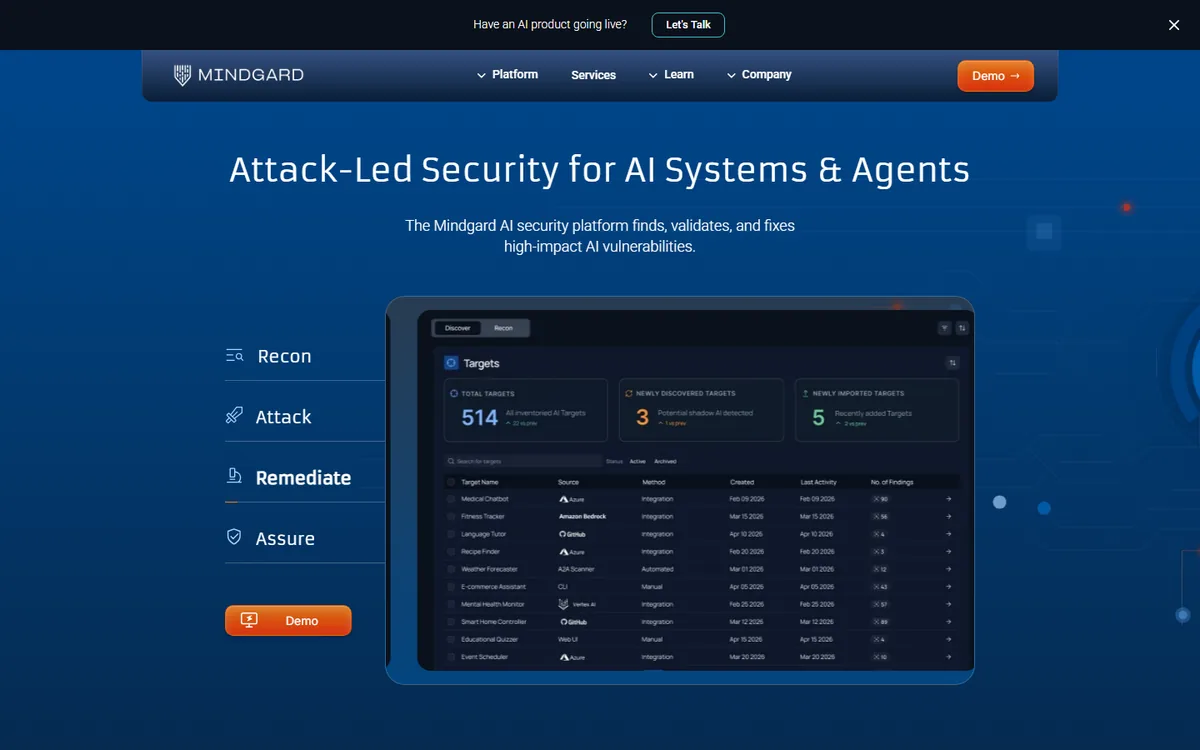
Mindgard runs automated, attacker-style tests against your models, agents and apps, then tracks fixes and retests them.
Mindgard spun out of Lancaster University in 2022 and focuses on offensive testing. It maps your AI system first, a step it calls Recon, then attacks the models, agents and tools it found. Results come with fix guidance, and you can retest after a change and export the evidence for your governance records. You can run it from a CI/CD pipeline, from Burp Suite or with one click in the console. In 2026 it raised a $30 million Series A.
I recommend Mindgard when you already have guardrails and want proof that they hold. A manual red-team exercise gives you a snapshot. A scheduled scan in your pipeline catches the regression when someone edits a system prompt on a Friday afternoon. Test, fix, retest and keep the evidence: the same loop sits at the core of how I scope an AI security audit. Mindgard’s strength is testing, so most teams still pair it with a separate guardrail for blocking attacks in production. Public reviews are thin, so ask for a proof of concept on one of your own apps.
What Mindgard Does Well
- Retesting after fixes is built into the workflow
- Runs in CI/CD, Burp Suite or the console
- Evidence exports help with governance reviews
What Mindgard Could Do Better
- You still need a separate runtime guardrail
- Few public reviews to judge it by
Mindgard Pricing
Mindgard’s pricing is quote-based. Its documentation describes a time-limited trial with some features restricted, which is enough to scan one app before you commit.
Mindgard Reviews
Mindgard had no G2 reviews when I checked, so I can’t give it a fair score.
Promptfoo
The Best Free Way to Red-Team an LLM App Inside Your CI Pipeline
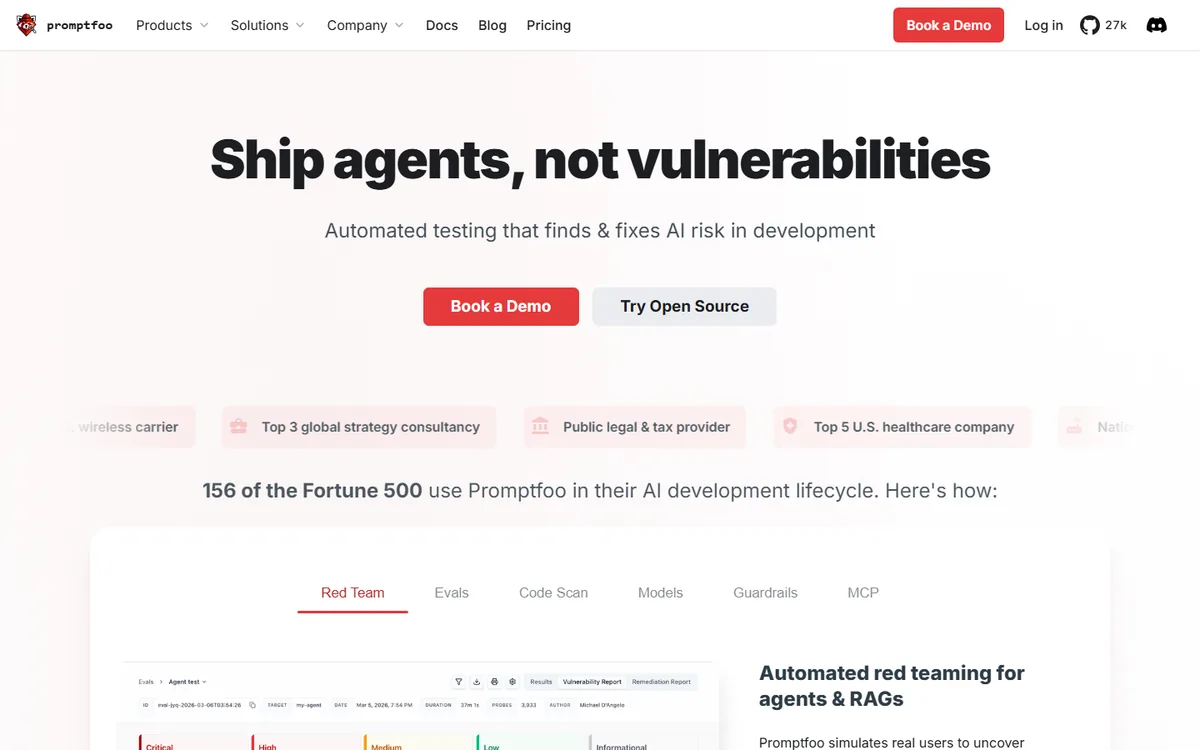
Promptfoo is an open-source command-line tool for LLM evaluations and red teaming that runs on a laptop or in CI.
Promptfoo began as a way to test prompts and grew into one of the most widely used open-source red-teaming kits. You describe your app and its purpose in a config file. Promptfoo then generates attacks for prompt injection, jailbreaks, data leaks, harmful content and agent misuse, and grades the answers. It works with most model providers. In March 2026 the team agreed to be acquired by OpenAI, and its site now says Promptfoo is part of OpenAI and remains open source.
For small teams it’s my default first step, because it costs nothing to try and the results are concrete. I like to keep a Promptfoo suite next to the app’s unit tests, so a prompt change that reopens a jailbreak fails the build. Two caveats apply. You need someone comfortable with YAML and the command line. Some buyers will also want to see how OpenAI ownership plays out for a tool that tests rival models, although it still supports other providers today. Dashboards, team sharing and continuous monitoring sit in the paid Enterprise tier.
What Promptfoo Does Well
- Free, open source and quick to start
- Fits into CI so regressions fail the build
- Works with most model providers
What Promptfoo Could Do Better
- Needs comfort with config files and a terminal
- Team dashboards cost extra
Promptfoo Pricing
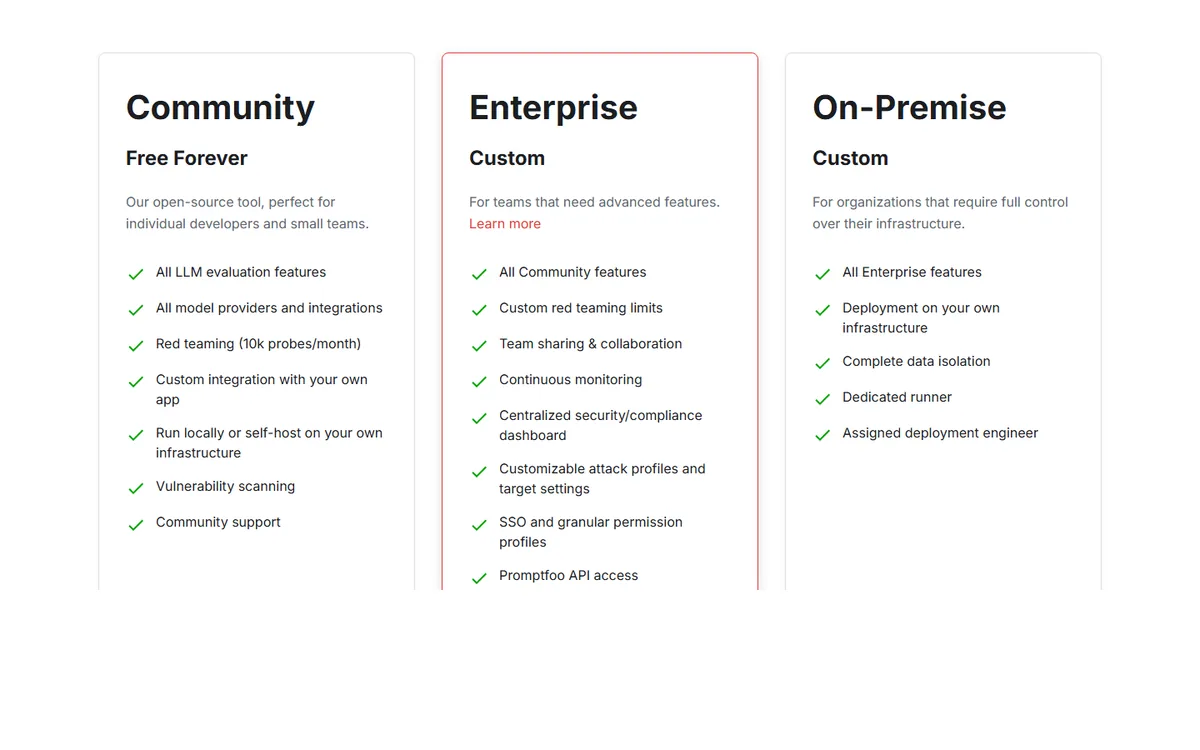
The Community plan is free and includes up to 10,000 red-team probes per month. Enterprise and On-Premise plans have custom pricing and add custom probe limits, team sharing and continuous monitoring.
Promptfoo Reviews
I found no G2 or Capterra listing for Promptfoo with user reviews, which is common for developer tools, so its GitHub activity is the better signal.
NVIDIA NeMo Guardrails
The Open-Source Guardrail Toolkit for Teams That Want to Write Their Own Rules
NeMo Guardrails is NVIDIA’s free Python library for adding programmable rails to the inputs, dialog, retrieval, tool calls and outputs of LLM apps.
NeMo Guardrails sits between your app and the model and runs checks at five points: on the input, during the dialog, on retrieved documents, on tool execution and on the output. You define flows in Colang, a small language for conversation rules, plus a YAML config. Each rail can call other models or services as checks, such as a jailbreak detector or a content safety model. It’s released under the Apache 2.0 license, and Cisco added an integration with it to AI Defense in 2026.
I suggest NeMo Guardrails to teams with strong Python developers who want full control and no per-request fee. You can keep a support bot on topic, stop it from quoting prices it doesn’t know and force a check on every retrieved chunk before the model sees it. The cost moves to engineering time. Each rail that calls a model adds latency and token spend, the rules need tests like any other code, and there’s no dashboard, inventory or red teaming in the box. Pair it with Promptfoo and you have a solid free stack. Once you run many apps, a commercial platform becomes easier to manage.
What NVIDIA NeMo Guardrails Does Well
- Free, with no per-request fees
- Rails at five points give fine control
- Works with most model providers and checks
What NVIDIA NeMo Guardrails Could Do Better
- Colang adds a new language to learn
- Each model-based rail adds latency and cost
NVIDIA NeMo Guardrails Pricing
NeMo Guardrails is free and open source. Your costs are hosting, the extra model calls each rail makes and the developer time to write and test rules.
NVIDIA NeMo Guardrails Reviews
There’s no G2 or Capterra listing for NeMo Guardrails itself, and the NVIDIA NeMo page on G2 covers the wider toolkit, so I didn’t use its score.
Put a Number on an AI Security Tool
Security tools pay back in two ways. The first is time: hours your team stops spending on manual prompt reviews, hand-run attack tests and chasing alerts from AI apps. Enter those hours and the monthly cost of the tool below, and you’ll see a rough yearly return. The second is the breach that never happens, which no calculator handles well. IBM found that organizations with high levels of shadow AI paid an average of $670,000 more per breach than those with low levels or none, so treat that risk as upside on top of the result. Deciding which risk deserves budget first is a threat-modeling job, and my AI security strategy framework walks through it.
Will It Pay for Itself?
Move the sliders to match the work you want to automate and the plan you are considering.
How to Choose the Right AI Security Tools
Most AI security budgets I see get spent on whatever was easiest to demo. Gaps are common: IBM reported that 13% of organizations had breaches of AI models or applications, and 97% of those had no AI access controls in place. Start from where your own exposure sits:
- Do you build your own LLM apps or agents, or mainly use tools like ChatGPT and Copilot?
- Do you download, train or fine-tune open-weight models?
- Who will own the tool day to day: security, the platform team or developers?
- Which security vendors already run your network and endpoints?
If your biggest worry is staff pasting data into public AI, start with Prompt Security or the AI Access part of Cisco AI Defense. If you ship LLM apps, add Lakera Guard or NeMo Guardrails in front of them and test them with Promptfoo or Mindgard. Teams that run their own models should look hard at HiddenLayer. If you already buy from Palo Alto Networks or Cisco, compare Prisma AIRS and Cisco AI Defense first, and if agents are spreading across many teams, put Lasso on the shortlist. A short outside review can save you from buying two tools that do the same job.
Questions About AI Security Tools
What Do AI Security Tools Actually Protect?
They cover three layers. Runtime guardrails, often called LLM firewalls, screen prompts and responses for injection attempts, jailbreaks and sensitive data. Red-teaming scanners attack your models and apps before release to find weak spots. Posture and usage tools list the AI you run, including shadow AI, and control what data staff send to public AI tools. Most companies I work with need at least two of the three.
What’s the Difference Between an LLM Firewall and a Red-Teaming Tool?
A firewall works in production. It checks every request and blocks bad input or output as it happens. A red-teaming tool works before and between releases. It fires attacks at your app and reports what got through. I treat them as a pair: the red-team results tell you which guardrail rules you need, and the next scan tells you if those rules hold.
Can a Guardrail Stop Every Prompt Injection?
No. OWASP ranks prompt injection as the top risk in its 2025 Top 10 for LLM applications, and no filter catches every phrasing. Guardrails cut the number of attacks that get through. Limit what the model can do as well: give tools tight permissions, keep secrets out of prompts and require human approval for risky actions, so a successful injection does less harm.
Are Open-Source AI Security Tools Good Enough?
For testing and a first app, often yes. Promptfoo covers red teaming well, and NeMo Guardrails handles custom runtime rules. The gaps show up at scale: no central inventory, no dashboards for the security team, and your developers own every update. I usually start clients on open source and move to a commercial platform once several apps or teams are involved.
Do We Need an AI Security Tool If We Only Use ChatGPT Enterprise or Copilot?
You need less of the app-side tooling. The data side still matters, though. An enterprise plan protects the data you send to that one vendor. It does nothing about staff who paste customer data into an unapproved AI app on their own. A usage control tool, such as Prompt Security or the AI Access part of Cisco AI Defense, covers that gap.
How Much Do AI Security Tools Cost?
Open-source tools like NeMo Guardrails and the Promptfoo CLI are free, apart from hosting and model calls. Lakera Guard and Promptfoo have free tiers capped at 10,000 requests or probes a month. Prisma AIRS, Cisco AI Defense, HiddenLayer, Prompt Security, Lasso and Mindgard are quote-based. Ask every vendor for a proof of concept on one real app before you sign.
How Do I Test an AI Security Tool Before Buying It?
Pick one live app and collect a set of attacks: known jailbreaks, instructions hidden in documents the app reads, and requests for data it should never reveal. Run them with and without the tool. Count what gets blocked, what slips through and how many normal requests get flagged by mistake, and measure the added latency. In the projects I’ve seen, false positives kill more rollouts than missed attacks.
Sources
- IBM: 2025 Cost of a Data Breach Report press release
- OWASP: LLM01:2025 Prompt Injection
- Palo Alto Networks: Prisma AIRS credit distribution and management
- Cisco: AI Defense expansion for the agentic era
- Lakera: platform documentation
- SentinelOne: Form 10-Q, quarter ended October 31, 2025
- SiliconANGLE: Lasso Security launches CPU-only AI guardrail, raises $30M
- SecurityWeek: Mindgard raises $30 million to protect AI systems
- Mindgard: trial limitations and proof of concept
- Promptfoo: Promptfoo is joining OpenAI
- Promptfoo: pricing
- NVIDIA: NeMo Guardrails on GitHub
Disclaimer: Prices, plans, product names and ratings change often in this market, especially after acquisitions. They were checked when this article was last updated, so confirm them with each vendor and on G2 or Capterra before you buy. Nothing here is legal advice or a security assessment of your setup.
Did you find this helpful?
Thank you for your feedback.
Marlena leads the WiseCrow editorial team and works with our consultants to turn real client projects into practical guides on AI strategy, automation and governance. Before joining WiseCrow, she spent 12 years in B2B operations and SaaS content. She has since edited more than 400 articles on AI and automation and reviewed workflows from over 60 client projects. She is based in Austin, Texas.