Summary
- AI use in retail is near universal on paper: 91% of retail and CPG firms use or assess it, and 90% plan bigger AI budgets for 2026.
- AI agents are early. Only 20% of firms have agents live, even though 68% of retail executives expect agentic AI within two years.
- Shoppers already arrive through AI. Generative AI referrals to US retail sites rose 693% in the 2025 holidays and converted 31% better.
- Trust lags use: 45% of consumers use AI while shopping, but 71% worry about their data and 76% want limits on AI assistants.
Every retail AI pitch deck I see opens with a big number. Half the time it’s three years old, and the other half it comes from a vendor that sells the thing being measured. When clients ask me for retail AI consulting help, one of my first jobs is sorting the numbers they can repeat to a CFO from the ones they can’t.
So here are 50 statistics I’m comfortable using, in seven groups: adoption, spending and market size, use cases, AI agents, AI shopping traffic, shopper attitudes, store staff and results. Each one shows what it measures, the year and a link to the source.
Six Retail AI Numbers That Matter Most in 2026
If a slide only has room for a few numbers, use these six. They cover the story in order: retailers are all in, budgets are rising, shoppers are already using AI to find products, and agents are the next step most leaders expect.
| Stat | Finding | Source and year |
|---|---|---|
| 91% | Retail and CPG firms using or assessing AI | NVIDIA, 2026 |
| 90% | Plan bigger AI budgets in 2026 | NVIDIA, 2026 |
| $262B | Holiday online sales influenced by AI | Salesforce, 2026 |
| 693% | Rise in AI referrals to US retail sites | Adobe, 2026 |
| 45% | Shoppers using AI while buying | IBM and NRF, 2026 |
| 68% | Retailers expecting agentic AI soon | Deloitte, 2026 |
How I Picked and Checked the 50 Statistics
I started with recurring studies that state who they asked and when: NVIDIA’s State of AI in Retail and CPG, Deloitte’s retail outlook, the IBM and NRF consumer study, Zebra’s Global Shopper Study and Capgemini’s consumer report. Then I added commerce data from Adobe and Salesforce, which count real traffic and orders. Every figure links to the publisher or to trade coverage that quotes it.
The year next to each figure is the year the source came out, as of November 2026. Fieldwork often ran months earlier, so a January 2026 report usually describes late 2025. I dropped any number I couldn’t trace back to its origin, including a few that show up on dozens of stats pages. Market-size figures are forecasts from research firms and are labelled that way.
AI Adoption Across Retailers
Adoption figures are the easiest to find and the hardest to read. Most surveys merge companies that run AI in production with companies still testing it, and the headline number usually counts both.
- 91% of retail and CPG respondents say their companies are actively using or assessing AI (NVIDIA State of AI in Retail and CPG, 2026).
- 79% of respondents call open-source models and software moderately to extremely important to their AI strategy (NVIDIA, 2026).
- 17% are using or evaluating physical AI, such as robots and smart spaces in stores and warehouses (NVIDIA, 2026).
- 3 in 10 retailers use AI for supply chain visibility today, and 41% expect to within the next year (Deloitte 2026 Retail Outlook, via Chain Drug Review, 2026).
- 67% of retail executives expect to have AI-driven personalization capabilities within the next year (Deloitte Global Retail Industry Outlook, 2026).
- 51% of retail decision-makers plan to adopt generative AI within five years, behind computer vision at 57% and RFID at 54% (Zebra 18th Global Shopper Study, 2025).
Compare 91% with 17%. Nearly every firm touches AI, but very few have it moving things in the physical world. Most retail AI today sits in software: forecasts, search, recommendations and service chat. Stores and warehouses come later, because they need sensors, integration work and staff who trust the output.
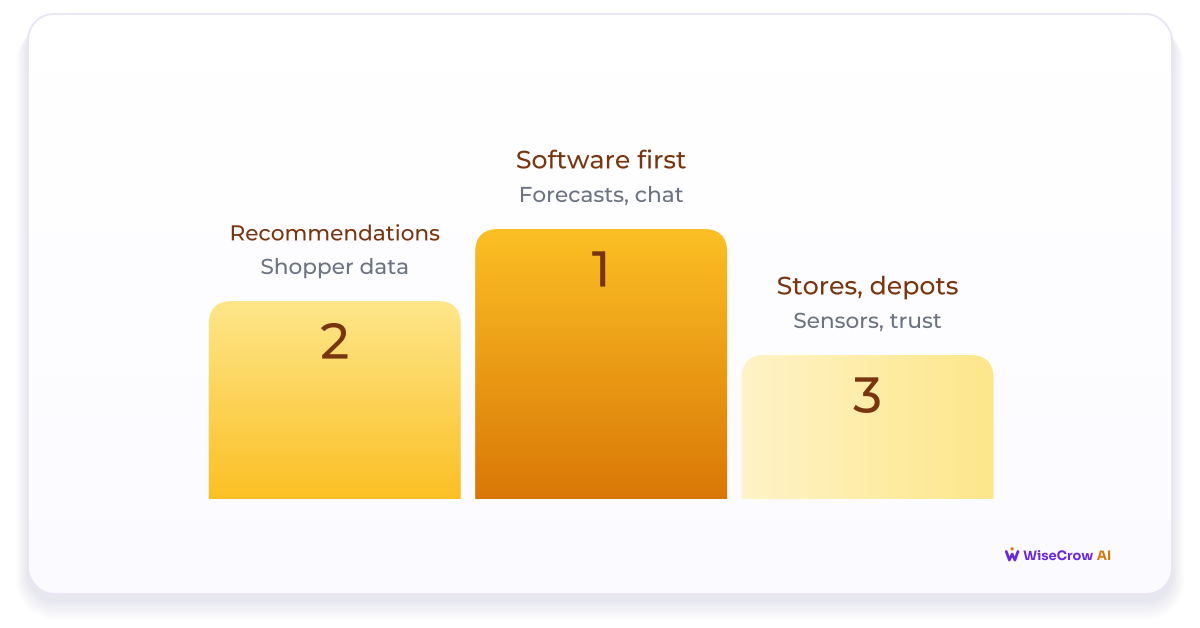
The Zebra figure is the useful reality check. Asked about a five-year horizon, retail decision-makers put generative AI behind older, proven technology. The ten most common entry points are ranked in my list of high-value retail AI use cases.
Retail AI Spending and Market Size
Budget intent is well documented. Hard spend totals aren’t. Retailers rarely report AI spend as its own line, so the dollar figures below come from forecasts, and you should treat them that way.
- 90% of retail and CPG respondents plan to increase AI budgets in 2026 to build on current projects (NVIDIA, 2026).
- Half of respondents expect their AI budgets to rise by 10% or more year over year (NVIDIA, 2026).
- 76% of retailers planned to increase AI investment over the following year, in a survey of 1,700 retail decision-makers in 21 countries (Salesforce Connected Shoppers Report, 2025).
- $31.12 billion: the estimated size of the global AI in retail market in 2024 (MarketsandMarkets, via GlobeNewswire, 2024).
- $164.74 billion: the forecast size of the same market by 2030, a 32% compound annual growth rate. Other research firms publish lower totals (MarketsandMarkets forecast, 2024).
- Up to $1 trillion: forecast US B2C retail revenue orchestrated by AI agents by 2030 (McKinsey forecast, via Digital Commerce 360, 2025).
- $3 trillion to $5 trillion: McKinsey’s global forecast range for agentic commerce by 2030 (McKinsey forecast, 2025).
- Up to 25% of global e-commerce sales could be influenced by AI agents by 2030 (Deloitte forecast, 2026).
The two budget numbers from NVIDIA tell you more than any market-size estimate. Nine in ten firms spending more, and half spending a lot more, means your competitors are funding AI from operating budgets now. Those forecasts are useful for one thing: showing a board that the money is moving.
Where Retailers Use AI in Practice
When you ask retailers what AI has actually improved, the answers get less glamorous. Productivity and efficiency beat customer-facing features by a wide margin.
- 54% of retail and CPG firms say AI improved employee productivity, the most cited business benefit (NVIDIA, 2026).
- 52% say AI delivered operational efficiencies (NVIDIA, 2026).
- 41% say AI improved customer service (NVIDIA, 2026).
- 64% report increased supply chain challenges compared with the year before (NVIDIA, 2026).
- 51% name supply chain efficiency and throughput as their top use of AI against those pressures, ahead of meeting customer expectations at 45% and traceability at 38% (NVIDIA, 2026).
- 87% of retail leaders say generative AI and automation are important for loss prevention (Zebra Global Shopper Study, 2025).
The supply chain numbers line up with what I see in client work. The projects that get funded first are forecasting, replenishment and allocation, because the savings show up in inventory and markdowns within a season. Customer-facing AI gets more press, but it’s harder to prove.
Loss prevention is the sleeper. Most of the value comes from spotting odd refunds, voids and inventory adjustments in data you already have, with no cameras involved. If you’re choosing software for any of these areas, my ranked retail AI tools cover pricing, inventory and service platforms.
Generative AI and AI Agents in Retail
Agents are the topic every retail conference covered in 2026. The surveys show a big gap between expectation and deployment.
- 47% of retail and CPG firms are using or assessing agentic AI, and 20% say agents are already active in their organization (NVIDIA, 2026).
- 57% name faster processes and efficiency as their main goal for AI agents, ahead of better customer experience and personalization at 40% (NVIDIA, 2026).
- 68% of retail executives expect to deploy agentic AI for key operational and enterprise work within 12 to 24 months (Deloitte, 2026).
- 75% of retailers say AI agents will be vital for competing within a year (Salesforce Connected Shoppers Report, 2025).
- 20% of global online sales in the 2025 holiday season, or $262 billion, were influenced by AI and agents (Salesforce holiday data, 2026).
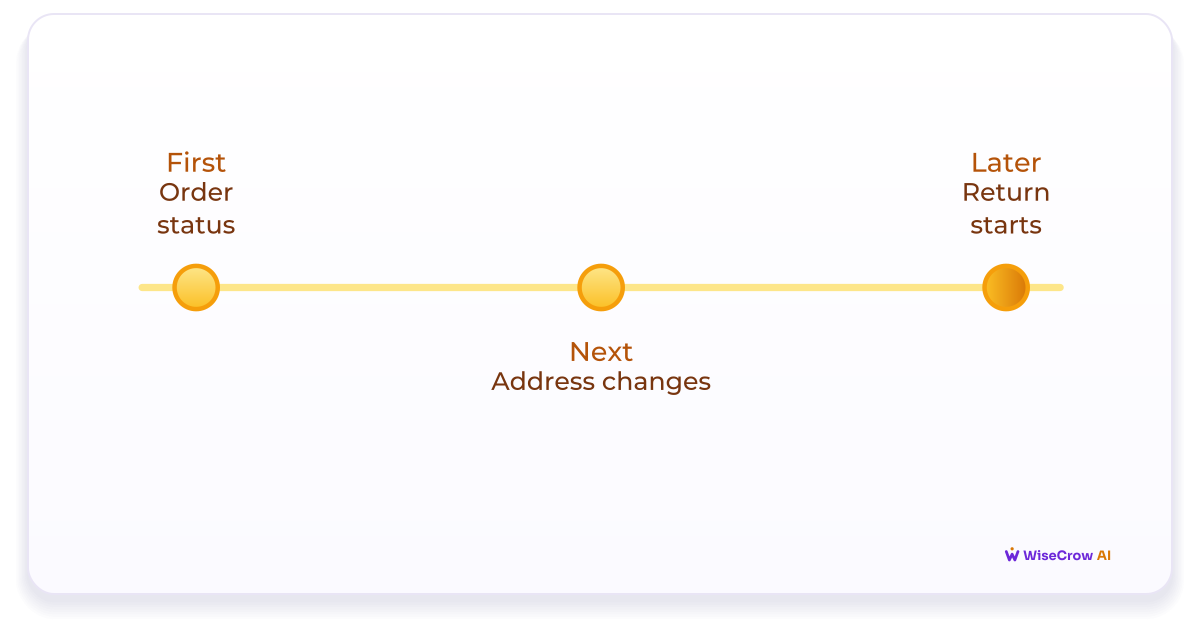
- 142% more tasks were handled by retailers’ AI agents during the holiday rush than in the two months before, such as updating delivery addresses and starting returns (Salesforce, 2026).
Read the $262 billion carefully. It counts orders where AI or an agent played a part, like a recommendation or a service chat. It doesn’t mean agents bought $262 billion of goods on their own. Retailers who quote it as agent sales get caught out fast.
The task numbers are more practical. Address changes, order status and return starts are exactly the requests that swamp service teams in December. Those are the jobs agents handle well today, because the rules are clear and the data sits in systems you already own.
AI Shopping Traffic and Conversion
These figures come from logged visits and orders, so they’re the most solid group in this roundup. The base was small, so the growth rates look dramatic.
- 693% more traffic reached US retail sites from generative AI tools in the 2025 holiday season than a year earlier (Adobe Analytics, via Digital Commerce 360, 2026).
- 31% higher conversion for shoppers arriving from generative AI tools than for visitors from other sources, double the gap seen in 2024 (Adobe Analytics, 2026).
- 254% year-over-year growth in revenue per visit from AI referrals during the holidays (Adobe Analytics, 2026).
- 9 times more often: how often shoppers referred by AI search converted compared with those arriving from social media (Salesforce holiday data, 2026).
- 15% to 20% of referrals for some retailers already come from chat-based AI tools (Deloitte, 2026).
The conversion gap makes sense once you think about where the shopper is in the journey. Someone who asked a chatbot to compare three blenders and then clicked through has already done the research. They arrive ready to buy.
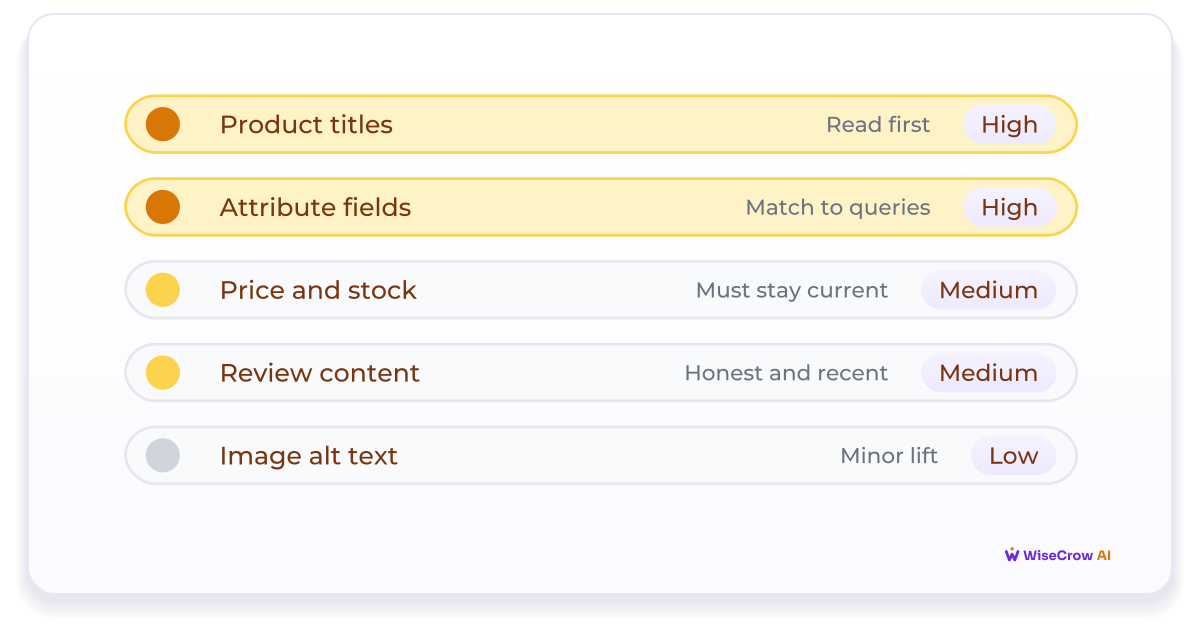
Your product data decides if you show up in those answers. Clean titles, full attributes, current prices and stock, and honest reviews all get read by AI tools. In my experience, a product feed audit is the cheapest AI project a retailer can run in 2026.
Shoppers’ Attitudes Toward AI and Trust
Consumer surveys give a wider spread of answers than any other group, mostly because each one defines “using AI to shop” differently. Look at the question before you compare two figures.
- 45% of consumers across 23 countries use AI during their buying journey, mostly to research products (41%), read reviews (33%) and find deals (31%) (IBM and NRF consumer study, 2026).
- 47% of US consumers used AI platforms or tools for their Halloween shopping in 2026, mainly for ideas and product recommendations (NRF survey, via Retail Insight Network, 2026).
- 68% of US consumers used at least one AI-enabled tool while shopping in the past three months, and 62% use AI to compare brands, prices or reviews (ICSC and McKinsey, via Homepage News, 2026).
- 39% of shoppers use AI for product discovery, rising to 54% among Gen Z (Salesforce Connected Shoppers Report, 2025).
- 63% of Gen Z shoppers are interested in AI agents making purchases on their behalf (Salesforce Connected Shoppers Report, 2025).
- 1 in 4 consumers used generative AI shopping tools in 2025, and a further 31% plan to (Capgemini Research Institute, via Chronicle.lu, 2026).
- 76% of shoppers want limits on what AI assistants can do for them (Capgemini, 2026).
- 71% of consumers worry about how generative AI uses their personal data (Capgemini, 2026).
- 46% of US shoppers who use AI assistants for online shopping say they trust AI-generated results (Adobe holiday survey, 2026).
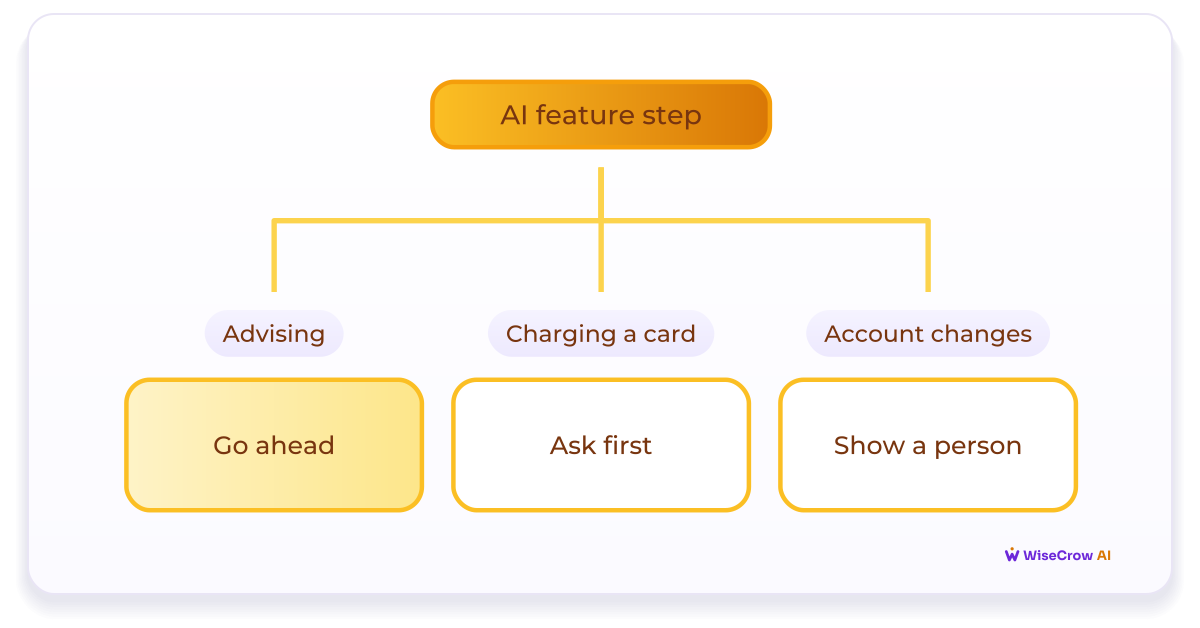
Shoppers happily let AI help them choose, and they’re much warier of letting it act. Research, comparison and deal hunting are mainstream. Handing over a card is still a minority habit, with Gen Z as the clear exception.
For your own AI features, the lesson is to stay in the advisory role until you’ve earned more. Explain why a product was recommended, show a person is reachable, and ask before anything gets charged. Capgemini also found that two-thirds of consumers trust AI more when it explains its recommendations.
Store Workforce and Physical Stores
Stores still carry most of retail, and the people working in them are asking for better tools. Four numbers sum it up.
- 88% of store associates say they struggle to get timely help or information, up from 82% a year earlier (Zebra Global Shopper Study, 2025).
- 89% of store associates globally agree that AI will help them become more productive (Zebra Global Shopper Study, 2025).
- 81% of retailers say inefficient processes and technology reduce store associate productivity (Salesforce Connected Shoppers Report, 2025).
- 72% of consumers still make purchases in physical stores (IBM and NRF consumer study, 2026).
Associates aren’t the ones resisting AI. Nearly nine in ten want it. What they can’t stand is another app that doesn’t know what’s in the back room. Tools that answer “is it in stock, and where?” win store teams over in a week. You can see how specific chains pulled that off in my roundup of real retail AI examples.
Results and ROI From Retail AI
Results data is mostly self-reported, so read it as a signal of direction. Still, the share of firms reporting gains above 10% is higher than I expected.
- 89% of retail and CPG respondents say AI is helping increase annual revenue (NVIDIA, 2026).
- 95% say AI is helping decrease annual costs (NVIDIA, 2026).
- 30% say AI has increased revenue by more than 10% (NVIDIA, 2026).
- 37% say AI has reduced costs by more than 10% (NVIDIA, 2026).
- 6.2% vs 3.9%: holiday sales growth for companies running their own AI agents compared with those that don’t, a 59% higher growth rate (Salesforce holiday data, 2026).
- 60% of service cases were deflected by Pandora’s AI support agent, which also contributed to a 10% rise in Net Promoter Score since its January 2025 launch (Salesforce holiday data, 2026).
The cost numbers beat the revenue numbers, and that matches what I see. Savings arrive first because they come from work you already do: fewer manual reorders, fewer service tickets, fewer emergency markdowns. Revenue gains depend on shoppers changing behavior, which takes longer and is harder to attribute.
The Salesforce agent comparison needs a caveat. Companies that built their own agents were probably stronger digital operators to begin with. The gap is real, but the agent isn’t the only reason for it. In my client work, the steadiest cost wins come from plain retail automation from inventory to checkout, with flashy customer features a distant second.
How to Choose the Right Retail AI Statistics for Your Case
Fifty numbers are too many for any deck. Pick the few that match the decision in front of you, and run each one through these checks first:
- Does the sample match your business? A global retail and CPG survey says little about a regional grocery chain.
- Is it measured or estimated? Adobe traffic data counts real visits. A 2030 market forecast is a guess with a decimal point.
- Does it separate testing from production? “Using or assessing” inflates adoption by a lot.
- Who published it? Vendor data is often solid, but say so when the publisher sells the product being measured.
- What would you do differently because of it? A number that doesn’t change a decision belongs in an appendix.
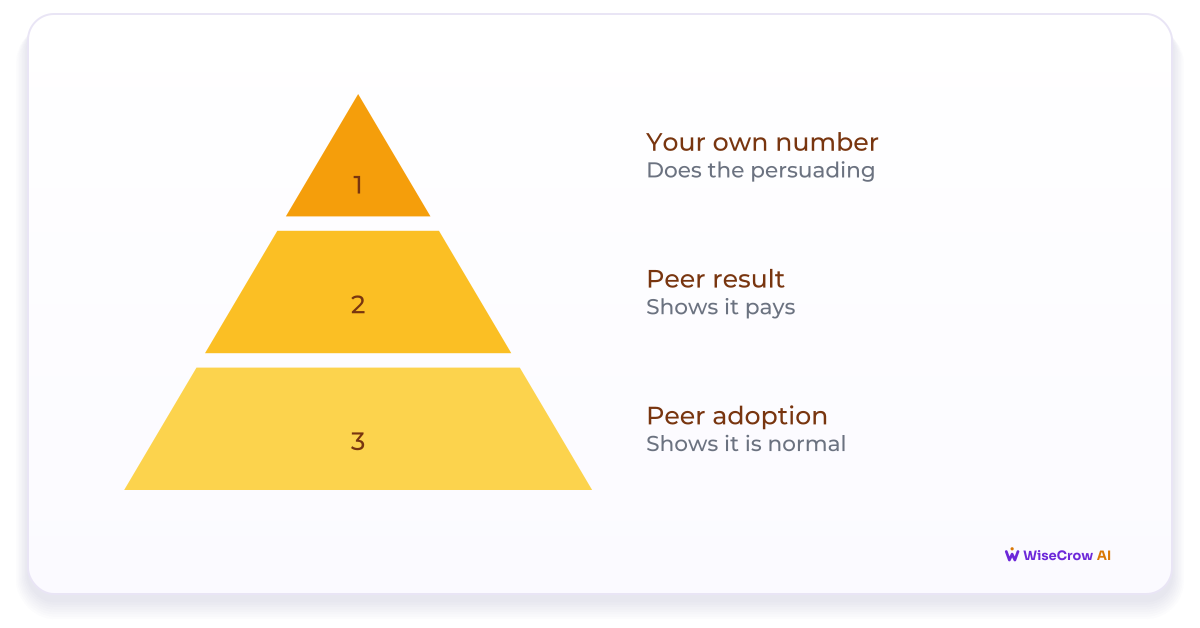
For a budget request, I usually pair one adoption figure, one result figure and one internal number. Something like: 90% of peers are raising AI budgets, 37% report cost cuts above 10%, and here’s what our stockouts cost us last quarter. The internal number does most of the persuading.
Questions About AI in Retail Statistics
How Many Retailers Use AI in 2026?
In NVIDIA’s 2026 State of AI in Retail and CPG survey, 91% of respondents said their companies are either actively using or assessing AI. That figure mixes live use with evaluation, so the share running AI in production is lower. For AI agents specifically, only 20% said agents are already active in their organization.
How Much Are Retailers Spending on AI?
No public source gives one reliable total for retailer AI spend. What the surveys show is direction: 90% of NVIDIA’s respondents plan to raise AI budgets in 2026, and half expect increases of 10% or more. Research firms put the AI in retail market at about $31 billion in 2024, with forecasts for 2030 that vary widely by publisher.
What Share of Holiday Sales Did AI Influence?
Salesforce estimates that AI and agents influenced 20% of global online sales during the 2025 holiday season, or $262 billion. It’s an influence estimate from Salesforce’s own commerce data, so it counts orders where AI played a part, such as a recommendation or a service chat. It doesn’t measure sales that AI completed alone.
Do Shoppers Trust AI When They Shop?
Partly. In Adobe’s holiday survey, 46% of shoppers using AI assistants said they trust AI-generated results. Capgemini found that 71% of consumers worry about how generative AI uses their personal data and 76% want limits on what AI assistants can do. People use AI for research and comparison far more than they let it buy for them.
Does Traffic from ChatGPT and Other AI Tools Convert Well for Retailers?
In the 2025 holiday season it did. Adobe found that visitors referred by generative AI tools converted 31% more often than other visitors, and Salesforce found that AI search referrals converted nine times more often than social media referrals. The base is still small and conversion rates shift between seasons, so check the latest figures before you plan around them.
What Is the Most Reliable Source for AI in Retail Statistics?
Use sources that publish their method and sample. NVIDIA’s yearly retail survey, Deloitte’s retail outlook, the IBM and NRF consumer study and Zebra’s Global Shopper Study all state who they asked and when. Adobe and Salesforce publish figures from their own commerce data, which covers billions of visits. Treat market-size forecasts from research firms as rough estimates.
How Often Should I Update the Retail AI Statistics I Use?
Once a year is enough for most of them. NVIDIA’s latest survey and the Adobe and Salesforce holiday data all came out in January 2026, and Zebra’s latest shopper study came out in November 2025. When a new edition comes out, swap both the figure and the year.
Sources
- NVIDIA, State of AI in Retail and CPG: 2026 Trends (January 2026): blogs.nvidia.com
- Deloitte, 2026 Global Retail Industry Outlook, survey of 330 retail executives: deloitte.com
- Coverage of the Deloitte 2026 Retail Outlook: Chain Drug Review
- Zebra Technologies, 18th Annual Global Shopper Study (November 2025): investors.zebra.com
- Salesforce, Connected Shoppers Report, sixth edition (2025): salesforce.com
- Salesforce, 2025 holiday shopping data (January 2026): salesforce.com
- MarketsandMarkets, Artificial Intelligence in Retail Market forecast (November 2024): GlobeNewswire
- McKinsey, The Agentic Commerce Opportunity, as reported by Digital Commerce 360 (October 2025): digitalcommerce360.com
- ICSC and McKinsey, Shopping in the Age of AI, as reported by Homepage News (April 2026): homepagenews.com
- Adobe Analytics 2025 holiday season data and consumer survey, as reported by Digital Commerce 360 (January 2026): digitalcommerce360.com
- IBM Institute for Business Value and NRF consumer study (January 2026): newsroom.ibm.com
- NRF Halloween 2026 survey by Prosper Insights & Analytics, as reported by Retail Insight Network: retail-insight-network.com
- Capgemini Research Institute, What Matters to Today’s Consumer 2026, as reported by Chronicle.lu: chronicle.lu
Disclaimer: This article is for general information only. Survey results, commerce data and market forecasts change with each edition, and forecasts are estimates, so check the original sources for the latest figures before you rely on them.
Did you find this helpful?
Thank you for your feedback.
Marlena leads the WiseCrow editorial team and works with our consultants to turn real client projects into practical guides on AI strategy, automation and governance. Before joining WiseCrow, she spent 12 years in B2B operations and SaaS content. She has since edited more than 400 articles on AI and automation and reviewed workflows from over 60 client projects. She is based in Austin, Texas.