Summary
- RELEX and Blue Yonder lead for large chains that need store-level forecasting and replenishment, but both need long rollouts and clean master data.
- Toolio, Netstock and Inventory Planner by Sage bring AI planning to mid-sized retailers and online brands in weeks.
- For pricing, Prisync covers competitor tracking on a small budget, while Competera and Revionics optimize prices from demand models.
- Klaviyo, Nosto, Algolia and Gorgias improve messaging, personalization, search and support, and their bills grow with your audience.
The Best Retail AI Tools at a Glance
| Tool | Category | Paid from | Best for |
|---|---|---|---|
| 1. RELEX Solutions | Unified retail planning | Custom quote | Grocery and large chains |
| 2. Blue Yonder | End-to-end supply chain | Custom quote | Enterprise planning and execution |
| 3. Toolio | Merchandise planning | Custom quote | Fashion and specialty brands |
| 4. Netstock | Inventory optimization | $900/mo, yearly | Mid-sized retailers on an ERP |
| 5. Inventory Planner by Sage | Ecommerce forecasting | Quote by inventory | Shopify and Amazon brands |
| 6. Revionics | Price optimization | Custom quote | Large pricing teams |
| 7. Competera | AI pricing platform | Custom quote | Big catalogs, mid to large |
| 8. Prisync | Competitor price tracking | $99/mo | Online stores on a budget |
| 9. Klaviyo | Customer data and messaging | Free plan | Online brands of any size |
| 10. Nosto | Personalization and testing | Custom quote | Mid-sized online stores |
| 11. Algolia | AI site search | Free tier | Fast search that scales |
| 12. Gorgias | AI customer support | $10/mo | Shopify brands |
The 12 Best Retail AI Tools, Ranked
I ranked these tools by how directly they protect retail margin: forecasting and replenishment first, because stock ties up the most cash, then pricing, then the tools that shape the shopper’s experience. Within each group, the broadest platform comes first. In my retail AI consulting work, the tool matters less than the decision it supports, so read the verdicts with your biggest leak in mind.
RELEX Solutions
The Strongest All-Round Choice for Store-Level Forecasting and Replenishment in Grocery and Large Chains
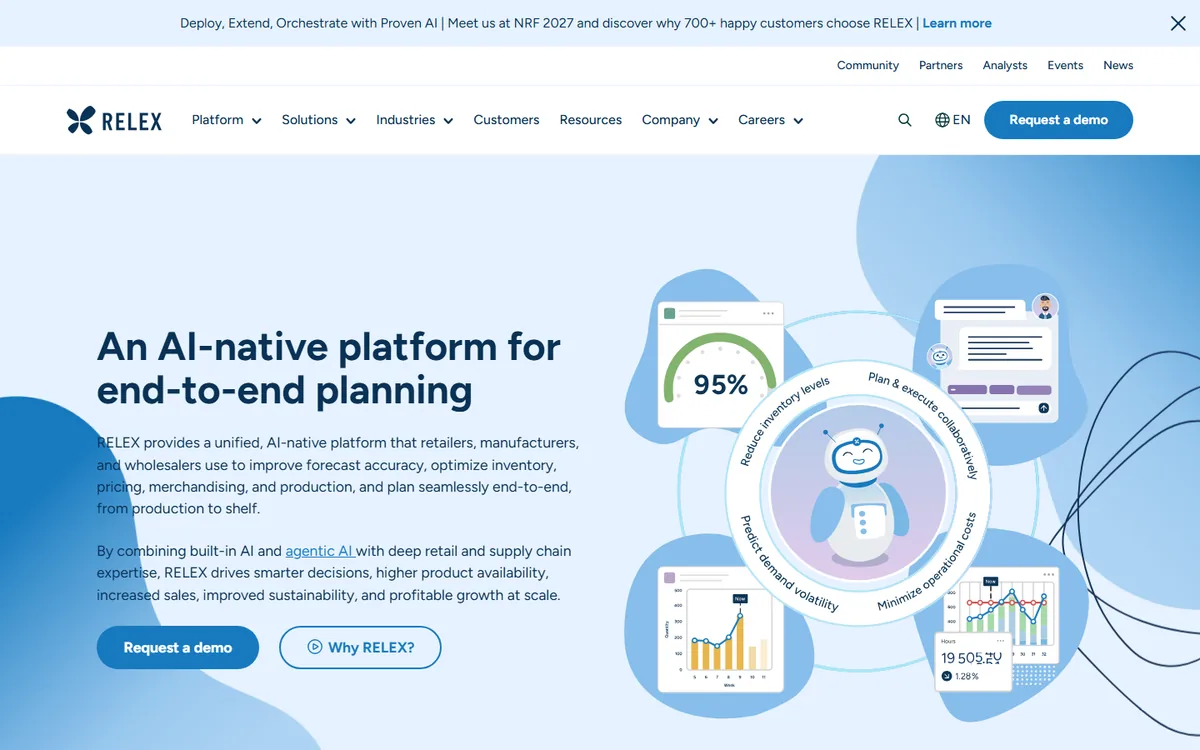
RELEX plans demand, replenishment, allocation, assortment, space, pricing and promotions on one data model, with AI agents that explain and act on the numbers.
RELEX is where I start when a chain with fresh food, many stores and thin margins asks me about forecasting. Its models work at store and item level and pick up weather, local events, promotions and cannibalization, then turn the forecast into order proposals for stores and distribution centers. Space, assortment and price decisions share the same data, so a planogram change shows up in the next order. In May 2026 RELEX launched RELEX Open, which lets you plug your own AI agents into the platform, and it now ships ready-made agents for forecasting, replenishment, pricing and promotions.
The payoff I see most often comes from short shelf-life goods, where a sharper forecast means less waste and fewer empty shelves in the same week. The price is effort. Expect a long implementation, heavy demands on master data and a planning team that has to change habits it has had for years. Reviewers praise the support team and the freedom to change settings without IT. A few mention limited ERP links. If you run a handful of stores with simple ranges, RELEX will feel like far more platform than you need.
What RELEX Solutions Does Well
- Fresh and short shelf-life forecasting is a real strength
- Forecasts, space and pricing share one data model
- Planners can change settings without developers
What RELEX Solutions Could Do Better
- Long rollouts that depend on clean master data
- Too much platform for small chains
RELEX Solutions Pricing
RELEX doesn’t publish prices. Contracts are quote-based subscriptions that depend on the modules you license and the size of your store and supplier network, and implementation services are priced separately.
RELEX Solutions Reviews
- G2: score of 4.6 out of 5 (from +20 customer reviews)
Blue Yonder
The Enterprise Suite When Planning, Stores and Warehouses Must Run on One Vendor
Blue Yonder, fully owned by Panasonic since 2021, covers demand and supply planning, merchandise and assortment planning, space planning, order management and warehouse execution.
Blue Yonder is the former JDA business, and many large retailers already run some part of it, often the space planning tool their category teams use for planograms. The portfolio reaches from merchandise financial planning and assortment planning to demand forecasting, order management, warehouse management and transport. In 2026 Blue Yonder added AI agents for merchandise financial planning and assortment planning, plus a fulfillment agent inside Order Management that flags sourcing problems and suggests a fix.
I recommend it when you want one vendor from the plan to the store shelf, and your IT team can carry a large program. The breadth is the reason to buy and also the main risk. Modules come from different eras, and Capterra reviewers mention dated screens and expensive training. On G2, ratings are split across many separate product listings with few reviews each, so ask for references from retailers your size and in your category. For a mid-sized brand, Toolio or Netstock covers most of the planning value with far less work and a smaller bill.
What Blue Yonder Does Well
- Covers planning through store and warehouse execution
- Its space planning tool is a shared language for category teams
- New agents target financial and assortment planning
What Blue Yonder Could Do Better
- Some screens feel dated, and training costs add up
- Large programs need strong internal IT
Blue Yonder Pricing
Blue Yonder doesn’t list prices. Each module is quoted separately as a SaaS subscription, so your total depends on which planning and execution products you combine and how many stores, warehouses and users they cover.
Blue Yonder Reviews
- G2: 4.2 out of 5 star rating, Retail Planning & Category Management listing (from 8 customer reviews)
- Capterra: 4.5 out of 5 star rating, Supply Chain Planning listing (from 11 customer reviews)
Toolio
Modern Merchandise Planning for Fashion and Specialty Brands Ready to Leave Spreadsheets Behind
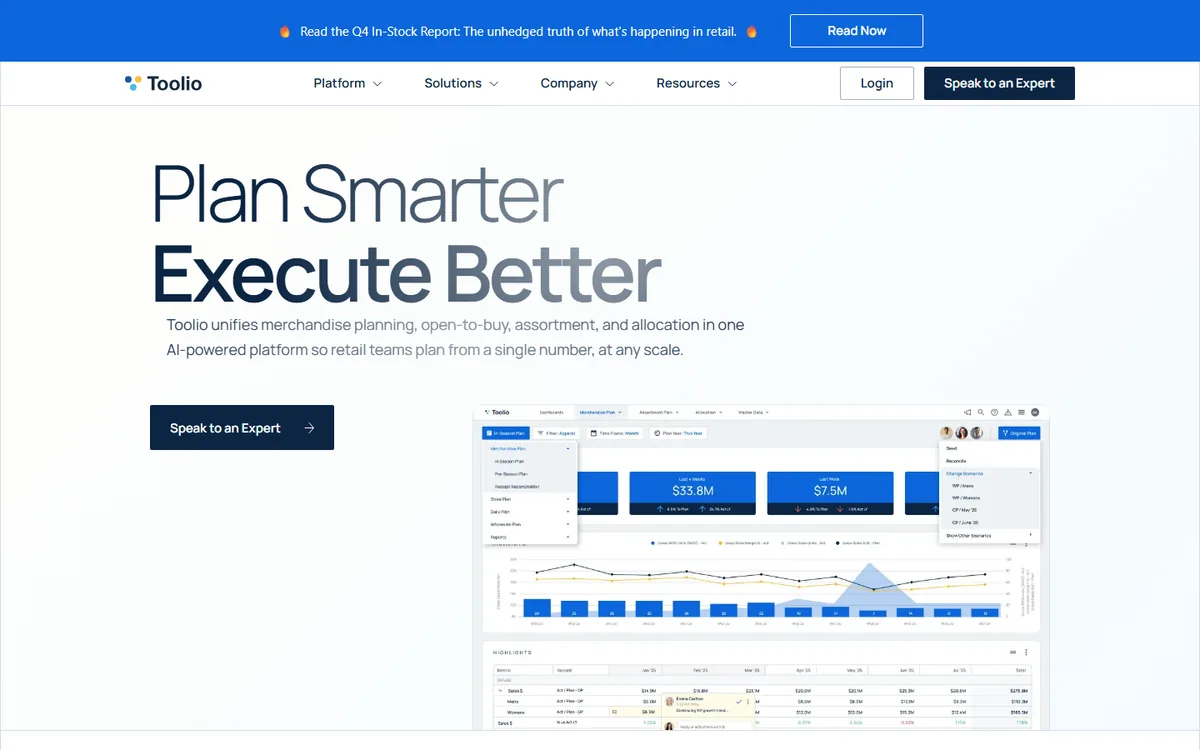
Toolio is a cloud platform for merchandise financial planning, assortment planning, open-to-buy, allocation and replenishment, built for apparel, footwear and specialty retail.
Most mid-sized fashion brands I meet still plan the season in giant spreadsheets that one person fully understands. Toolio swaps those for linked plans. Financial targets flow down into assortment plans by style and color, open-to-buy updates as sales come in, and allocation sends stock to stores and ecommerce. AI forecasting feeds the buy plan, and Toolio has demoed an MCP server that connects its planning data to AI assistants.
What I like is how fast planners take to it. The grids look like the spreadsheets they know, so the switch doesn’t stall in month two. G2 reviewers praise the automation and the reporting, and several mention a learning curve in the first weeks. Toolio is built for seasonal merchandise. Daily replenishment of thousands of perishable items is a better job for RELEX. The review base is also small, so ask for a reference from a brand with your channel mix before you sign.
What Toolio Does Well
- Familiar grid layout helps planners switch from spreadsheets
- Financial, assortment and allocation plans stay linked
- A clear fit for seasonal fashion and specialty ranges
What Toolio Could Do Better
- Few public reviews to judge it by
- Weaker fit for grocery and perishables
Toolio Pricing
Toolio doesn’t publish prices. Pricing is modular, so you pay for the planning modules you choose, and you get exact figures through a sales quote after a demo.
Toolio Reviews
- G2: score of 4.8 out of 5 (from 10 customer reviews)
Netstock
The Quickest Route to Better Replenishment for Mid-Sized Retailers Already on an ERP
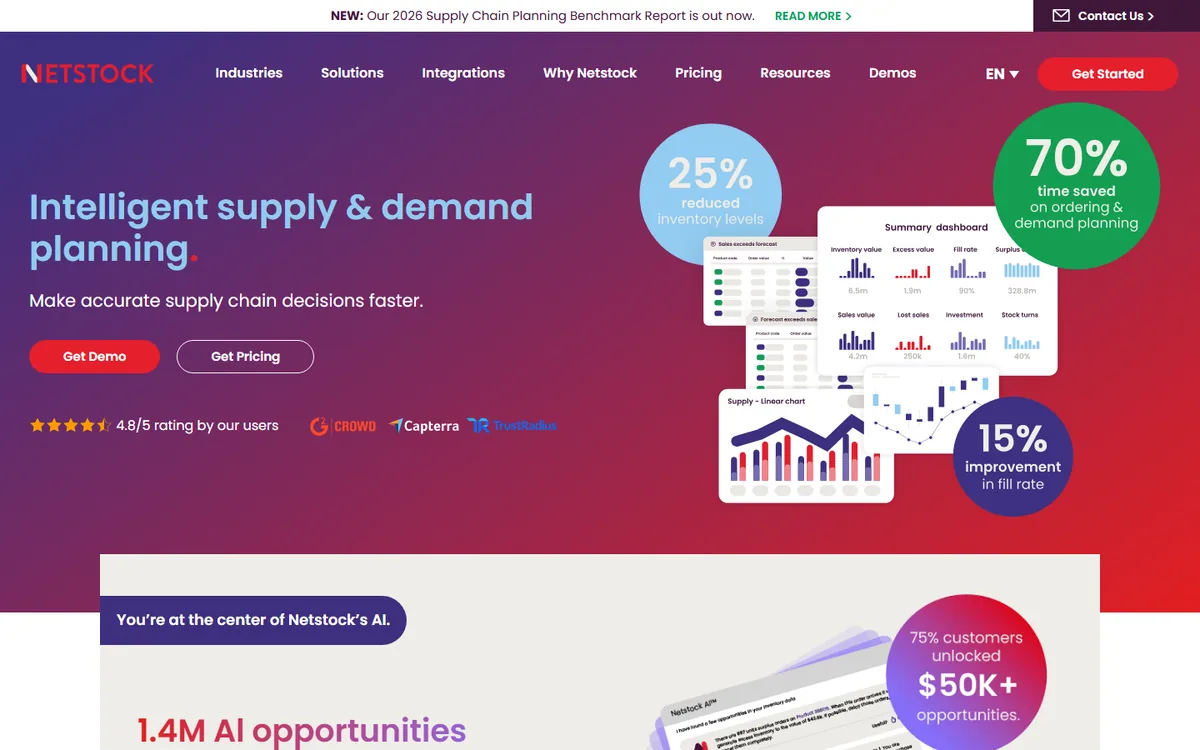
Netstock sits on top of your ERP and turns sales history into forecasts, reorder suggestions and an inventory health dashboard, with AI recommendations in its Predictor Inventory Advisor.
Netstock fits retailers and distributors who already run an ERP like Microsoft Dynamics 365 Business Central, NetSuite, Acumatica or SAP Business One and want smarter buying without a big planning project. Prebuilt connectors pull your data each night. Netstock forecasts demand per item and location, sorts stock into classes and drafts purchase orders you can send back to the ERP in one click. Predictor Inventory Advisor flags excess stock and stockout risk on a single dashboard your buyers can read at a glance.
In my client work, Netstock is the tool buyers keep opening after the pilot, because each screen answers one question: what should I order today? G2 reviewers say much the same, and some report that orders now draft themselves and need only a quick check. The weak spots are reporting flexibility and a price that small businesses find steep. One negative review describes a nine-month rollout that never paid off, so agree on data feeds and success measures before you sign. My guide to AI retail automation covers what to automate next once orders run on their own.
What Netstock Does Well
- Ready connectors for common mid-market ERPs
- Buyers grasp the dashboard in minutes
- Draft orders go back to the ERP in one click
What Netstock Could Do Better
- Reporting and custom dashboards are limited
- Entry price is high for very small retailers
Netstock Pricing
Netstock’s pricing page says plans start at $900 per month on an annual subscription. The final price depends on the product bundle you pick, and you request an exact estimate through a short form.
Netstock Reviews
- G2: score of 4.6 out of 5 (from +180 customer reviews)
- Capterra: score of 4.8 out of 5 (from +70 customer reviews)
Inventory Planner by Sage
The Ecommerce Brand’s Forecasting Tool for Shopify, BigCommerce and Amazon Sellers
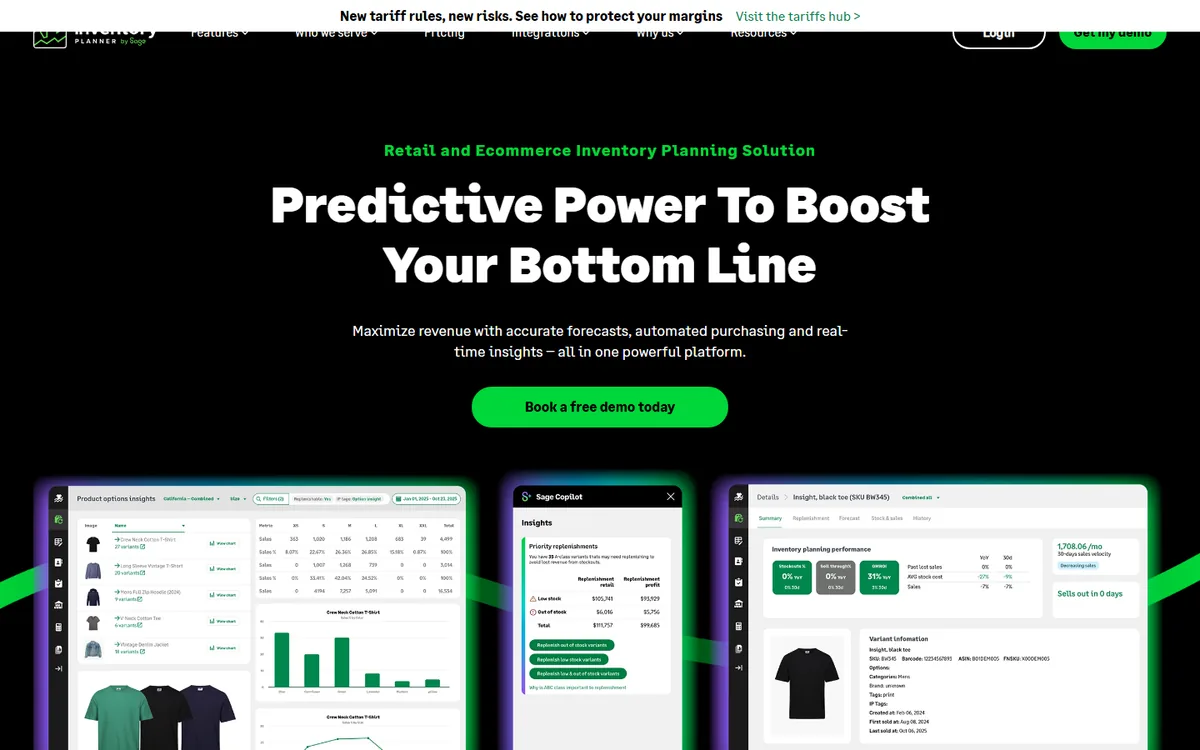
Inventory Planner, part of Sage since 2022, forecasts demand from your store data, suggests reorders and builds purchase orders for online and wholesale brands.
For brands that sell mostly online, Inventory Planner is often the first serious forecasting tool they buy. It connects to Shopify, BigCommerce, Amazon and other channels, reads your sales and stock levels, and recommends what to reorder for each variant and warehouse based on supplier lead times. You can build purchase orders, send them to suppliers and track what’s still open, all in one place. Unlimited users are included, so buyers, founders and finance can all work from the same numbers.
Users on G2 and Capterra praise the forecasts and the hours saved on purchasing. The complaints are about money and syncing. Pricing scales with the volume of inventory you manage, and several Shopify App Store reviewers say they had to pay a full year up front before onboarding began. If you run a small store with a few dozen products, a cheaper Shopify app will do. Once you carry thousands of variants across channels and warehouses, the forecasts start to earn the fee.
What Inventory Planner by Sage Does Well
- Forecasts at variant and warehouse level
- Purchase orders built from the recommendations
- Unlimited users at no extra cost
What Inventory Planner by Sage Could Do Better
- Annual contracts paid up front, according to some reviewers
- Occasional sync issues with store data
Inventory Planner by Sage Pricing
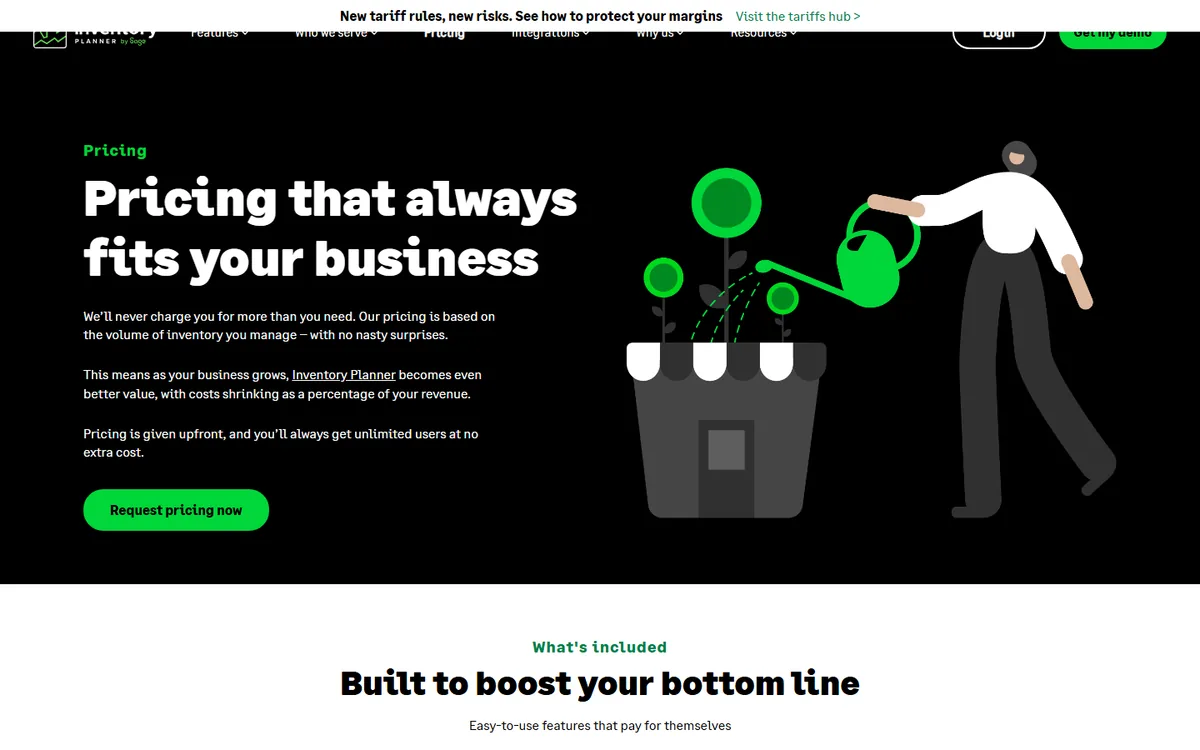
Inventory Planner doesn’t list plan prices. Its pricing page says the cost depends on the volume of inventory you manage, with unlimited users included, and you request a quote or book a demo to get your figure. The Shopify app is free to install, with charges billed in USD.
Inventory Planner by Sage Reviews
- G2: score of 4.4 out of 5 (from +45 customer reviews)
- Capterra: score of 4.6 out of 5 (from +70 customer reviews)
Revionics
Enterprise Price, Promotion and Markdown Optimization with a Long Retail Track Record
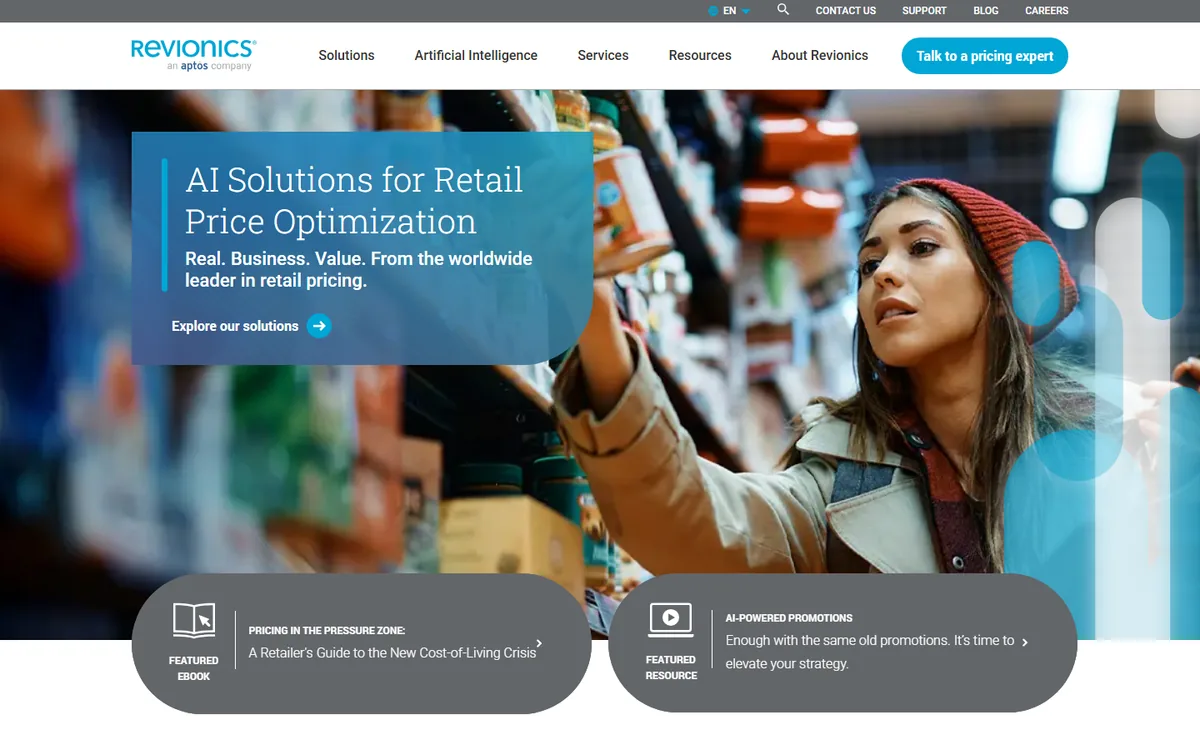
Revionics, an Aptos company since 2020, uses demand models to recommend base prices, promotions and markdowns for large grocery, drug, sporting goods and specialty chains.
Revionics models how each item sells at different prices, how shoppers switch between similar items and how competitor prices pull demand away. Your pricing team sets rules for margin, price image and price ladders, and the system proposes changes that meet those goals. Markdown Optimization plans clearance timing and depth by store. In April 2026, Academy Sports + Outdoors extended its use of Base Price and Markdown Optimization. Revionics also previewed a multi-agent pricing system at Google Cloud Next 2025 with a commercial launch planned for 2026, so ask your rep where it stands.
Price optimization pays when you have many items, many stores and a pricing team ready to trust a model. The one G2 reviewer praises the analytics and warns that results depend on Revionics experts staying involved. I see the same pattern, so budget for the vendor’s science team past year one. For curated ranges with few items, a competitor tracker and clear rules get you most of the value. Pricing shows up again and again in real AI in retail examples, and in the projects I trust most, a person still makes the final call.
What Revionics Does Well
- Base price, promotion and markdown in one suite
- Rules for price image and ladders keep prices sensible
- Long track record with large grocery and specialty chains
What Revionics Could Do Better
- Results lean on ongoing vendor expertise
- Almost no public user reviews to compare
Revionics Pricing
Revionics doesn’t publish prices. Each suite is quoted as an enterprise subscription, and the price depends on the modules you choose, your number of items and stores, and the level of analytics support you want.
Revionics Reviews
- G2: score of 4.5 out of 5 (from 1 user review)
Competera
AI Pricing for Large Catalogs That Starts with the Rules You Already Use
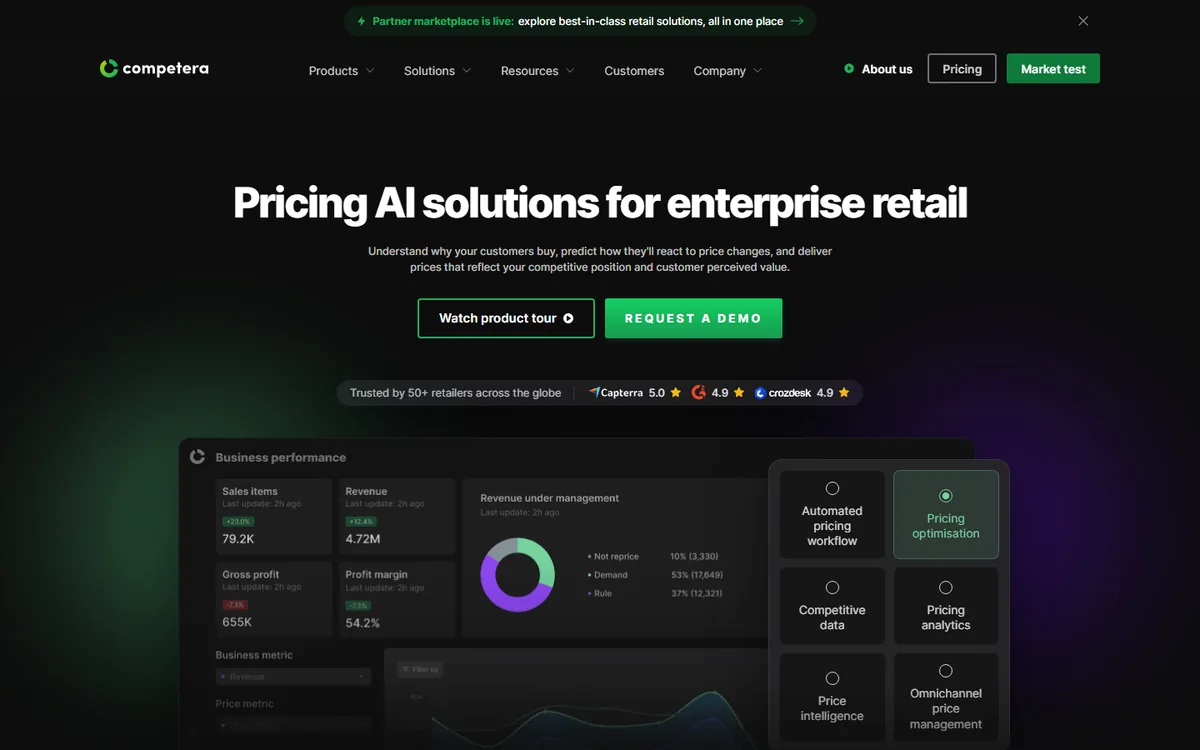
Competera combines competitor price data, demand forecasting and contextual AI to recommend prices for retailers with big catalogs, online and in store.
Competera suits pricing teams that are nervous about handing prices to a black box. You begin by automating the price rules you already follow, then move to demand-based recommendations, and finally to full optimization where the model weighs elasticity, competitor moves and stock levels together. Competitor price collection is part of the platform, so you don’t need a separate tracker. At NRF 2026, Competera showed how a retailer combined its AI with SAP to plan markdowns across a very large catalog.
I see Competera as the middle step between a tracker like Prisync and a full Revionics program. You get real demand modeling without a two-year project. Reviewers on G2 and Capterra rate it highly and praise the support team and the interface. Some note it isn’t the cheapest option, and one wanted more control over rule-based repricing in the interface. Before the pilot, make sure you have clean cost data and written price rules from your category managers, or the first month goes to arguing about inputs.
What Competera Does Well
- A gradual path from rules to full optimization
- Competitor data comes built in
- Strong support scores from reviewers
What Competera Could Do Better
- Pricing sits above simple trackers
- Needs clean cost data before it shines
Competera Pricing
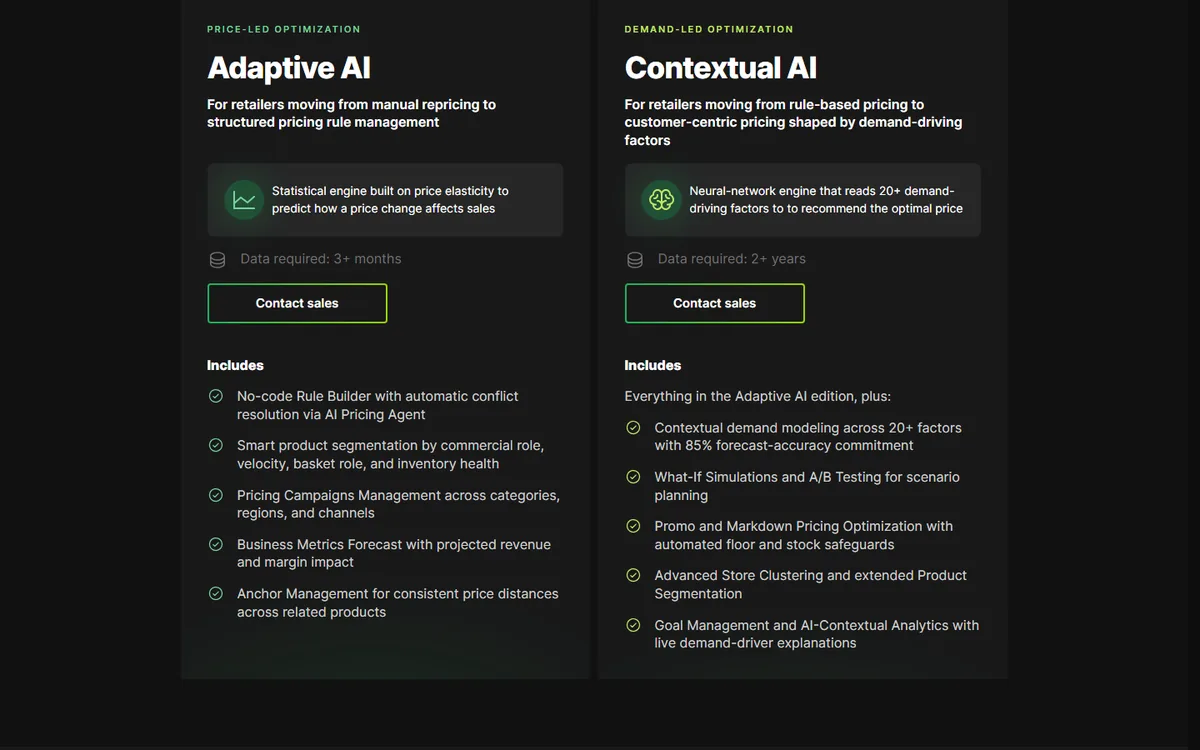
Competera doesn’t publish prices. Its editions and add-ons are all sold through sales, and the quote depends on your catalog size, channels and the level of AI optimization you choose.
Competera Reviews
- G2: score of 4.9 out of 5 (from 14 customer reviews)
- Capterra: score of 4.8 out of 5 (from 58 customer reviews)
Prisync
Affordable Competitor Price Tracking for Online Stores with Up to 5,000 Products
Prisync tracks competitor prices and stock across websites and marketplaces, and its rules can reprice your store automatically within limits you set.
Plenty of retailers don’t need demand models yet. If you sell products that shoppers compare across sites, the first question is simple: are you priced right against the stores they check? Prisync answers it. You add competitor product URLs, and it collects their prices and stock levels every day, with alerts, history charts and a dashboard of where you sit against each rival. Dynamic pricing rules can then update prices on your store, with floors and ceilings that protect your margin.
I like how upfront Prisync is about its scope. Plans are public, the 14-day trial needs no card, and reviewers give the support team high marks. It knows what competitors charge and knows nothing about your own demand, so if you follow every price drop it will walk you straight into a price war. Set a minimum margin on day one. Above 5,000 products you need a custom deal, and at that size Competera may be the better next step.
What Prisync Does Well
- Public prices and a free trial without a card
- Quick setup with daily competitor data
- Support gets high marks from reviewers
What Prisync Could Do Better
- No demand modeling behind the price rules
- Extra channels and API access cost more
Prisync Pricing
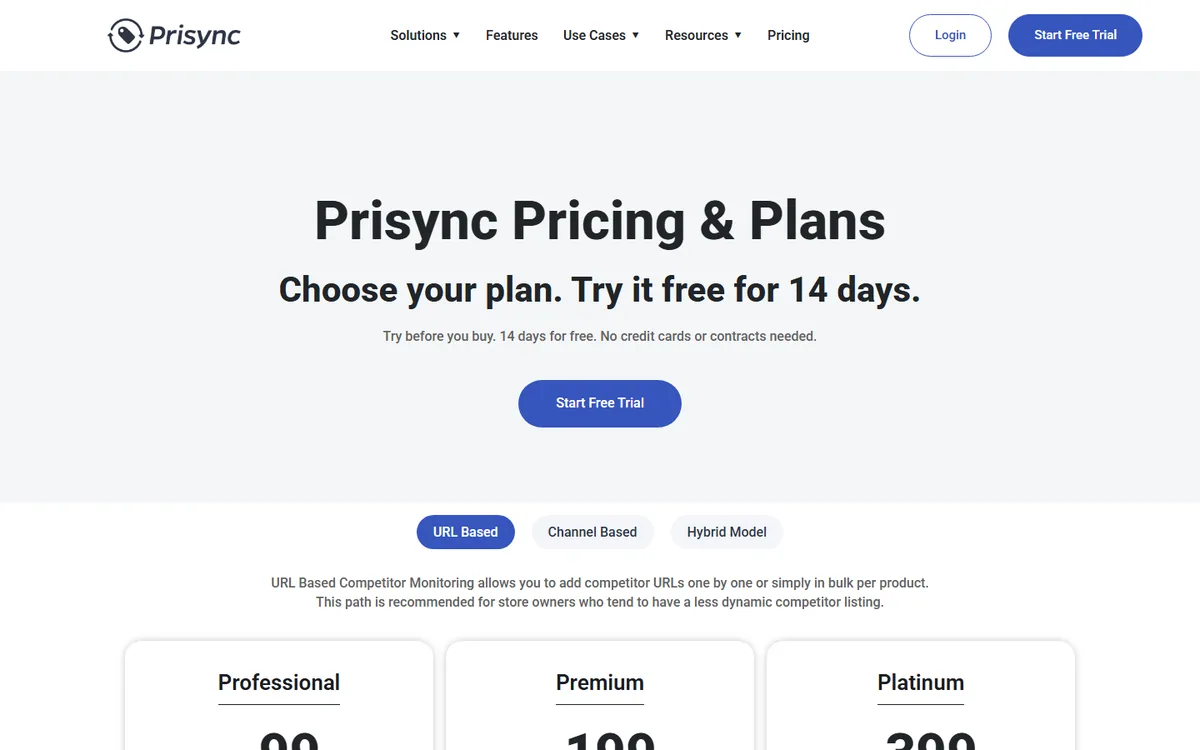
Prisync’s URL-based plans cost $99 per month for Professional (up to 100 products), $199 for Premium (up to 1,000) and $399 for Platinum (up to 5,000). Channel-based plans run from $199 to $599 per month, and Hybrid plans from $299 to $799. Extra sales channels cost $100 to $200 per month each, API access adds 20% to the monthly fee, and every plan comes with a 14-day free trial.
Prisync Reviews
- G2: score of 4.7 out of 5 (from +160 customer reviews)
- Capterra: score of 4.8 out of 5 (from +120 customer reviews)
Klaviyo
The Customer Data and Messaging Platform Online Retailers Grow Into, from First Email to Full CRM
Klaviyo combines a customer data platform with email, SMS, mobile push, reviews and a helpdesk, and adds AI agents for campaign building and customer service.
Klaviyo started as the email tool for Shopify stores and now calls itself an autonomous B2C CRM. The Klaviyo Data Platform pulls browsing, order and engagement data into one profile per shopper, and that profile drives flows like abandoned cart, back in stock and win-back across email, SMS, WhatsApp and push. Composer, its AI marketing agent, reads your existing flows and segments and drafts a full campaign from a single prompt. Customer Agent answers order and product questions around the clock and hands the rest to your team in the built-in helpdesk.
In my client work, Klaviyo is the tool online brands keep longest, because the data model grows with them. A shopper who browsed rain jackets and left can get a matching email and text that afternoon, with no developer involved. The weak spot is the bill. Pricing follows active profiles, so a big list of old subscribers you never clean costs real money every month. Reviewers also mention a learning curve once you move past templates into custom segments. Before you budget, compare your spend with peers in these AI in retail statistics.
What Klaviyo Does Well
- One shopper profile drives email, SMS and push
- Ready-made retail flows work on day one
- Free plan to test before you commit
What Klaviyo Could Do Better
- Costs climb fast as your profile count grows
- Advanced segments take time to learn
Klaviyo Pricing
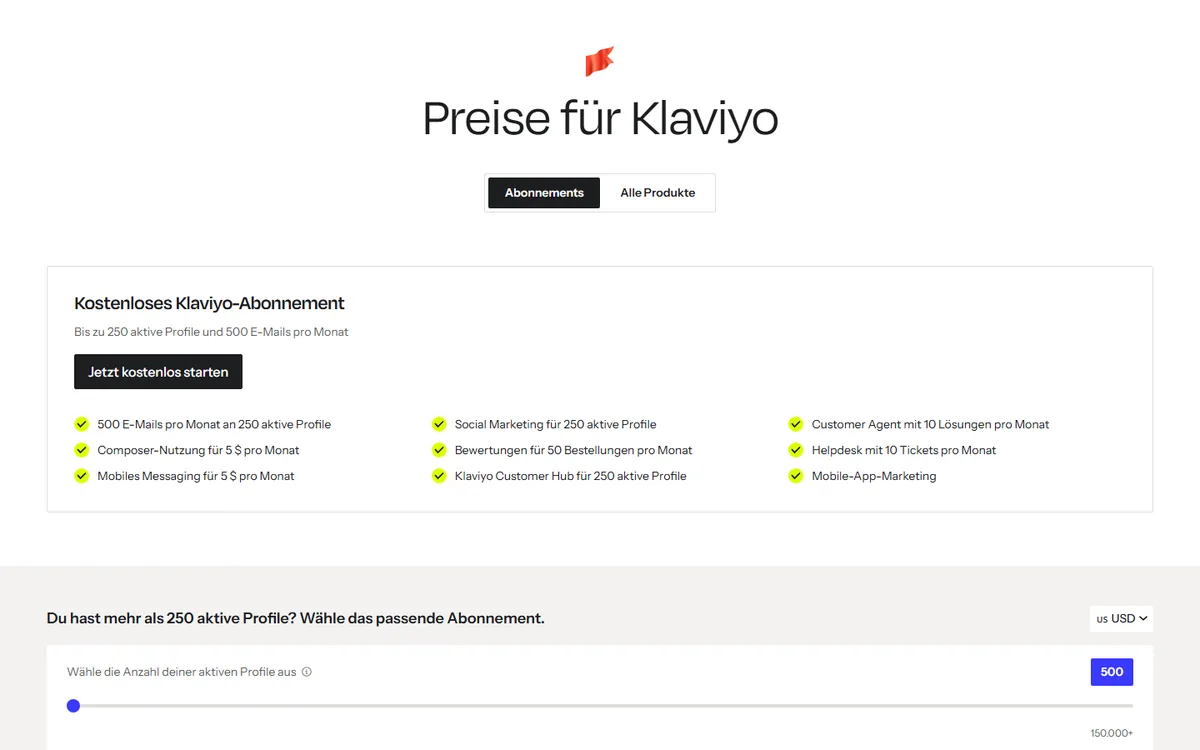
Klaviyo has a free plan for up to 250 active profiles and 500 emails per month. The Email plan starts at $20 per month and the Marketing plan at $25 per month, both for 500 active profiles and 5,000 emails, and prices rise with your profile count. SMS is an add-on, and above 150,000 active profiles you move to a Custom plan with advanced data management and data warehouse sync.
Klaviyo Reviews
- G2: score of 4.6 out of 5 (from +1,300 customer reviews)
- Capterra: score of 4.6 out of 5 (from +520 customer reviews)
Nosto
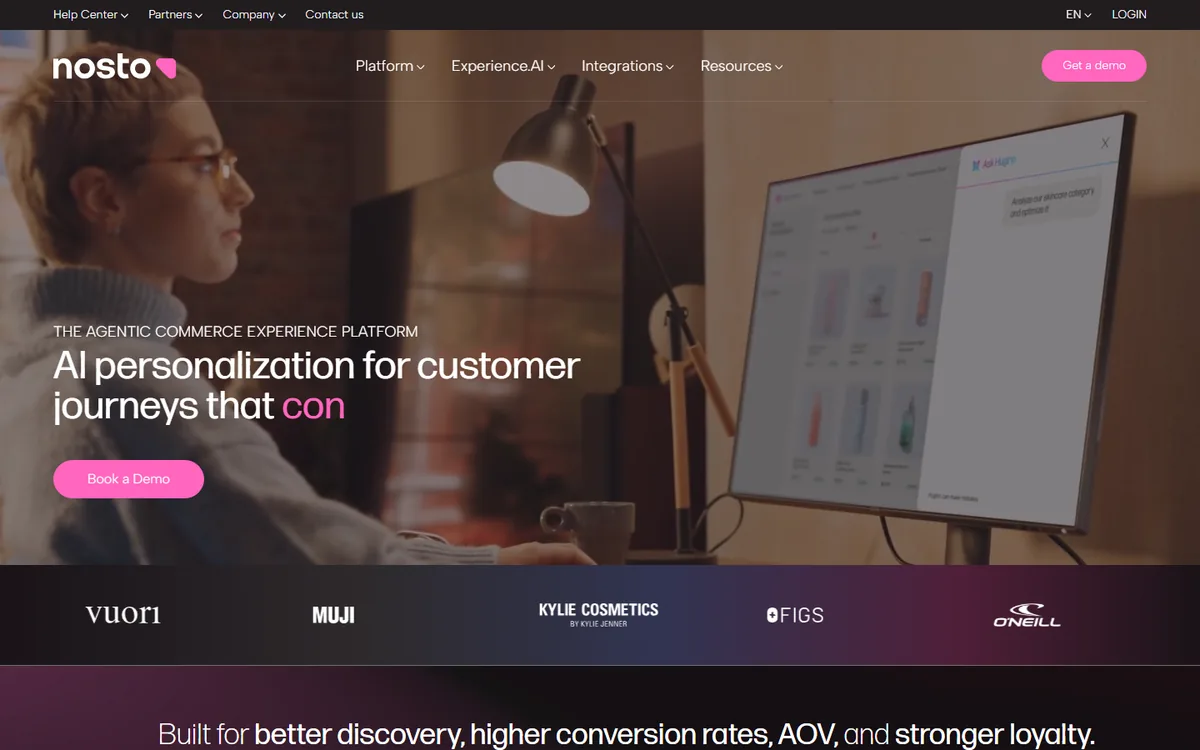
Personalization, Recommendations and A/B Testing for Online Stores That Want Results Without a Data Team
Nosto personalizes search, category pages, product recommendations and on-site content for online stores, with A/B testing and an AI agent called Huginn built in.
Nosto is the personalization platform I see most often at mid-sized online brands on Shopify, Salesforce Commerce Cloud, Adobe Commerce and BigCommerce. The Product Experience Cloud covers AI search, category merchandising, recommendations, post-purchase upsells and dynamic bundles. The Content Experience Cloud adds content personalization, behavioral pop-ups, shoppable user content and A/B testing. Huginn, Nosto’s AI agent, works with a set of smaller agents on search, merchandising and tests, so a small team can run more experiments than it could by hand.
The strength is speed. Recommendations and personalized category pages go live without a long integration, and you can test them against your current pages before you roll them out. Reviewers praise the support team and say it takes a while to discover everything the platform can do. Results depend on traffic, though. With few visitors, tests take weeks to reach a clear answer, so a small store may see little beyond better recommendations. Start with one page type and one test you can read within a month.
What Nosto Does Well
- Search, merchandising and tests in one platform
- Fast setup on the major ecommerce platforms
- AI features come with every module at no extra cost
What Nosto Could Do Better
- No public prices and no self-service trial
- Low-traffic stores wait long for test results
Nosto Pricing
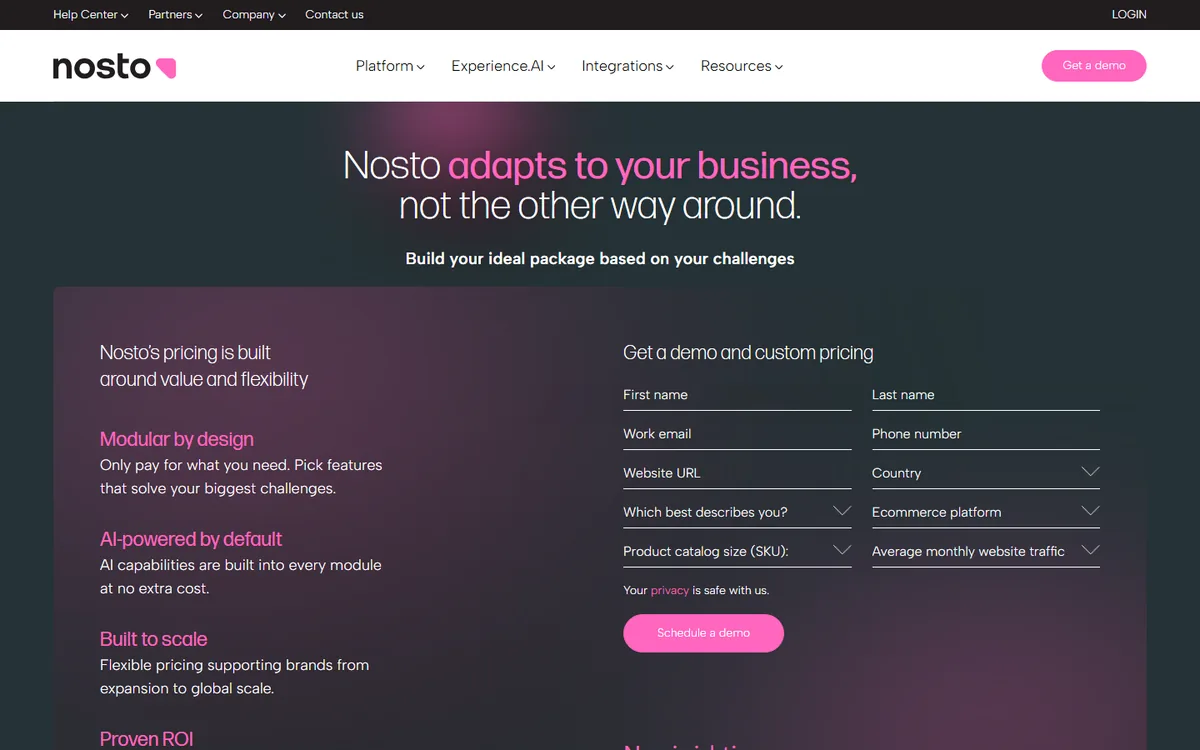
Nosto doesn’t publish prices or fixed tiers. You pay a base platform fee plus a fixed fee set by your store’s sales volume and traffic, and the total depends on the modules and support level you pick. There’s no self-service trial, but qualified stores can run a proof of concept on their own data before they sign.
Nosto Reviews
- G2: score of 4.6 out of 5 (from +230 customer reviews)
- Capterra: score of 4.0 out of 5 (from 4 customer reviews)
Algolia
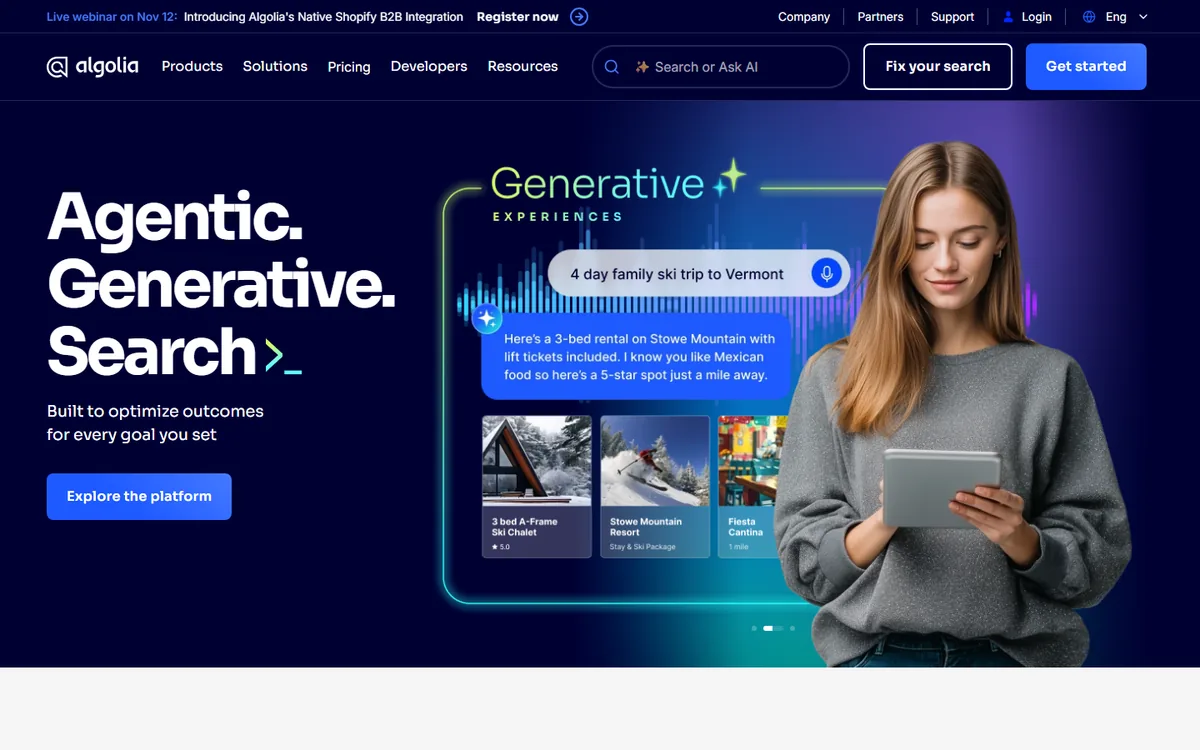
Fast, Developer-Friendly AI Search You Can Start for Free and Scale with Your Traffic
Algolia powers product search, browse pages and recommendations with AI ranking, and its pay-as-you-go plans let smaller retailers start without a contract.
Search is where shoppers tell you exactly what they want, and a weak results page loses the sale on the spot. Algolia returns results as people type, handles typos and synonyms, and learns from clicks and purchases to rank better over time. The Grow Plus plan adds AI search on top of keyword matching, and Recommend adds related items and frequently bought together blocks. Merchandisers can pin, boost and bury products in a visual tool without asking a developer.
Developers like the APIs and the docs, so integration tends to go smoothly. The catch is cost at scale. Bills follow your search requests, so a holiday spike shows up on next month’s invoice, and reviewers on both sites rate value for money as Algolia’s weakest point. Set usage alerts before peak season. If you’d like search, merchandising and A/B testing from one vendor, Nosto is the closer fit.
What Algolia Does Well
- Results appear as shoppers type, even with typos
- Free allowance lets you test on real traffic
- Merchandisers can boost and bury without code
What Algolia Could Do Better
- Usage costs jump during traffic peaks
- Best results need developer time to set up
Algolia Pricing
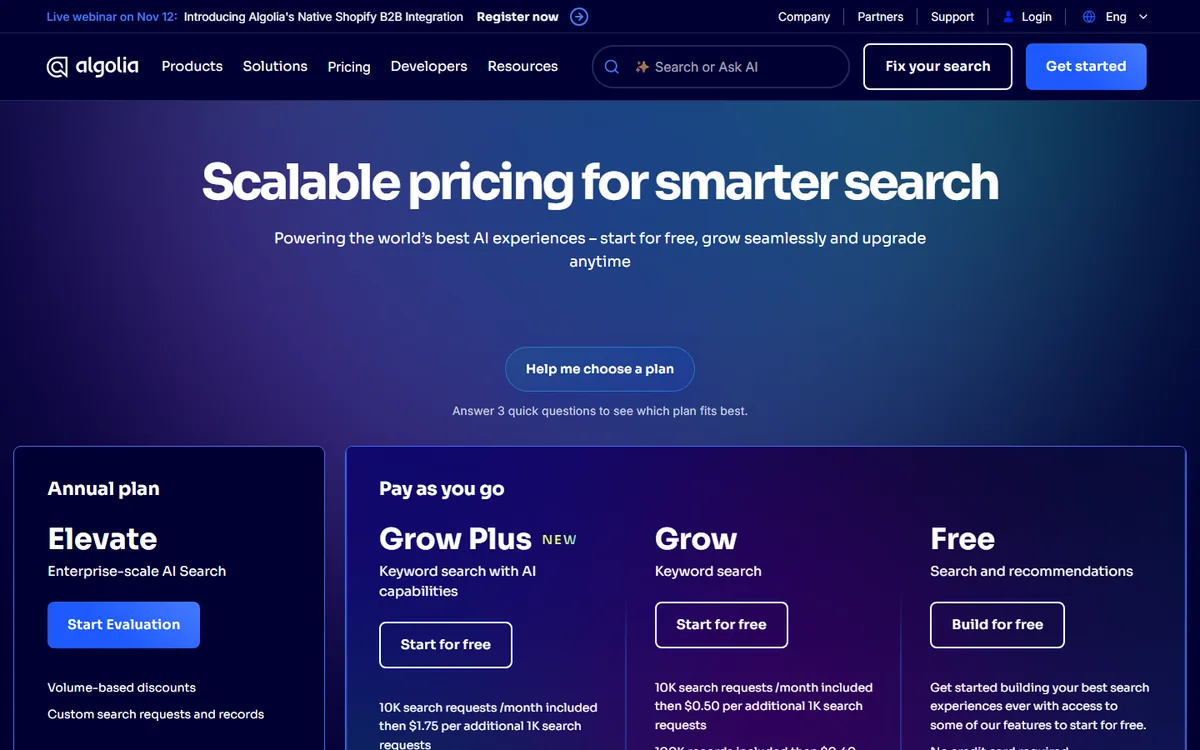
Algolia has a free plan with 10,000 search requests per month. The Grow plan includes 10,000 search requests and 100,000 records each month, then charges $0.50 per extra 1,000 searches. Grow Plus adds AI search at $1.75 per extra 1,000 searches. Elevate is custom-priced on an annual contract for large catalogs and traffic.
Algolia Reviews
- G2: score of 4.5 out of 5 (from +450 customer reviews)
- Capterra: score of 4.7 out of 5 (from +70 customer reviews)
Gorgias
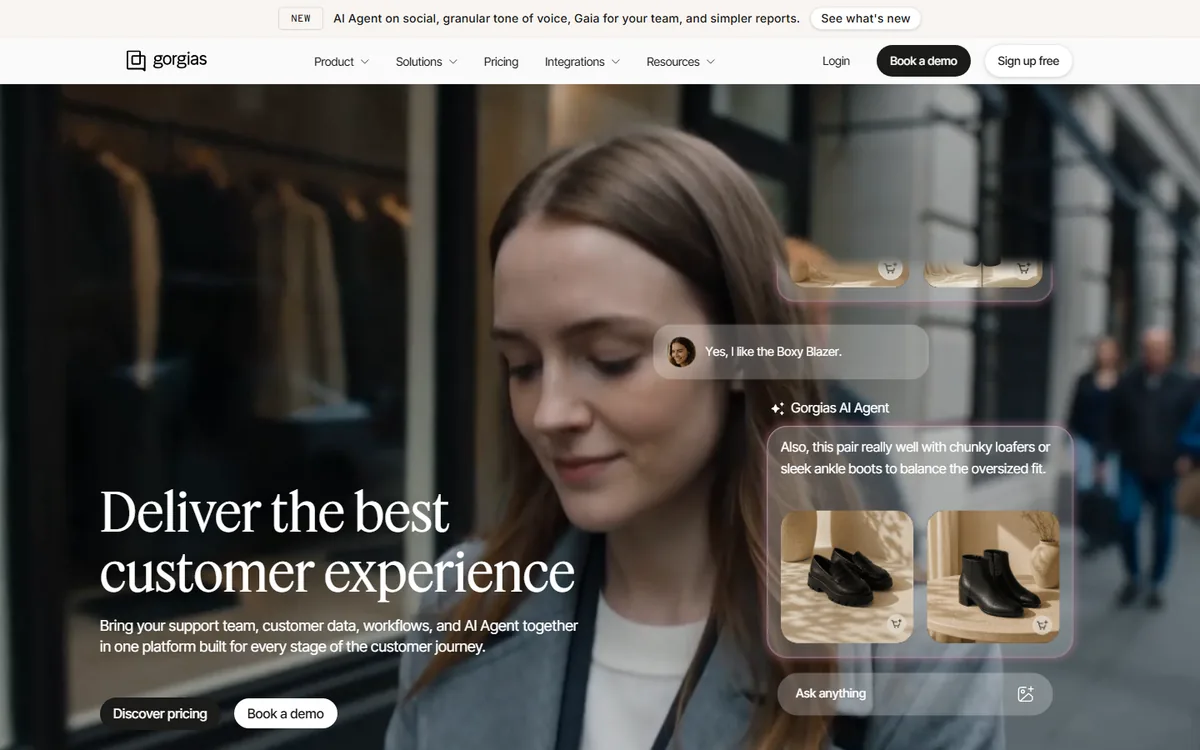
The Shopify-Native Helpdesk Whose AI Agent Handles Order Questions and Product Advice
Gorgias puts email, chat, social and SMS tickets in one inbox next to your store’s order data, and its AI Agent answers and acts on routine requests.
Most retail support tickets ask the same few things: where’s my order, can I return it, can I change the address? Gorgias shows each customer’s orders beside the ticket, so agents can refund, cancel or edit a Shopify order without switching tabs. The AI Agent resolves routine requests on its own and sticks to the policies you write. Its Shopping Assistant recommends products in chat based on browsing activity and cart contents, and you control which products it promotes or skips.
Pricing by ticket is the friction point. Reviewers say costs spike in the holiday peak, which is exactly when ticket volume climbs, and AI Agent interactions are billed on top and count as tickets too. Gorgias makes the most sense for Shopify brands and smaller omnichannel retailers. Large store chains with call centers usually need a broader service platform. When you map which store and support jobs to hand to AI first, start with order status, because it’s high volume and low risk.
What Gorgias Does Well
- Order actions sit right inside each ticket
- AI Agent follows the return and shipping policies you set
- Low entry price for a small team
What Gorgias Could Do Better
- Ticket-based pricing spikes in peak season
- AI interactions are billed on top of the plan
Gorgias Pricing
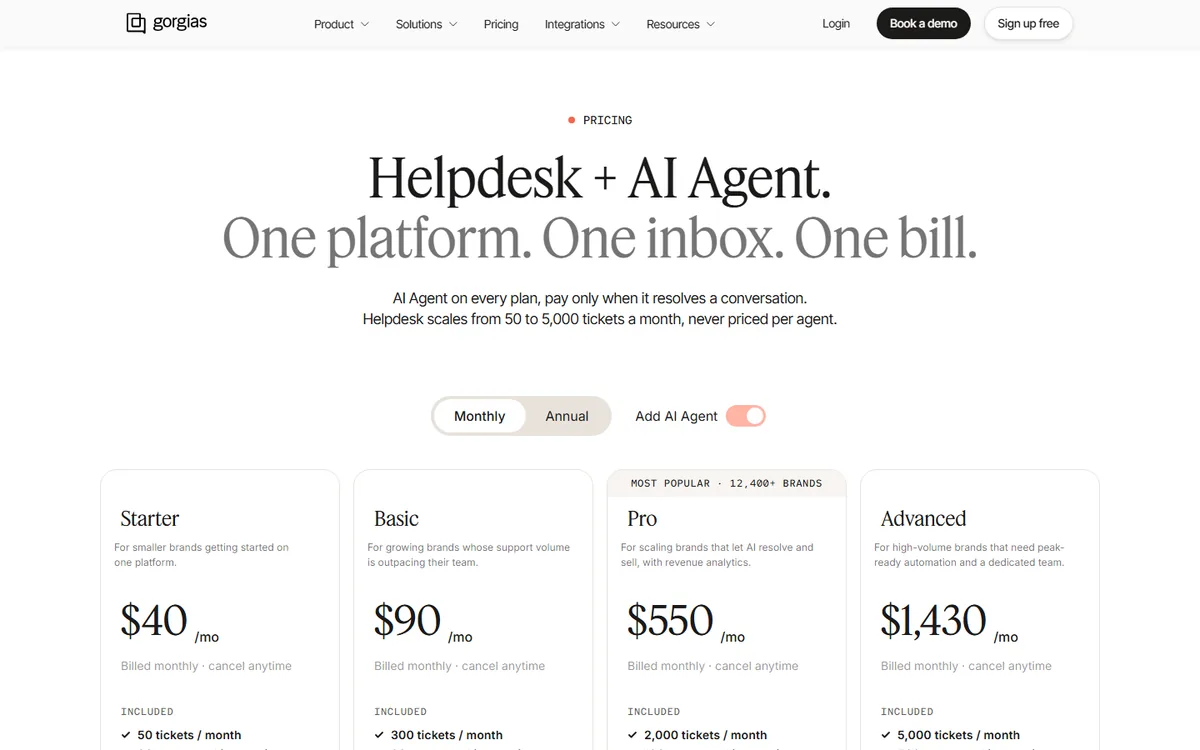
Gorgias Starter costs $10 per month for 50 tickets. Basic is $60 per month, or $50 billed annually, for 300 tickets. Pro is $360 per month, or $300 billed annually, for 2,000 tickets, and Advanced is $900 per month, or $750 billed annually, for 5,000 tickets. Enterprise is quoted. The AI Agent costs $0.90 per automated interaction on an annual contract or $1.00 on a monthly one.
Gorgias Reviews
- G2: score of 4.6 out of 5 (from +560 customer reviews)
- Capterra: score of 4.6 out of 5 (from 135 customer reviews)
Check Whether a Retail AI Tool Pays for Itself
Retail tools are easy to justify in a demo and hard to defend at renewal. Hours are the simplest return to measure, so start there. Enter the weekly hours your buyers, pricing analysts or support agents spend on the task, the share the tool could take over and its monthly price. Margin gains from fewer stockouts or smarter markdowns come on top, so treat the result as a floor.
Will It Pay for Itself?
Move the sliders to match the work you want to automate and the plan you are considering.
How to Choose Retail AI Tools for Your Business
In my client work, retailers overspend when they buy a platform for decisions they don’t make yet. Answer four questions before you book any demos:
- Where do you lose the most margin today: stockouts and waste, prices, or lost online sales?
- Which systems hold your sales, stock and customer data, and do they have ready connectors?
- How many stores, items and channels does the tool need to handle in two years?
- Who will own the tool every week: planners, pricing analysts, ecommerce or support?
If stock is your biggest leak, large chains should shortlist RELEX and Blue Yonder, fashion brands Toolio, ERP-based retailers Netstock and online brands Inventory Planner. For pricing, start with Prisync if you mainly need competitor data, and move to Competera or Revionics once you have a pricing team. For the shopper’s experience, choose Algolia for search, Gorgias for support, Klaviyo for email and SMS, and Nosto when you have people who can run tests. My ranking of AI in retail use cases can help you decide which of those problems to tackle first.
Questions About Choosing Retail AI Tools
What Is the Best Retail AI Tool for a Small Retailer?
It depends on where you lose the most money. For an online store that runs out of stock or over-orders, I’d start with Inventory Planner by Sage. If shoppers compare your prices across sites, Prisync is the cheapest useful first step. If support tickets eat your team’s week, Gorgias pays back fastest. Pick one problem and one tool, and add the next only after the first one is in daily use.
Do I Need Clean Data Before I Buy a Retail AI Tool?
You need data that’s good enough for the decision you want to improve. For forecasting, that usually means two years of sales by item and location, current stock and a tidy product master. Missing stockout flags and duplicate items hurt forecasts more than anything else. Fix those first, and leave the bigger cleanup for later.
How Long Does It Take to Roll Out Retail Forecasting Software?
Mid-market tools like Netstock and Inventory Planner can be live in weeks when your ERP or store platform has a ready connector. Enterprise platforms like RELEX and Blue Yonder usually run for many months, often in waves by category or region. In my client work, the timeline slips most when a rollout collides with peak season or a planogram reset.
Can AI Pricing Tools Set My Prices Automatically?
Yes, within the limits you set. Prisync, Competera and Revionics can all push prices to your store or POS once you define floors, ceilings, margin targets and price ladders. I recommend you start with recommendations that a category manager approves, then automate the categories where the team agrees with the model most of the time.
Which Retail AI Tools Work with Shopify?
Inventory Planner by Sage, Prisync, Gorgias, Klaviyo, Nosto and Algolia all connect to Shopify. Gorgias goes deepest, because agents can edit, refund and cancel Shopify orders from the ticket view. Check each vendor’s app listing for the plan you need, since some features sit on higher tiers.
Are Enterprise Retail AI Platforms Worth the Cost for Mid-Sized Chains?
Sometimes. If you run hundreds of stores with fresh food or short product lifecycles, the waste and stockout savings can cover a RELEX or Blue Yonder contract. Below that, I usually see better value from Toolio, Netstock or Competera, which cover most of the same decisions with a shorter rollout and a smaller team.
How Do I Measure If a Retail AI Tool Is Working?
Agree on the metric before the pilot starts and keep a control group. For forecasting, track in-stock rate, waste and inventory days. For pricing, track gross margin and units against control stores or categories. For customer experience tools, track conversion, average order value and tickets resolved without an agent. Give it a full season before you judge the trend.
Disclaimer: Prices, plans and ratings change often, and most enterprise retail vendors only share prices on request. Everything here was checked when this article was last updated, so confirm details with each vendor before you buy. This is not legal or financial advice.
Did you find this helpful?
Thank you for your feedback.
Marlena leads the WiseCrow editorial team and works with our consultants to turn real client projects into practical guides on AI strategy, automation and governance. Before joining WiseCrow, she spent 12 years in B2B operations and SaaS content. She has since edited more than 400 articles on AI and automation and reviewed workflows from over 60 client projects. She is based in Austin, Texas.