Summary
- Complex credit models still owe declined applicants specific reasons under ECOA and Regulation B, so map features to reasons before launch.
- Your sponsor bank applies its own third-party and model risk standards to your models. Ask for its questionnaires before you sign.
- Drift, AML alert noise and GenAI answers all need a named owner, a threshold and a log, more than a better tool.
- Produce model cards, approvals and monitoring reports as you ship. Rebuilding them later takes weeks.
Most fintech AI problems I get called in for begin on the day a bank partner, an examiner or a warehouse lender asks a question the team can’t answer with a document. Why was this applicant declined? Who approved the last retrain? Where did the training data come from? If you want outside help building those answers into your stack, fintech AI consulting covers it from model inventory to bank reviews.
Below are the eight challenges I see most often at lenders, neobanks and payment companies, all of them about regulation and model risk. Each one comes with how it shows up in a real company, the steps that close it and the tools that help. A second table near the end lists what a partner bank will usually ask you to show.
Eight Challenges and Who Will Ask About Them
The middle column matters more than it looks. It tells you whose questionnaire the problem will land in first, which is often the best clue for how to fix it.
| Challenge | Who asks first | First fix |
|---|---|---|
| 1. Adverse action reasons | CFPB, bank partner | Map features to reasons |
| 2. Fair lending bias | Bank compliance, examiners | Disparity tests pre-launch |
| 3. Sponsor bank oversight | Bank third-party risk team | Inventory and docs pack |
| 4. Model drift | Model risk reviewers | Thresholds with named owners |
| 5. Privacy and consent | Privacy counsel, states | Purpose tags on data |
| 6. AML false positives | BSA officer, bank partner | Score and sort the queue |
| 7. GenAI hallucinations | Compliance, complaint teams | Approved sources only |
| 8. Thin audit evidence | Auditors, banks, investors | Model card per release |
Why Fintech AI Draws Closer Scrutiny
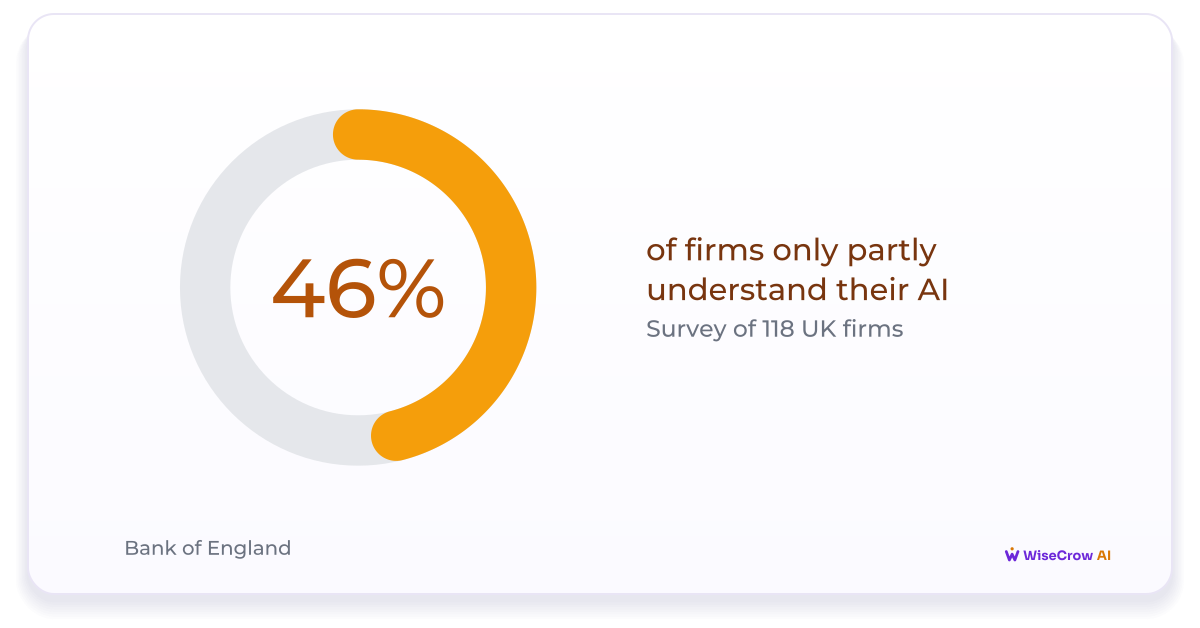
Financial services adopted AI early and widely. The Bank of England and FCA’s 2024 survey of 118 UK firms found that 75% of firms already use AI, and 46% said they had only a partial understanding of the AI technologies they use. The gap between use and understanding is exactly what supervisors and bank partners probe.
The decisions also land on people. A declined loan, a frozen account or a wrong answer about a late fee shows up in a consumer’s life the same day. The EU AI Act reflects that: it lists credit scoring of individuals as high-risk, with fraud detection carved out. The Act has been adopted and applies in stages, and the EU has proposed changes to when some high-risk duties apply, so check the current status before you plan around it. In the US, the rules come from ECOA, fair lending law, BSA/AML rules, privacy law and bank guidance, and most fintechs feel them through their sponsor bank. If you’re still picking where AI goes first, my list of AI in fintech use cases ranks the options by payback.
The 8 Challenges and How to Fix Each One
The order follows the path of a typical lending or payments product, from the credit decision out to support and the audit file. Expect several of these to hit you in the same quarter.
Explaining Credit Decisions to Applicants
A lender swaps its scorecard for a gradient-boosted model with 400 features. Approval rates improve. Then the first batch of declines goes out, and the letters cite “insufficient credit history” for applicants with ten-year files, because nobody mapped the model’s drivers to the reason codes.
Under the Equal Credit Opportunity Act and Regulation B, an applicant you turn down is owed the specific principal reasons for the decision. A complex model leaves that duty in place. In May 2025 the CFPB withdrew a large batch of guidance documents, among them its 2022 circular on adverse action notices and complex algorithms, yet the regulation itself still applies and partner banks still test for it. The fix that holds up in my client work pairs a feature attribution method such as SHAP with a reviewed table that maps each model feature to a plain-language reason. Compliance signs off on the table, and you test it on real declines before launch.
How to Make Every Decline Explainable
- Pull the top drivers for each declined applicant with one consistent attribution method.
- Map every model feature to an approved reason statement, and flag features a consumer couldn’t act on.
- Drop or rework features that only make sense to a data scientist.
- Have compliance check a sample of 50 real decline letters against the model output.
- Rerun the mapping check each time you retrain or add a feature.
Tools That Produce the Reasons
Open-source libraries such as SHAP and InterpretML give you per-applicant drivers, and most credit decisioning platforms can store them next to each decision. Keep the mapping table in version control, so every change to a reason statement has an author and a date.
Fair Lending and Bias Testing
A card issuer adds cash-flow data from linked bank accounts. The model gets sharper. It also learns that certain deposit patterns, which track closely with neighborhood and age, predict default, and nobody checks how approval rates shift across protected groups until a bank auditor asks.
ECOA bans discrimination on protected characteristics, and fair lending reviews look at outcomes as well as intent. Your model can leave race and sex out of its inputs and still produce a skewed result through proxies like ZIP code, device type or spending patterns. Most lenders I work with don’t collect protected data directly, so testing relies on proxy methods such as Bayesian Improved Surname Geocoding. Run those tests before launch and again after each retrain. When a gap shows up, the strongest file shows you searched for a less discriminatory alternative model and wrote down why you shipped the one you did.
Running a Bias Test That Stands Up
- Agree with compliance on groups, metrics and thresholds before training starts.
- Estimate group membership with a proxy method where you can’t collect it.
- Compare approval rates, pricing and limits across groups, and check the biggest drivers for proxies.
- Train two or three alternative models and record the trade-off between accuracy and disparity.
- Write up the choice and file it with the model version that went live.
- Repeat the test after every retrain and at least once a year.
Resources for Fair Lending Tests
Open-source toolkits like Fairlearn and AIF360 handle the disparity metrics, and the CFPB has published its own write-up of the BISG proxy method. Many lenders also pay an outside fair lending firm for a yearly independent test, which partner banks often ask to see.
Sponsor Bank Oversight of Your Models
A payments startup signs with a sponsor bank and launches card issuing in six weeks. Eighteen months later the bank’s third-party risk team sends a 140-line questionnaire asking for model documentation, validation reports and change logs for the fraud model. The startup has a wiki page and a long chat thread.
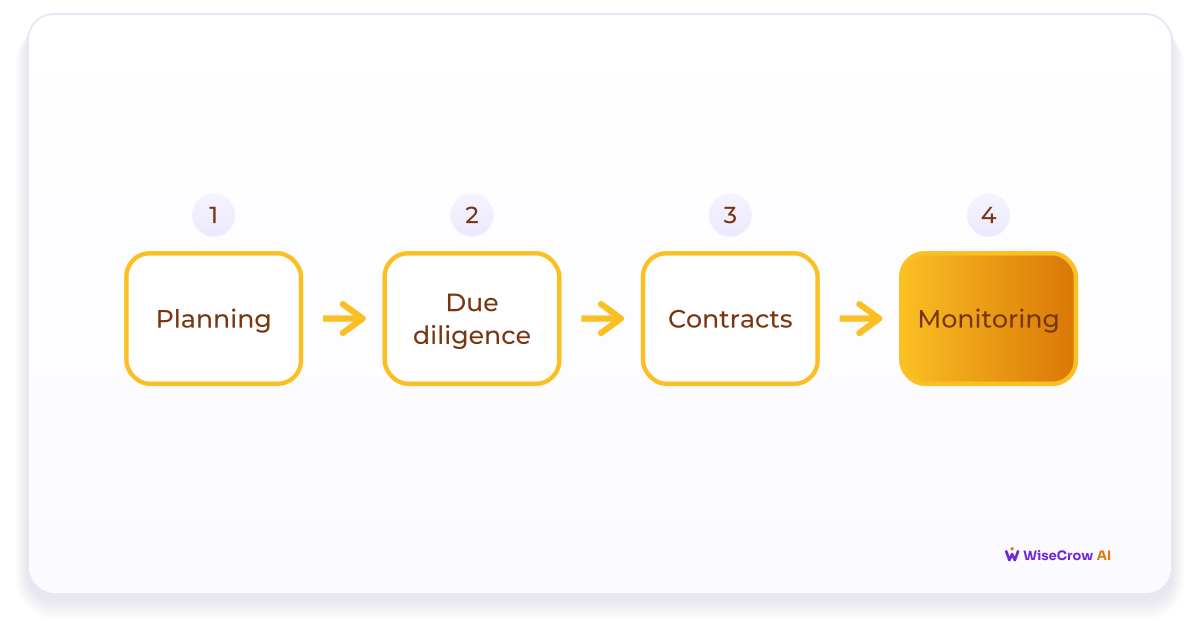
Your bank partner answers to its own examiners for what you do under its charter. In June 2023 the Federal Reserve, FDIC and OCC issued final interagency guidance on third-party relationships, covering planning, due diligence, contracts, ongoing monitoring and termination, and fintech partners sit squarely inside it. Banks also apply their own model risk standards to models you run for them: an inventory, independent validation and ongoing performance checks. The friction I see most often comes from timing. The bank asks after launch, when the evidence is hardest to rebuild, so ask for its model risk requirements during onboarding and build to them from version one.
Getting Ahead of Your Bank Partner
- Ask the bank for its model risk and third-party questionnaires before you sign.
- Keep a model inventory with owner, purpose, data sources, version and last validation date.
- Agree in the contract which model changes need the bank’s notice or approval.
- Arrange independent validation for each model that decides credit, fraud or AML outcomes.
- Send the bank a short quarterly performance report before it asks for one.
Where to Keep the Bank-Facing Evidence
A model registry such as MLflow or your cloud provider’s ML platform keeps versions and approvals linked, and a shared data room holds the documents the bank reviews. Smaller teams can start with one structured folder per model, as long as names and dates stay consistent.
Drift in Fraud and Credit Models
A fraud model trained on last year’s card-not-present attacks catches most of the fraud at launch. Then a ring shifts to account takeover through SIM swaps. Losses climb for five weeks before anyone links the spike to the model, because the dashboard only tracked approval rate.
Fraud models drift fastest, since the people on the other side adapt to them. Credit models drift slower and hurt longer: a shift in the applicant mix or the economy shows up in defaults months after the loans go out. In my client work, the monitoring software usually works fine. What’s missing is a threshold and a name. Someone has to own the alert that fires on a Saturday night, and someone needs the authority to roll back to the last approved version. The fintech AI tools I rank for fraud and credit all ship some form of drift tracking, but no tool decides who picks up the alert.
Catching Drift Before the Loss Report Does
- Track input drift on the ten or so features that drive most of each model’s decisions.
- Add early outcome signals, such as first-payment default or chargebacks in the first 30 days.
- Set an alert threshold per metric, and name a primary and a backup owner for each alert.
- Keep the last approved model version ready for a quick rollback.
- Run a champion-challenger test before a retrained model replaces the live one.
- Log every retrain with the data window used and the person who approved it.
Monitoring Options Fintech Teams Use
Platforms such as Fiddler, Arize or the open-source NannyML track feature drift and performance over time. Fraud vendors like Sardine and Feedzai include their own monitoring, though you still need your own view of losses by segment.
Data Privacy and Consent for Training
A neobank wants to train a cash-flow underwriting model on two years of its own customers’ transaction data. The privacy notice says data is used “to provide and improve our services.” Legal can’t say if that covers building a credit model, and the bank partner wants an answer in writing.
Financial data carries more rules than most. The Gramm-Leach-Bliley Act governs how financial institutions share nonpublic personal information, a growing list of US states have their own privacy laws, and the CFPB’s personal financial data rights rule for open banking has been under reconsideration, so check its current status before you build around it. Add the data aggregator’s terms, which often limit what you may do with data pulled through their APIs. My working rule is simple. Tag every dataset with the purposes the customer agreed to, and treat model training as a purpose of its own. Where the tag is missing, get consent or leave that data out.
Cleaning Up Consent Before You Train
- Build a data map showing every source, the consent or legal basis behind it and the systems it feeds.
- Tag each dataset with the purposes it may serve.
- Check aggregator and data partner contracts for limits on model training.
- Strip or tokenize direct identifiers before data reaches the training environment.
- Set retention rules for training sets and delete the ones you no longer need.
Tools for Mapping and Masking Data
Privacy platforms such as OneTrust, Transcend or BigID hold the data map and purpose tags in one place. Tokenization services from your cloud provider, or a data vault like Skyflow, keep raw identifiers out of training sets.
AML Alerts Nobody Can Clear
A cross-border payments company runs rules-based transaction monitoring. Alert volume doubles after a strong growth quarter, analysts clear the queue with one-line closing notes, and the bank partner’s BSA team samples 40 closures and finds half of them lack a real rationale.
Most monitoring alerts end up as false positives, and every one still needs a documented decision. Machine learning can rank alerts so analysts see the riskiest first, and some teams go further and suppress the lowest-risk ones. That second step draws the hardest pushback from examiners and bank partners, since a suppressed alert is a decision no person reviewed. I start with scoring, keep every alert in the queue and only discuss suppression once the scores have a few months of back-testing behind them. My roundup of AI in fintech examples shows how a few payment firms and lenders set up the review side.
Cutting Alert Noise and Keeping the Trail
- Measure current alert volume, false positive rate and minutes per alert as your baseline.
- Tune rule thresholds with below-the-line testing and keep the analysis on file.
- Add a risk score that sorts the queue, and leave every alert open for review.
- Let AI draft the case narrative, with the analyst editing and signing off.
- Back-test the scores against past suspicious activity reports before you suppress anything.
- Get written agreement from your BSA officer and bank partner before any alert closes automatically.
Platforms Built for AML Tuning
Transaction monitoring vendors such as Unit21, Hummingbird and ComplyAdvantage add scoring and draft narratives on top of rules. If you build your own scoring model, put it under the same validation and change control as your credit models.
GenAI Answers That Invent Policy
A lending app launches a support assistant on a large language model. A customer asks if one late payment will hurt their credit score. The assistant says a single late payment is never reported, which contradicts the lender’s own reporting policy, and the screenshot ends up in a complaint.
Answers about fees, credit reporting, disputes or hardship options carry consumer protection risk, and a wrong answer from your bot is your wrong answer. A Canadian tribunal made the point in 2024 when it held Air Canada liable for its chatbot’s advice on bereavement fares and rejected the idea that the bot was a separate entity. For fintech clients, I keep generative answers tied to approved documents, hand topics like disputes and hardship to a person and log every conversation. Assistants that can act on accounts raise the stakes again, one of the shifts I follow in my AI in fintech trends piece.
Keeping the Assistant Inside Approved Answers
- Limit retrieval to approved, versioned documents such as fee schedules and policy pages.
- List the topics the assistant must hand to a person, including disputes, hardship and complaints.
- Test at least 200 real customer questions before launch and have compliance grade the answers.
- Show the source document under each answer, so customers and reviewers can check it.
- Sample conversations every week and track the share of wrong or risky answers.
Guardrail Tools Worth Testing
Frameworks such as NVIDIA NeMo Guardrails or Guardrails AI enforce blocked topics and output checks around your model. Evaluation tools like Promptfoo let you rerun your question set each time the prompt, model or documents change.
Audit Evidence on a Startup Budget
A Series A lender has three models, four engineers and no model risk team. Its sponsor bank, its warehouse lender and a state examiner all ask for model documentation in the same quarter. The CTO spends six weeks writing it from memory.
You can’t hire a full model risk function at twenty people, and nobody expects you to. Partners want proof that each decision was made on purpose and checked by someone other than the builder. The cheapest route is to produce evidence as a by-product of shipping: a model card filled in at each release, an approval recorded in the pull request, a monitoring report saved every month. In my client work, the habit costs a few hours per release. Rebuilding the same file after the fact takes weeks, and reviewers can tell it was written backward.
Building the File as You Ship
- Create one model card template covering purpose, data, performance, fairness results, limits and owner.
- Make a completed card a required check before any model release merges.
- Record approvals in your ticket or pull request history with names and dates.
- Save monitoring reports and incident notes to the model’s folder each month.
- Pay for independent validation of your highest-risk model first, and add others as budget allows.
- Run a mock bank review once a year with your partner’s own questionnaire.
Low-Cost Ways to Keep the Evidence
Git, a model registry and a shared drive with a fixed folder structure cover most of what a small team needs. Documentation platforms built for financial model risk, such as ValidMind, start to pay off once you run more than a handful of models.
What Your Partner Bank Will Ask You to Show
Every bank has its own questionnaire, but the requests behind them repeat. I keep a standard list with fintech clients and check it against the partner’s actual questions during onboarding. If you can hand over each item below within a day, most reviews go quickly.
| Request | What they want to see | Where you keep it |
|---|---|---|
| Model inventory | Every model, owner, version | Registry or sheet |
| Model documentation | Purpose, data, limits | Model card per release |
| Validation report | Independent test results | Validation folder |
| Fair lending tests | Disparities, alternatives tried | Compliance file |
| Adverse action mapping | Features to reasons | Version control |
| Monitoring reports | Drift, losses, overrides | Monthly report folder |
| Change log | What changed, who approved | Pull request history |
| Incident and complaint log | Issues and fixes | Ticket system |
Two rows cause most of the delays I see. The validation report needs someone independent of the builder, and small teams often don’t have that person in-house. Budget for an outside validator early. The change log is the other one: teams retrain often and record little, so the bank sees a model version it never heard of.
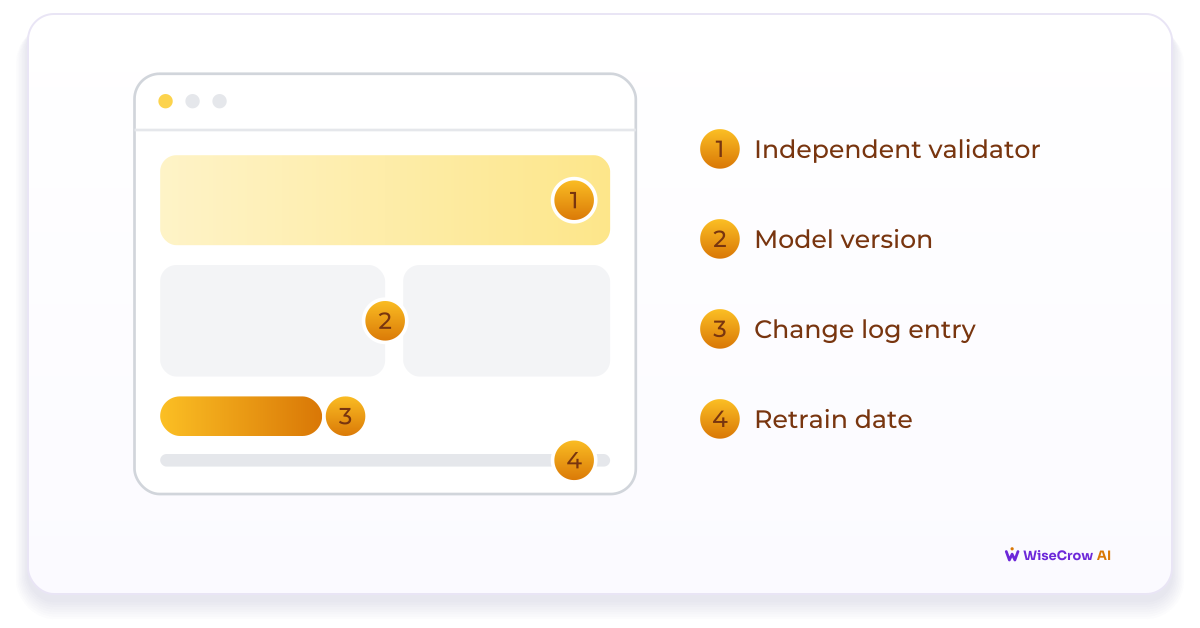
Banks also differ in how deep they go. A large sponsor with a dedicated fintech program may want quarterly performance data and notice of every material change. A smaller community bank may send a shorter list and still expect the same core documents. Ask which models the bank counts as in scope, since some treat a marketing propensity model as out of scope and others don’t.
Count the Hours Your Alert Queue Costs
AML alert review is usually the biggest block of manual work tied to these challenges, and the easiest to measure. Enter the number of alerts your analysts clear each week and the minutes each one takes to see what better scoring and drafted narratives could give back. Keep the review step in your estimate, since every alert still needs a decision.
How Much Time Could You Save?
Move the sliders to match one repetitive task in your business.
How to Choose Which Fintech AI Challenge to Fix First
Start with whatever decides something about a person. Adverse action reasons and fair lending tests come first for any lender, because a flaw there repeats with every application and the fix gets harder once the model has been live for a year. Payment and banking-as-a-service companies without credit products can start with AML alert handling instead.
Next, look at who will ask soonest. If your sponsor bank’s annual review is three months out, the evidence folder and model inventory jump the queue, even if drift worries you more. A finished inventory also makes every later fix faster, since you can see which models exist and who owns them.
Leave generative AI for customers until those two are in order. A support assistant feels like a quick win, but it adds a new kind of risk on top of the ones you haven’t closed yet. When you do launch it, start with internal use for your support agents and move it in front of customers once the weekly samples look clean.
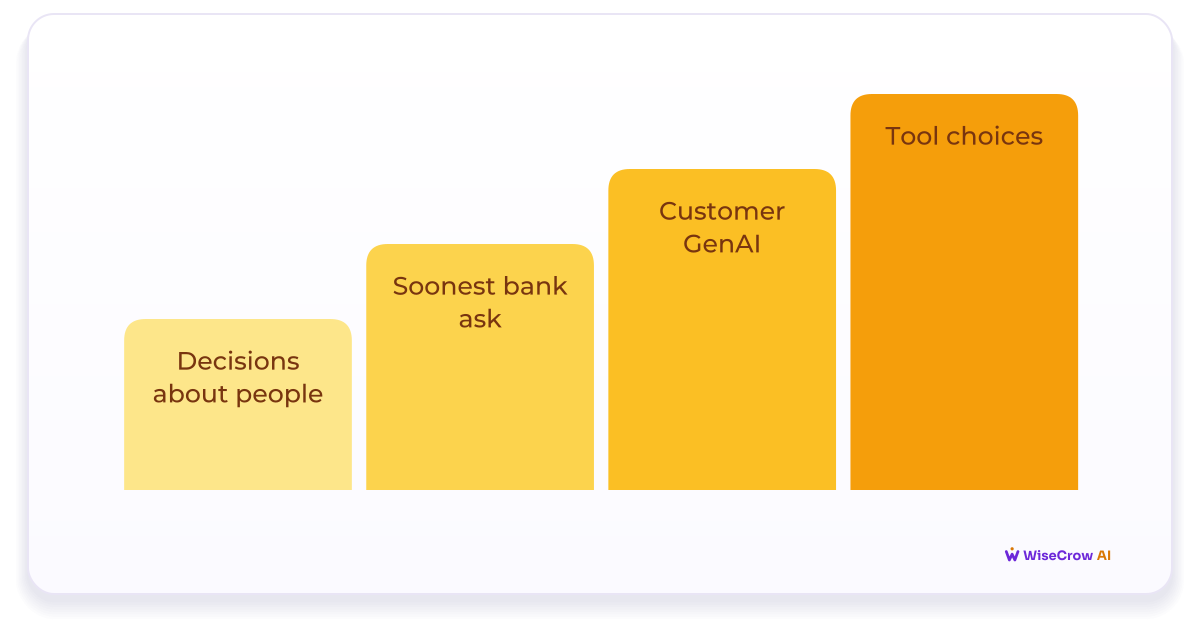
Tool choices come last. Most of the fixes above start with a spreadsheet, a template and a name next to each model, and the software decisions get much easier once you know what you need to track.
Questions About AI in Fintech Challenges
What Are the Biggest Challenges of AI in Fintech?
In my client work, explainable credit decisions and fair lending testing cause the most rework, because they touch every applicant you decline. Sponsor bank oversight and thin documentation come next, and they tend to surface together when a partner bank runs its first review of your models.
Can a Lender Use a Machine Learning Model for Credit Decisions?
Yes. ECOA and Regulation B don’t ban complex models, but they still require you to give declined applicants the specific principal reasons for the decision. If your model can’t produce reasons a consumer can understand and act on, fix the model or the reason mapping before you launch.
Is the CFPB Circular on Complex Algorithms Still in Effect?
No. The CFPB withdrew its 2022 circular on adverse action and complex algorithms in May 2025, along with dozens of other guidance documents. The underlying duty in Regulation B to state specific reasons still applies, and bank partners and state regulators still check for it.
Why Does My Sponsor Bank Care About My AI Models?
Your sponsor bank answers to its own regulators for the activity it supports, including your credit, fraud and AML decisions. Interagency third-party guidance expects banks to monitor partners on an ongoing basis, so the bank will ask for your inventory, documentation, validation and monitoring results.
Does the EU AI Act Apply to Fintech Companies?
It can. The Act lists AI used to assess the creditworthiness of individuals or set their credit score as high-risk, with an exception for fraud detection. The Act has been adopted and applies in stages, and the EU has proposed changes to when some duties apply, so check the current status for your use case.
How Can AI Reduce AML False Positives Safely?
Start by scoring and sorting alerts so analysts see the riskiest first, while every alert stays in the queue. Let AI draft case narratives that analysts edit and sign. Only consider closing low-risk alerts automatically after back-testing and written agreement from your BSA officer and bank partner.
How Much Model Documentation Does an Early-Stage Fintech Need?
Enough to show what each model does, what data it uses, how it was tested, who approved it and how it performs now. A model card per release, approvals in your pull requests and a monthly monitoring report cover most partner requests. Add independent validation for your highest-risk model first.
Sources
- Bank of England and FCA: Artificial Intelligence in UK Financial Services, 2024
- EU Artificial Intelligence Act: Annex III, High-Risk AI Systems
- Federal Reserve: Agencies Issue Final Guidance on Third-Party Risk Management (June 2023)
- McCarthy Tétrault: Moffatt v. Air Canada, a Misrepresentation by an AI Chatbot (February 2024)
Disclaimer: This article is general information and not legal, compliance or financial advice. Regulations, agency guidance and their timelines change, so check the current status of any rule with qualified counsel and your bank partner before you rely on it.
Did you find this helpful?
Thank you for your feedback.
Marlena leads the WiseCrow editorial team and works with our consultants to turn real client projects into practical guides on AI strategy, automation and governance. Before joining WiseCrow, she spent 12 years in B2B operations and SaaS content. She has since edited more than 400 articles on AI and automation and reviewed workflows from over 60 client projects. She is based in Austin, Texas.