Summary
- Payment use cases rank highest, because a small gain repeats on every transaction you process.
- Dispute automation and smarter payment retries often pay back within a quarter, with little regulatory exposure.
- Underwriting, AML monitoring and in-app assistants carry the heaviest regulatory weight, and your sponsor bank will want evidence first.
- Support automation is the most common fintech AI use case, and it still lands near the bottom on return.
Fintech product teams get pitched AI for every screen in the app. When a payments company or digital lender brings me in for fintech AI consulting, I start with two lists: where money moves through the product, and where a person still makes a call by hand. Both lists usually point to the same dozen use cases.
Below, I rank those twelve by the return I usually see, from payments through lending and compliance to growth. Fintechs already get more from AI than incumbents do. In the 2026 Cambridge survey, 56% of fintechs said AI had raised profitability, against 34% of traditional firms.
Fintech AI Use Cases at a Glance, Ranked by Return
Rows run from the highest return I see to the lowest. Effort covers data work, engineering and approvals. Payback is the range from kickoff to a measurable result in my client work, so test it against your own numbers. Regulatory exposure says how much scrutiny a use case draws from regulators and your partner bank, which often sets the launch date more than the build does.
| Use case | Effort | Payback I see | Regulatory exposure |
|---|---|---|---|
| 1. Payment Routing and Authorization Optimization | Medium | 2 to 4 months | Low |
| 2. Transaction Fraud Scoring | High | 4 to 8 months | Medium |
| 3. Chargeback and Dispute Automation | Low | 1 to 3 months | Low |
| 4. Merchant Risk Scoring | Medium | 3 to 6 months | Medium |
| 5. Alternative-Data Underwriting | High | 9 to 15 months | High |
| 6. Collections Outreach | Medium | 3 to 5 months | High |
| 7. KYC and KYB Onboarding Automation | Medium | 2 to 5 months | Medium |
| 8. AML Transaction Monitoring | High | 6 to 12 months | High |
| 9. Partner-Bank Compliance Reporting | Low | 2 to 4 months | Medium |
| 10. Support Automation | Low | 2 to 4 months | Medium |
| 11. Personalized Offers | Medium | 4 to 8 months | Medium |
| 12. In-App Financial Assistant | High | 9 to 18 months | High |
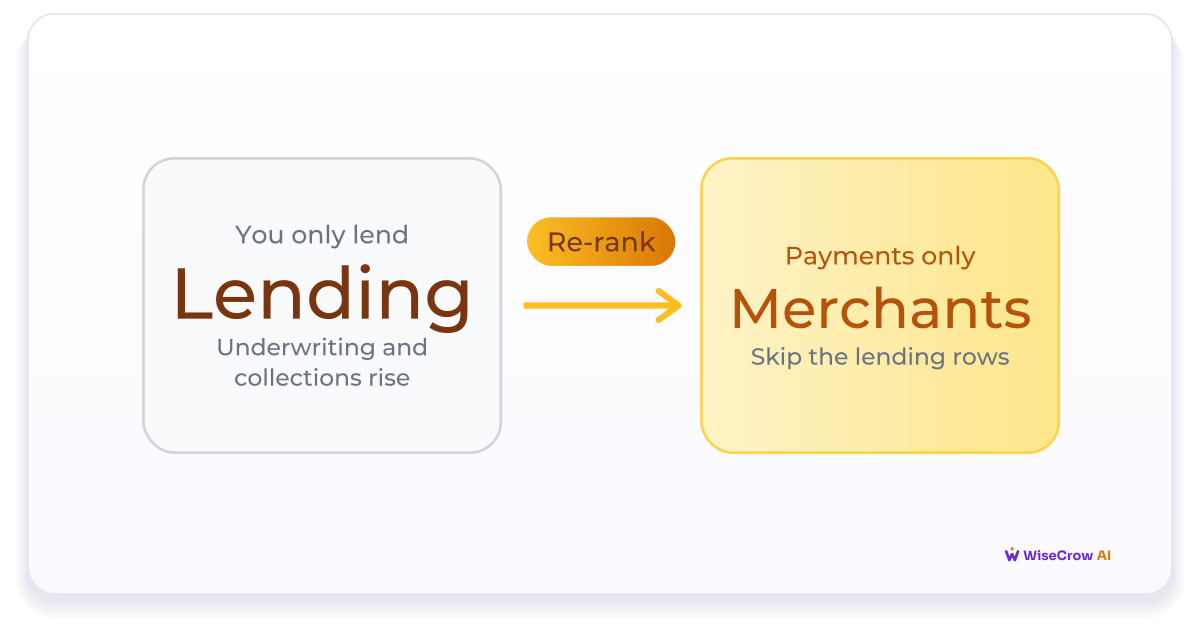
The ranking assumes a fintech that both moves money and lends. If you only lend, move underwriting and collections to the top. If you only process payments, skip them and look hard at merchant risk. Each product area below also hints at which team should own the project.
Payments: Approvals, Fraud, Disputes and Merchants
Payments lead because they repeat. A small gain in approval rate or fraud loss applies to every transaction and grows with volume, and two of the four carry low regulatory exposure.
Payment Routing and Authorization Optimization
Every good payment that gets declined is revenue you earned and lost at the last step. AI picks the processor, retry timing and message format most likely to win the issuer’s approval, and for card-on-file products it decides when a soft decline is worth another try. I rank it first because the gain lands on revenue within weeks and regulators barely notice it.
Watch fraud next to approvals, since a router that pushes risky payments through hands you the bill as chargebacks a month later. Network tokens help on both counts: Visa reports that tokenized transactions carry a fraud rate 34% lower than ones made with the raw card number. In my client work, the first gains usually come from smarter retries on recurring payments, before any routing model exists.
Where a Payment Gets Its Best Shot
- The payment arrives with card type, issuer country, amount and merchant category.
- The model estimates approval odds for each available route.
- The payment goes to the route with the best expected approval after fees.
- Soft declines get a timed retry plan, and hard declines stop.
- Approvals, fees and later fraud are logged per route for retraining.
Routing Layers Worth Testing
Payment orchestration platforms and the optimization features inside large processors both handle routing and smart retries. Ask each vendor to replay a month of your own declined traffic before you sign.
Transaction Fraud Scoring
Fintech fraud moved past stolen card numbers a while ago. Account takeovers, scams the real customer authorizes and synthetic identities all flow through the same transaction stream. A model scores each transfer or payout on device data, login behavior, payee history and the web of linked accounts. On instant payment rails the score matters even more, because settled money is usually gone.
Visa says more than 300 AI models and 90 tools helped it block over $40 billion in fraud in 2024. A fintech needs far fewer. You need fast features, a short feedback loop and friction only where the score calls for it. I tell product teams to own the step-up screens, because a clumsy check drives away good customers faster than fraud does.
Scoring a Transfer Before It Leaves
- Device and login signals are captured as soon as the app opens.
- The payment request adds amount, payee, rail and recent velocity.
- Graph features flag links to accounts already closed for fraud.
- Middle scores trigger a step-up check or payee warning, and high scores hold for review.
- Confirmed fraud and scam reports return as labels within days.
Fraud Engines Fintechs Actually Run
Most fintechs pair a vendor fraud platform with device intelligence and their own rules, then add custom models once they have enough labeled losses. Pick one where analysts can write and test rules without an engineering ticket.
Chargeback and Dispute Automation
Each chargeback comes with a deadline, a reason code and a demand for evidence. Teams often let small ones go, since building the pack takes longer than the money is worth. AI reads the reason code, pulls matching proof such as delivery confirmation, login history or earlier undisputed payments, and drafts a response in the card network’s format.
You win back disputes you used to write off. The quieter payoff is root-cause tagging, since reason codes point at fraud gaps, product bugs and confusing billing descriptors. More than once I’ve traced a pile of ‘unrecognized charge’ disputes to a descriptor customers couldn’t place, and a one-line fix beat any model.
Building a Response Before the Deadline
- The processor sends the dispute with amount, reason code and deadline.
- AI matches it to the transaction, customer and order records.
- Evidence that fits the reason code is assembled in the network’s format.
- Small disputes go out automatically, and larger ones get a quick human check.
Software for Dispute Work
Chargeback management tools connect to the major processors and submit evidence for you. Read the pricing closely, since some vendors take a share of every recovered dollar.
Merchant Risk Scoring
As a payment facilitator or acquirer, you carry your merchants’ losses when they vanish with customer money. Merchant risk models score each applicant at signup and keep watching for volume spikes, refund surges or a website that no longer matches the business on file. The score sets reserves, payout delays and the accounts an analyst opens today.
Most merchant losses I’ve seen came from accounts that looked fine for months, so ongoing monitoring earns more than signup checks. AI also scans merchant sites for prohibited goods, a job analysts dread. Leave closures to a person and log the reason, because the merchant will ask why, and so will your partner bank.
Watching a Merchant After Signup
- The application is checked against registries, ownership data and the merchant’s website.
- An onboarding score sets limits, reserve and payout schedule.
- Daily processing, refund and dispute data update the score.
- Shifts in volume, ticket size or product mix open a review task.
- Analysts adjust reserves, hold payouts or close the account.
Where Merchant Risk Tools Come From
Payment platforms and specialist monitoring vendors sell onboarding scores and website scanning as separate modules. Smaller payfacs tend to start with a vendor score and add their own model after a year of loss data.
Lending: Credit Files and Repayment
Credit is where fintechs win most from better models and have the most to explain when one gets it wrong. For what named neobanks and lenders shipped, my roundup of AI in fintech examples walks through their builds.
Alternative-Data Underwriting
Bureau scores say little about thin files, gig income or a young business. Alternative-data underwriting adds cash flow from linked bank accounts, rent and payroll data and, for small business loans, processing volume and bookkeeping records. The model proposes a decision, limit and price under your credit policy, and done well it widens approvals without lifting losses.
Regulation B still requires specific principal reasons for every adverse action, however complex the model. The CFPB pulled its 2022 circular on complex algorithms in May 2025 during a wide guidance withdrawal, and the regulation itself stayed in force. The Cambridge Centre for Alternative Finance found 78% of regulators rate explainability critical or important, while only half the industry uses explainable AI methods. I map every feature to a reason a customer could understand before training starts.
From Linked Account to Credit Offer
- The applicant consents, and bank or payroll data arrives through an aggregator.
- Transactions are sorted into income, rent, debt payments and spending.
- Cash-flow features join bureau data to estimate default risk.
- Policy rules set limit and price, and borderline files go to an underwriter.
- Adverse action notices draw their specific reasons from the top factors.
- Outcomes are compared across groups before launch and every quarter.
Platforms for Cash-Flow Credit
Open banking aggregators supply the account data, and several now sell cash-flow scores on top of it. A decision engine that stores every input and reason code will save you weeks when a regulator or partner bank asks for a sample.
Collections Outreach
Fintech borrowers live in the app, so collections should too. AI decides who gets a nudge, when and on which channel: a push before the due date, an in-app button to move a payment, a self-serve plan after a second miss. It also writes plain messages in the borrower’s own language, which small teams rarely manage.
You can test a reschedule button the way you test a signup screen, an edge bank call centers lack. In the US, Regulation F limits call frequency and sets rules for emails and texts, so code those limits as hard stops. In my client work, an early self-serve plan often recovers more than a sharper message later, because it reaches people before embarrassment makes them stop opening the app.
Choosing Tonight’s Nudges
- Due dates, payment history and app activity load each evening.
- The model predicts who may miss and which nudge suits each borrower.
- Contact limits, opt-outs and hardship flags filter the list.
- Reminders and plan offers go out by push, email or text.
Collections Tools Built for Digital Lenders
Digital-first collections platforms handle messaging, payment links and plan offers, and many pick timing with AI. Confirm they log every contact attempt per borrower, since that log is your evidence when a complaint lands.
Compliance: Onboarding, Monitoring and Bank Reporting
Compliance work seldom makes the product roadmap, yet it sets how fast you can grow. Fintechs carry a twist banks don’t, since many duties sit with a sponsor bank that wants proof. The model risk behind these three gets a full treatment in my look at AI in fintech challenges.
KYC and KYB Onboarding Automation
Signup is the narrowest point of your funnel, and every extra minute of verification costs applicants. For consumers, AI decides who passes on database and device checks alone and who needs a document and selfie. For businesses, it pulls registry records, maps ownership to the beneficial owners and flags shell structures or mismatched addresses.
The return shows up as conversion and analyst hours at once, which makes the case easy to sell. Recent movers, people who changed their name and newcomers with short histories fail automated checks more often, so track their review and drop-off rates separately. KYB is where I see the biggest time savings, because tracing ownership through three holding companies can eat an afternoon.
Clearing a New Account for Use
- Database, device and watchlist checks run as the applicant types.
- Low-risk consumers pass, and the rest get a document and selfie step.
- Business files trigger registry lookups and an ownership map.
- Mismatches reach an analyst with the evidence already assembled.
- Approved accounts start with limits set by their risk tier.
Onboarding Stacks Fintechs Use
Identity verification vendors cover the consumer flow, and KYB providers connect to company registries in many countries. An orchestration layer between them lets you swap vendors without rebuilding signup.
AML Transaction Monitoring
Most fintechs launch with a vendor’s default rules and a sponsor bank looking over their shoulder. The rules fire on thousands of normal transfers, and the backlog grows with every customer. Segmentation sets thresholds that fit how each customer group really behaves, and anomaly models catch patterns no rule describes.
Under a sponsor bank program, monitoring changes usually need the bank’s sign-off, so put that review in the timeline from day one. Expect questions about validation, testing and who checks closed alerts. I never retire a rule on model results alone. Run both side by side for a few months, show the bank what each caught, then propose changes.
Moving from Noisy Rules to Tuned Monitoring
- Past alerts, dispositions and filed reports are joined with customer data.
- Customers are grouped by product, expected activity and risk rating.
- Thresholds are tuned per group, and an anomaly model runs beside the rules.
- Parallel-run results go to the sponsor bank before any rule changes.
- Samples above and below each threshold are tested every quarter.
Monitoring Software for Fintech Programs
Cloud AML platforms aimed at fintechs ship segmentation, anomaly detection and case management in one product. Choose one that exports alert data your sponsor bank can audit.
Partner-Bank Compliance Reporting
Banking-as-a-service programs run on reporting. Sponsor banks want complaint logs, onboarding numbers, monitoring results, marketing reviews and proof each control ran. Many compliance teams build those packs by hand from five or six systems a month. AI pulls the data, checks it for gaps against the program agreement and drafts the commentary.
US regulators have looked hard at bank and fintech partnerships, and several sponsor banks have faced enforcement actions over third-party oversight. Clean, on-time reporting keeps a partner bank at ease. AI can also check app copy and emails for claims the bank hasn’t approved. Keep a compliance officer signing every pack, because the bank will judge you on errors long before it notices speed.
Assembling the Monthly Sponsor Bank Pack
- Data is pulled from complaint, onboarding, monitoring and marketing systems.
- AI checks each section against the program agreement.
- Large movements since last month get a drafted explanation.
- A compliance officer reviews and signs before the pack goes out.
Software for Partner Oversight
Compliance platforms built for bank and fintech partnerships handle evidence collection, and some sponsor banks run their own portals. A language model connected to your warehouse can draft commentary in whatever format your bank requires.
Growth: Support, Offers and the In-App Assistant
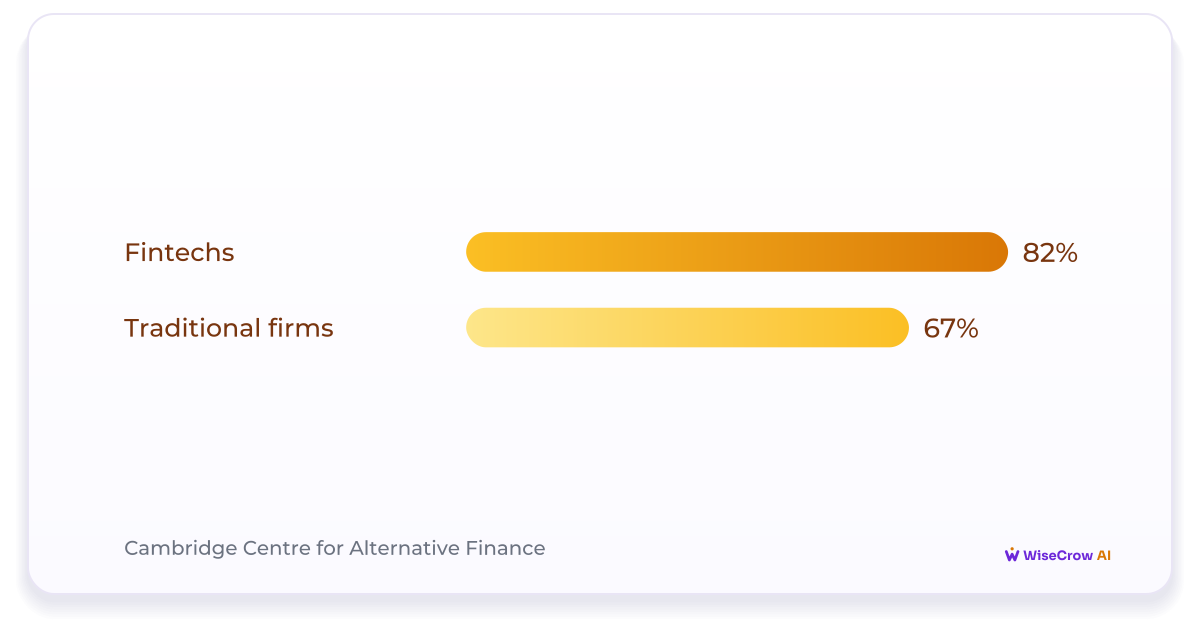
The last three face the customer and are the most common. The Cambridge report found 82% of surveyed fintechs use AI for customer support, against 67% of incumbents. Common and profitable are two different things, so these close my ranking.
Support Automation
Fintech tickets bunch around a few topics: a pending transfer, a frozen card, a failed verification, a missing deposit. AI resolves the simple ones by checking the account and explaining what happened. On the rest, agents get a drafted reply and the account events that matter, and ticket tags show product teams which flows create the most contacts.
Payback comes from contacts that never reach an agent and shorter handling on those that do. The regulatory angle is easy to miss. In the US, a message about an unauthorized transfer can start Regulation E error resolution timelines, so the AI must spot those and route them correctly. I test that detection before any work on answer quality.
How a Ticket Gets Resolved
- Each message is tagged by topic and checked for complaint or error-claim language.
- Possible error claims open a tracked case right away.
- Routine questions get answers built from live account data.
- Harder tickets reach an agent with a drafted reply attached.
Support Platforms with AI Built In
Helpdesk platforms now include AI agents that read your help center and call internal APIs for account data. My list of fintech AI tools compares support options next to KYC, fraud and credit software.
Personalized Offers
Fintech apps know a lot about each user’s money, and most still show everyone the same banner. Personalized offers use transactions and app behavior to pick each user’s next product: round-up savings for someone with spare cash at month end, a higher line for a reliable borrower, a business account for a freelancer. Cross-sell is where acquisition cost per customer starts to fall.
Credit offers built from personal data can raise fair lending questions, so reuse your underwriting group tests. Hold back a control group that sees no tailored offers, or every signup during a campaign looks like the model’s work. In my experience, a few well-timed offers beat a steady stream, because users tune out an app that always sells.
Matching an Offer to a User
- Spending categories, balances and app events are summarized daily.
- The model scores each user for every product they qualify for.
- Frequency caps and consent settings filter the offers.
- Take-up is compared with the control group after each campaign.
Engines Behind Tailored Offers
Customer engagement platforms include decisioning features that choose the next offer, and larger fintechs build their own models. Start with the tool you already message users through, and go custom once it can’t express your eligibility rules.
In-App Financial Assistant
An in-app assistant answers questions about the user’s own money: why the balance dropped, what went on food last month, whether a bill clears before payday. Newer versions act too, moving money to savings once the user confirms. It’s the most visible use case on this list and the hardest one to make pay.
Engagement doesn’t equal revenue, and a confident wrong answer about money can hurt someone. Anything that sounds like investment or credit advice may trigger licensing rules. Assistants that move money raise the stakes again, a shift I follow in my piece on AI in fintech trends. I launch read-only and add actions one at a time, each behind a confirmation screen.
Rolling Out the Assistant in Stages
- Launch with read-only questions about balances, spending and bills.
- Ground every answer in the user’s transactions and show the figures.
- Block topics that could count as investment, tax or credit advice.
- Add transfers between the user’s own accounts behind a confirmation.
- Review a sample of conversations each week.
Building Blocks for an Assistant
Most fintechs build on a large language model with retrieval over their own data and a strict tool layer for actions. Packaged assistants from banking platform vendors save build time and limit how far you can shape them.
Price Out One Manual Queue Before You Buy
Proving value is harder than it sounds: the Cambridge survey found 55% of industry respondents struggle to measure what AI delivers. I start with a queue you can count, such as dispute packs, KYB reviews or the sponsor bank report. Enter the weekly hours, the share a tool could take over, your loaded hourly cost and the tool’s monthly price.
Will It Pay for Itself?
Move the sliders to match the work you want to automate and the plan you are considering.
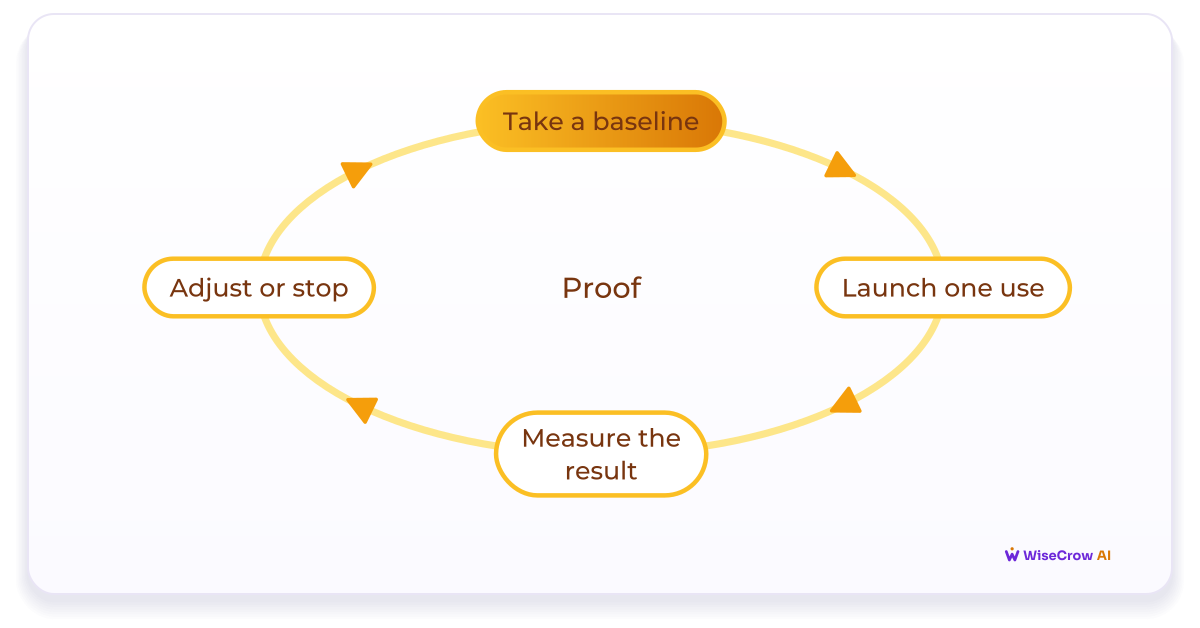
The figure covers staff time only. Recovered chargebacks, approved payments and lower fraud losses come on top, and each needs a baseline taken before launch, or you’ll argue about the result for months.
How to Choose Your First Fintech AI Use Case
The table gives you a shortlist. Three questions turn it into a decision in a single working session.
Start Where Money Moves Most Often
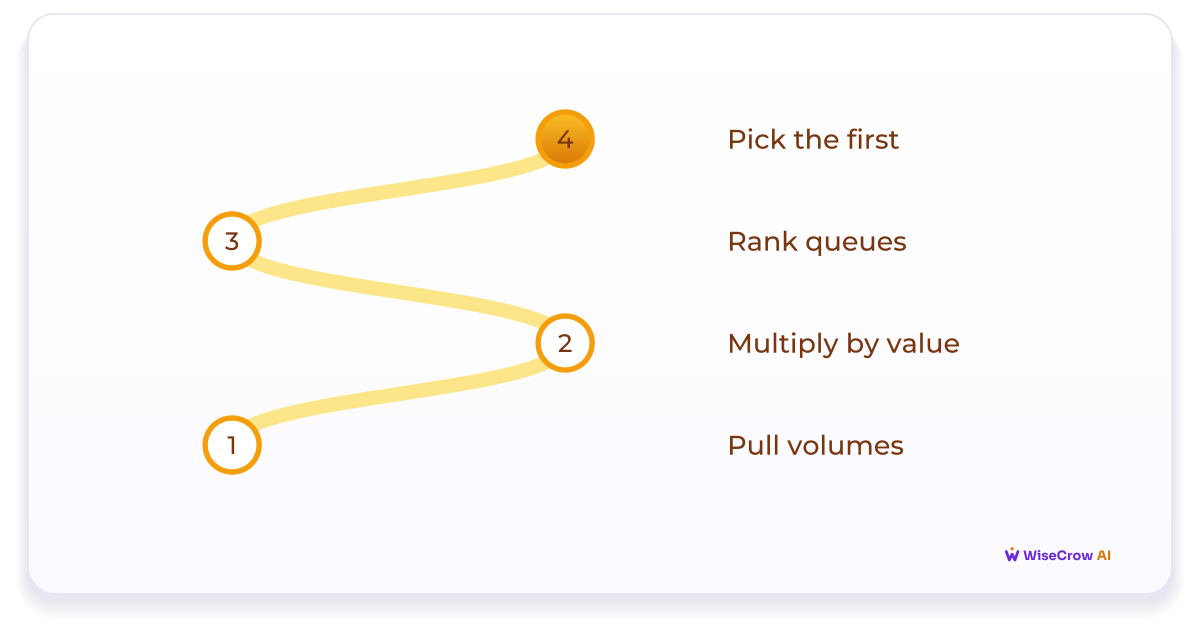
Pull your volumes: payments per day, disputes per month, applications per week, tickets per day. Multiply each by the money or minutes at stake per item. The biggest result is your natural first candidate, even when it isn’t the most exciting idea on the list.
Count Who Has to Sign Off
List every approver before you pick: your compliance lead, any model risk reviewer and your sponsor bank. Dispute automation might need one signature. Underwriting or AML changes can need three, plus a parallel run. With a new bank relationship, start with something the bank doesn’t need to approve.
Look at Your Loss Labels
Models learn from outcomes, and fintechs often record them loosely. Check that confirmed fraud is kept apart from friendly fraud, that defaults carry a date and amount, and that dispute wins and losses are stored at all. Where labels are thin, begin with a document or rules use case and clean the labels while it runs.
Questions About AI in Fintech Use Cases
What Are the Most Common AI Use Cases in Fintech?
Customer support, fraud scoring, identity checks and credit models come up most. In the Cambridge survey, AI customer support was the leading front-office use, at 82% of fintechs. The most common use cases aren’t always the most profitable, so rank them against your own volumes.
Which Fintech AI Use Case Pays Back Fastest?
In my client work, dispute automation and smarter retries on declined payments usually show results within a quarter. Both run on data you already hold and draw little regulatory attention. Underwriting returns more over time and takes longer to build and approve.
Can a Fintech Use Machine Learning for Credit Decisions in the US?
Yes, within existing rules. ECOA and Regulation B require specific principal reasons for every decline, whatever the model, and fair lending laws apply to every input. The CFPB withdrew its 2022 circular on complex algorithms in May 2025, so check current guidance with compliance counsel.
Does My Sponsor Bank Need to Approve an AI Model?
Often it does. Most program agreements give the bank oversight of credit decisions, AML monitoring, complaints and customer communications. Ask early which changes need notice or approval and what evidence the bank expects.
How Much Data Do I Need to Train a Fraud Model?
Enough confirmed fraud cases to learn from, which early-stage fintechs rarely have. Start with a vendor model trained on pooled data, add your own rules and label every loss carefully. After a year or so of labeled outcomes, a custom model is worth testing.
Should a Fintech Build or Buy Its AI?
Buy where the problem looks the same for everyone, like identity checks, dispute submission and support tooling. Build where your own data is the edge, such as underwriting on your customers’ cash flow. Most fintechs end up with vendor tools plus a few custom models.
How Does the EU AI Act Affect Fintech Use Cases?
The Act lists AI used to assess the creditworthiness of individuals as high-risk, with duties around risk management, documentation and human oversight. AI used only to detect financial fraud is carved out of that category. The timing of some obligations has been under discussion, so check the current status for each market you serve.
Sources
- Cambridge Centre for Alternative Finance, 2026 Global AI in Financial Services Report: jbs.cam.ac.uk
- Visa, The Key Forces Driving Payments for 2026 (press release, January 2026; Visa’s own figures): visa.com.hk
- Electronic Code of Federal Regulations, 12 CFR 1002.9 (Regulation B): Notifications: ecfr.gov
Disclaimer: This article is for general information only and isn’t legal, compliance or financial advice. Effort and payback ranges reflect typical projects, and rules on credit, payments and AI keep changing, so check the current position for your products and markets before you decide.
Did you find this helpful?
Thank you for your feedback.
Marlena leads the WiseCrow editorial team and works with our consultants to turn real client projects into practical guides on AI strategy, automation and governance. Before joining WiseCrow, she spent 12 years in B2B operations and SaaS content. She has since edited more than 400 articles on AI and automation and reviewed workflows from over 60 client projects. She is based in Austin, Texas.