Summary
- Fintechs lead incumbents on AI: 47% are at advanced adoption stages against 30% of traditional institutions, per Cambridge’s 2026 survey.
- Agentic AI is leaving the pilot stage, with 52% of the industry actively adopting it, and card networks are building for agents that pay.
- Fraud is now AI against AI, so model retraining, tokenization and identity checks matter more each quarter.
- Data quality, explainability and value measurement decide which projects scale, and supervisors are watching all three.
Every fintech roadmap I’ve seen this year has the word “agent” on it somewhere. Some of those plans are real, and some are a chatbot with a new name. Telling them apart is a large part of good fintech AI consulting, and it’s the lens I use for the nine trends below.
I sorted them by maturity. The first three are already live in most fintechs. The middle three are moving from pilots into production. The last three are still taking shape, but they decide which of the first six you can scale. Each group closes with what I’d do this quarter. Most figures come from one large 2026 survey of 628 institutions, vendors and regulators, so I’ve flagged where a number is a vendor’s own claim.
Fintechs Are Pulling Away From Incumbents
The clearest signal of 2026 is a gap. In the 2026 Global AI in Financial Services Report from the Cambridge Centre for Alternative Finance, 81% of surveyed financial services firms used AI at some level. That part is no surprise. The split underneath it is more telling: 47% of fintechs were at advanced stages of adoption against 30% of traditional institutions. At the most advanced stage, which the report calls Transforming, it was 19% against 6%.
The gap carries through to results. Among fintechs, 56% reported higher profitability from AI. Among incumbents, it was 34%. My read is simple. Fintechs have fewer legacy systems, shorter sign-off chains and product teams that can ship a model change in a week. A bank with the same idea often needs a quarter just to get the data out of its core system.
One more number keeps the hype in check. Only 14% of respondents saw AI as transformational to their strategy. Most firms are using it to do current work faster and cheaper. Very few have rebuilt their business around it yet.
The 9 Trends by Maturity
The table shows where each trend sits today and who should move first. “Act now” means a fintech without it is already behind its peers. “Watch” means you should track it and run small tests without committing a big budget.
| Trend | Maturity | Who should act now |
|---|---|---|
| AI customer support | Live | Any consumer fintech |
| AI against AI fraud | Live | Payments and lenders |
| Embedded AI in products | Live | Product teams |
| Agentic AI in production | Scaling | Ops and compliance |
| Agent payments | Early scaling | Payments and checkout |
| Explainability and bias checks | Scaling | Lenders and insurtechs |
| Data quality bottleneck | Forming | Data and platform leads |
| Supervision catching up | Forming | Risk and legal |
| Measured value and jobs | Forming | Finance and leadership |
Treat the “Forming” rows as required work. They’re the slow trends that decide if the fast ones survive an audit and a board review.
Already Live in Most Fintechs
These three trends have left the experiment stage. If you run a consumer or SMB fintech, your competitors almost certainly use all of them in some form.
1. AI Customer Support Runs at Scale
Support is where AI landed first in fintech, and it’s still the most common front-office use. The Cambridge survey found 74% of the industry using AI for customer support. Fintechs were at 82% and incumbents at 67%. Generative AI adoption overall reached 71%, just behind classical machine learning at 75%.
The trend has moved past answering FAQs. The better setups now pull account data, explain a declined card, start a dispute and hand off to a person with the full history attached. In my client work, the handoff delivers the biggest gain. When the agent who takes over can see what the customer already said and what the AI already checked, handle time drops and customers stop repeating themselves.
The risk is the confident wrong answer. A support bot that invents a fee or misstates a refund rule creates a complaint, and in some markets a regulatory issue. Keep anything about money, fees and legal rights grounded in approved content, and log every answer so you can review the ones that went wrong.
2. Fraud Becomes AI Against AI
Fraudsters adopted generative AI quickly. Deepfaked voices on support lines, synthetic identities that pass basic KYC and bots that test stolen cards at scale are now routine. Visa says bots make up 37% of internet traffic, which gives you a sense of how much of what hits a login page isn’t human.
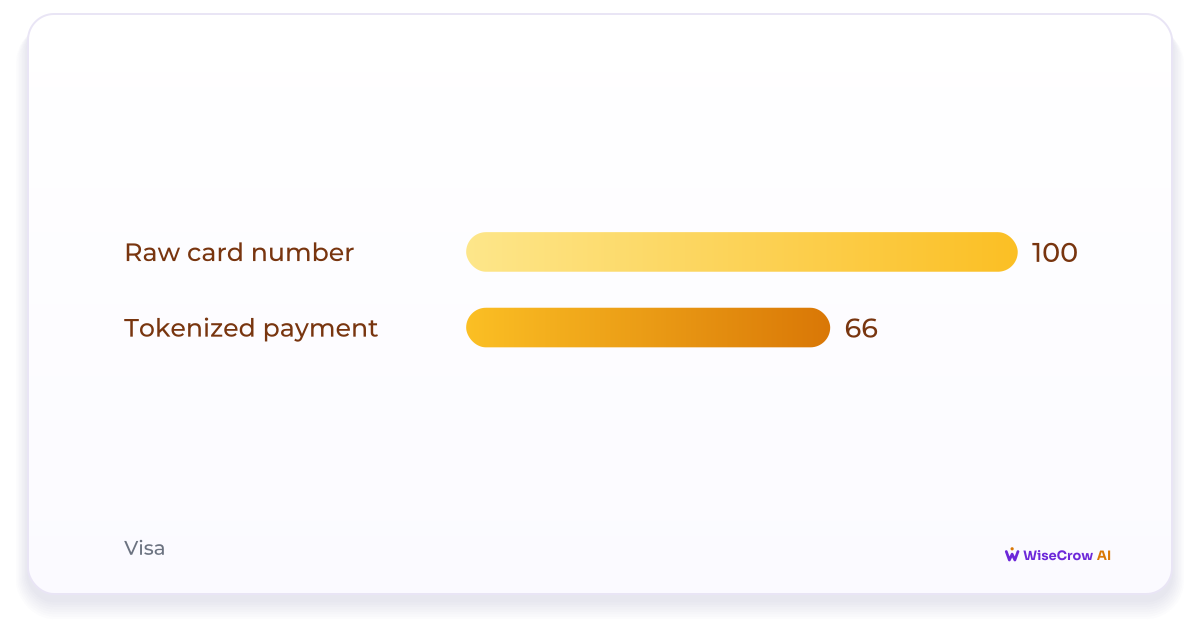
Defense has scaled too. In its 2026 payments outlook, Visa says more than 300 AI models and 90 tools helped it block over $40 billion in fraud in 2024. It also reports that tokenized transactions have a 34% lower fraud rate than transactions using the raw card number. Both are Visa’s own figures, but they match what I see: the payment rails are doing more of the fraud work, and fintechs that use tokens and network risk scores get that protection cheaply.
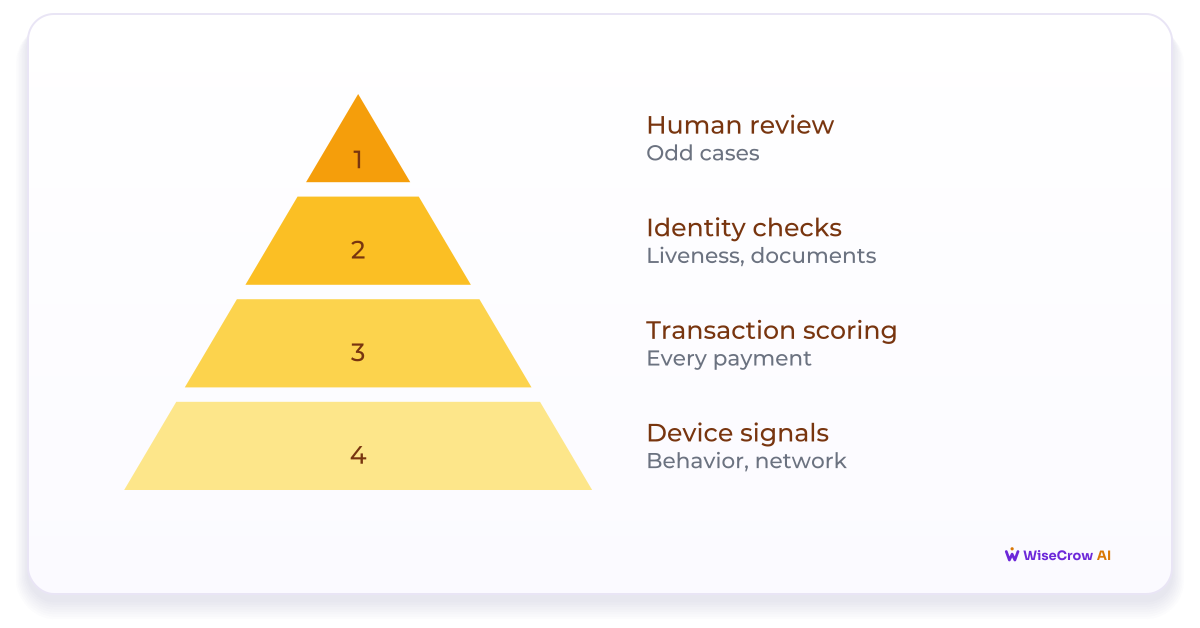
The weak spot is identity. A deepfake that fools a liveness check at onboarding gets a real account, and from there it looks like a good customer for weeks. Fintechs that hold up best layer device signals, behavior patterns and document checks, and they retrain fraud models more often than once a year. My collection of fintech AI examples shows how neobanks and lenders wire these layers together.
3. AI Moves Inside the Product
A few years ago, fintechs used AI behind the scenes for risk and operations. Now it sits in the product the customer touches. Budgeting apps explain spending in plain words. SMB platforms draft invoices, categorize expenses and flag late payers. Lending apps pre-fill applications from bank data and tell the applicant what’s missing.
The shift matters because embedded AI changes what customers expect. Once one app explains a cash-flow dip in a sentence, a dashboard full of charts feels slow. It also raises the bar for accuracy, since the customer sees every mistake. The strongest product teams I work with treat each AI feature like a payments feature: it has an owner, a test set of real cases and a rollback switch. My list of fintech AI use cases ranks the ones that pay back fastest.
Pick features where an occasional wrong answer is cheap to fix. Categorizing a transaction wrongly is a small annoyance. Telling a customer they qualify for a loan they don’t is a complaint, and possibly a fair-lending problem.
For this quarter, audit what you already run before you add anything. Pull a sample of 100 support conversations the AI handled and score them for accuracy and handoff quality. Ask your fraud team when each model was last retrained and if deepfake attempts show up in the data. Then list every AI feature in your product with its owner and its rollback plan. In my experience, at least one feature turns up without an owner, and fixing that costs nothing.
Moving From Fintech Pilots to Production
These trends are real but uneven. A few fintechs run them at scale, many are piloting, and most of the budget decisions for 2027 will be made here.
4. Agentic AI Leaves the Pilot Stage
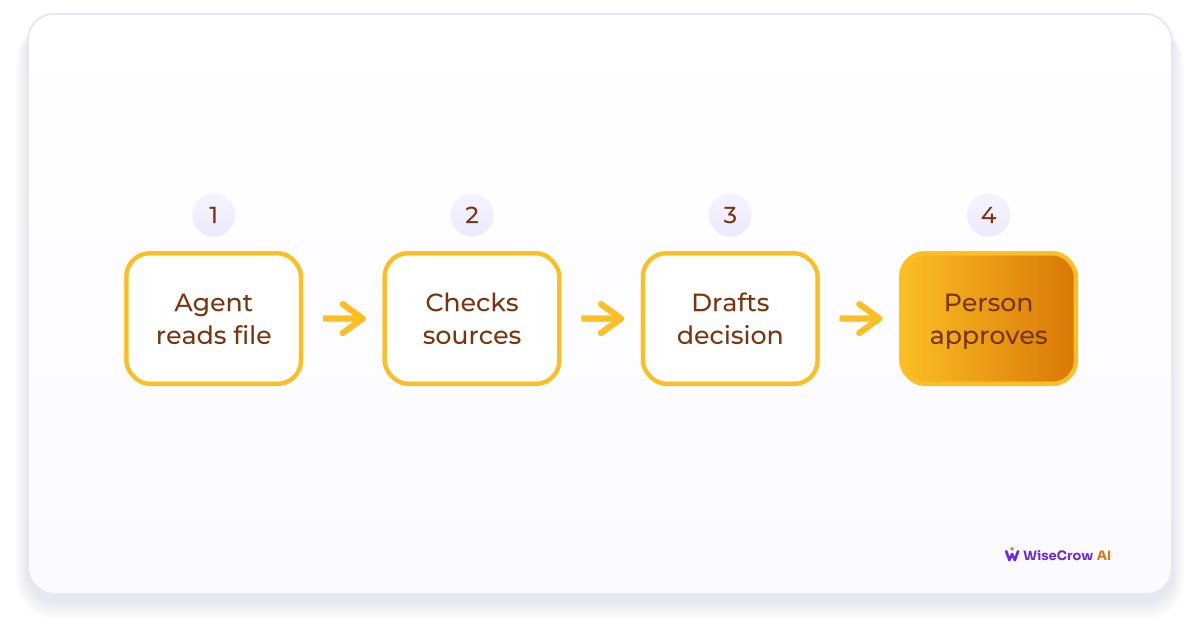
An agent does more than answer. It plans and carries out several steps, such as gathering documents for a KYC refresh, checking them against a watchlist and drafting the case note for an analyst. In the Cambridge survey, 52% of the industry was actively adopting agentic AI: 23% at the scaling or transforming stage and 29% piloting. Fintechs led again, at 57% against 45% for traditional institutions. And 81% expected agentic AI to be meaningfully achieved in their organization by 2030.
The agents that reach production in fintech share a pattern. They work in the back office, where a person reviews the output before it touches a customer. Compliance case prep, reconciliation breaks, chargeback evidence packs and merchant onboarding checks are the jobs I see working. Agents with direct power to move money or change a credit decision are still rare, and for good reason.
Ask any agent vendor three questions. Which steps does the agent decide on its own? What happens when it hits a case it can’t solve? How is every action logged for an auditor? If the answers are vague, you’re looking at a chatbot with a workflow attached.

5. Agents Start to Pay
The next step after agents that work is agents that buy. Card networks call it agentic commerce: an AI agent finds a product, compares options and checks out for the customer, within limits the customer sets. Visa names it as one of the key forces in payments for 2026 and points to a 4,700% year-on-year rise in traffic from US generative AI platforms to retail sites in July 2025. That’s Visa’s figure, and traffic isn’t purchases, but the direction is clear.
For fintechs, agent payments raise questions that existing rails weren’t built for. How do you know the agent is acting for a real customer? How do you prove consent when the customer never saw the checkout page? Who absorbs the loss when an agent buys the wrong thing? The networks are answering with agent tokens, spending limits and verified agent programs. The details change monthly, so I’d avoid building heavy custom logic on any one scheme yet.
Payments, wallet and checkout fintechs should be testing now. Everyone else can watch. A useful first step is to test if your fraud rules would block a legitimate agent, since many bot filters will flag one on sight.
6. Explainability and Bias Checks Become Table Stakes
The gap between what regulators want and what firms do is wide here. In the Cambridge survey, 78% of regulators rated explainability as critical or important. Only 50% of the industry had adopted explainable AI methods, and about two-thirds of firms were not monitoring their AI for bias at all.
For lenders, insurtechs and anyone making decisions about individuals, I expect that gap to close fast, through supervision or through partners. Bank partners and investors already ask for model documentation in due diligence. A lender that can show why an applicant was declined, which features drove the score and how approval rates compare across groups closes those conversations quickly. One that can’t gets stuck. The fixes take time, and I cover the hard parts in my guide to AI in fintech challenges.
Start with the decisions that affect people most: credit, pricing, account closures and fraud blocks. For each, record which model makes it, what data it uses and how a customer can ask for a review.
My move for the next three months: pick one back-office process with clear rules and a lot of manual review, and run an agent on it in suggestion mode for six to eight weeks. An analyst approves every step, and you track how often they change the agent’s work. If you run payments, ask your network contacts what agent token support looks like and test your bot rules against it. And for every model that touches a customer decision, write down who owns it and when bias was last checked. If the answer to the second question is “never”, start there.
Slow Shifts That Decide What Scales
The last three trends move slowly, and they don’t make headlines. In my client work, they’re also the trends that decide which AI programs scale.
7. Data Quality Becomes the Real Bottleneck
Clean, labeled, accessible data is now the scarce part of fintech AI. The Cambridge survey asked about barriers, and data availability and quality topped the list for vendors at 66%, with 46% of regulators and 40% of the industry naming it too. Vendors see it most because they’re the ones trying to plug models into customer data.
Privacy sits right next to it. Data privacy was the top AI risk for 80% of regulators and 74% of the industry. Model hallucinations came next at 70% for both groups. Put together, the message is that fintechs need data that’s accurate, permitted for the use and traceable to its source.
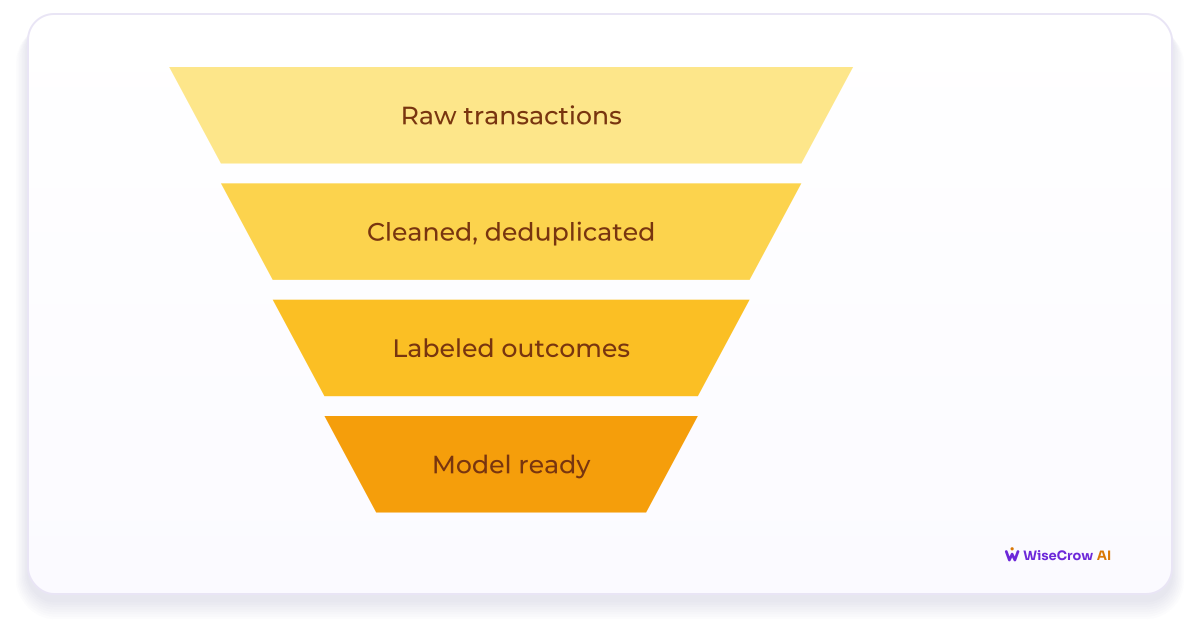
In my client work, the data problem in fintech is usually specific: transaction descriptions that differ across processors, customer records split across a core system and a CRM, and fraud labels that depend on who reviewed the case. Fixing the three or four fields a model depends on most beats any large data program. Some of the platforms in my ranking of fintech AI tools include enrichment and matching that handle part of the job for you.
8. Supervision Catches Up With Practice
Regulators are behind the industry, and they say so. In the Cambridge survey, 20% of regulators were at advanced AI adoption stages against 40% of the industry. That gap matters, because supervisors who don’t use AI themselves tend to ask broad questions and expect long answers.
The EU AI Act was the most referenced external framework among respondents, at 42%. It lists credit scoring of individuals as a high-risk use, with duties around data quality, documentation, human oversight and transparency. The EU has since reached a provisional agreement through the Digital Omnibus to postpone the high-risk obligations. The delay is agreed in principle, but formal adoption and the final details matter, so check the current status before you plan around any date.
Outside the EU, the pattern is similar: existing rules on fair lending, consumer protection, model risk and outsourcing already apply to AI, and supervisors are writing guidance on how. A US lender doesn’t need a new AI law to face questions about an unexplained credit decline.
9. Value Gets Measured, and Jobs Shift
Boards now want numbers. The Cambridge survey found 40% of firms reporting higher profitability from AI and 43% seeing no change. Measurement is the sticking point: 55% of the industry and 63% of regulators said AI value is hard to measure, rising to 76% at large institutions.
The fintechs that report credible results set a baseline before launch. Cost per support contact, fraud losses in basis points, time to approve a loan, false positive rate in AML alerts. Pick one per project, measure it for a month before go-live and report the change in money. When I help teams prepare these reports, the version that convinces a CFO puts the saving, the tool cost and the review time on separate lines, so nothing looks hidden.
Jobs are the other half. In the same survey, 24% of respondents expected a net reduction in headcount by 2030 and 10% expected a net increase. The exposure is highest in high-volume, rules-based work: tier-one support, document review and alert triage. In practice, I see teams shrink slowly through hiring freezes more often than layoffs, and the people who stay move into review, exceptions and model oversight.
Three tasks fit into this quarter. Name the three data fields your most important model depends on and check how often they’re wrong or missing. Map every AI use against the frameworks that apply in your markets, and mark the ones that touch credit or pricing as high priority. Then pick the AI project you’re most proud of and try to put its result in a single money figure. If you can’t, set a baseline now for the next one.
How to Choose Which Fintech AI Trends to Fund
Nine trends is too many to fund at once, even for a well-funded fintech. I run each one through four checks before it gets budget:
- Does it change a metric your board already tracks, such as fraud loss, cost per contact or approval time?
- Can you test it in one product line or market with a clear success number?
- Is the data it needs clean, permitted and in one place today?
- Could you explain its decisions to a supervisor or bank partner tomorrow?
A trend that passes all four is ready to fund. One that fails the data or explainability check goes back for data and documentation work first. In my experience, most fintechs end up funding one live trend and one scaling trend at a time, with the slow data, oversight and measurement work running underneath both.
Questions About AI in Fintech Trends
What Is the Biggest AI in Fintech Trend in 2026?
Agentic AI moving out of the pilot stage. In the Cambridge Centre for Alternative Finance’s 2026 survey, 52% of the financial services industry said it was actively adopting agentic AI, with 23% already scaling or transforming and 29% piloting. Fintechs were ahead of traditional institutions, at 57% against 45%.
Are Fintechs Really Ahead of Banks on AI?
On the survey data, yes. The same Cambridge report found 47% of fintechs at advanced stages of AI adoption against 30% of incumbents, and fintechs were far more likely to report higher profitability from AI. Banks have more data and more money, but they also carry older systems and longer approval chains.
What Is Agentic Commerce?
Agentic commerce means an AI agent searches, compares and pays for something on a person’s behalf, within limits that person sets. Card networks such as Visa call it one of the main forces in payments for 2026. For fintechs, the open questions are how to verify the agent, prove the customer’s consent and handle disputes.
How Is AI Changing Fraud in Fintech?
It works on both sides. Fraudsters use AI for deepfakes, synthetic identities and bots at scale, and fintechs use machine learning to spot them. Visa says its AI models and tools helped it block more than $40 billion in fraud in 2024. Expect your fraud models to need retraining more often than they used to.
Does the EU AI Act Apply to Fintech Companies?
It can. Credit scoring of individuals is listed as a high-risk use, which brings duties around data, documentation, oversight and transparency. The EU has provisionally agreed through the Digital Omnibus to delay the high-risk obligations, so check the current status before you plan around any deadline.
Why Do AI Projects in Fintech Stall?
Most stall on data and on measurement. In the Cambridge survey, 40% of the industry named data availability or quality as a barrier, and 55% said AI value is hard to measure. Projects that fix their data first and set a baseline before launch get past the pilot far more often.
Will AI Cut Jobs in Fintech?
Some roles will shrink and others will grow. In the Cambridge survey, 24% of respondents expected a net reduction in jobs by 2030 and 10% expected a net increase. The roles most exposed are high-volume, rules-based tasks in support, operations and back-office review.
Sources
- Cambridge Centre for Alternative Finance, 2026 Global AI in Financial Services Report: jbs.cam.ac.uk
- Visa, The Key Forces Driving Payments for 2026 (January 2026): visa.com.hk
- EU AI Act Digital Omnibus agreement: Gibson Dunn
Disclaimer: This article is for general information only and isn’t financial or legal advice. Survey results, vendor claims and regulatory timelines change often, so check the original sources and the current legal status with your advisers before you act.
Did you find this helpful?
Thank you for your feedback.
Marlena leads the WiseCrow editorial team and works with our consultants to turn real client projects into practical guides on AI strategy, automation and governance. Before joining WiseCrow, she spent 12 years in B2B operations and SaaS content. She has since edited more than 400 articles on AI and automation and reviewed workflows from over 60 client projects. She is based in Austin, Texas.